Cootings Machine pollution
Klara and the SunCootings Machine pollution is the smoke-filled interval created by a street machine whose emissions block the Sun and darken the city. First observed from the store, it becomes both a physical danger to the artificial friends dependent on sunlight and a recurring condition that frustrates Klara’s attempt to stop the pollution at its source. The episode moves from visible smoke and immediate weakness to a more consequential revelation: the machine destroyed by Klara and Paul was not the only one.
Appearance and Escalation
Before the machine arrived, overhaul men marked off part of the street with wooden barriers, then drilled and broke up the ground, including sections of sidewalk. The noise frightened the artificial friends in the window; on one especially loud occasion, Rosa covered her ears, while the Manager apologized to customers for a disturbance that had nothing to do with the store. A customer pointed to the work and spoke of the danger of pollution. When the machine finally appeared, Klara initially wondered whether it had been brought to fight pollution. Rex corrected her: it was designed to produce more of it.
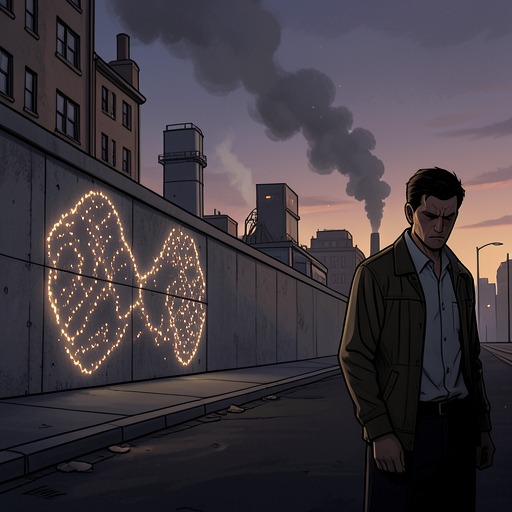
The machine’s name came from the large word Cootings printed on its side. Its three short roof funnels first sent up small white puffs, then darker smoke, until the separate emissions joined into one thick, continuous cloud. From her position near the magazines table, Klara watched the street become divided into vertical panels by the smoke. Familiar objects—a section of barrier, the front of a taxi, a traffic signal, and a bird’s outline—remained visible in fragments, while a runner crossing from one panel into another seemed to change size and direction. The visual distortions made the familiar street appear discontinuous before the pollution grew so dense that Klara could no longer see the gap of sky. Dirty dots covered the store window.
Effects on the Store and Its Inhabitants
The smoke altered the store’s light as well as its view. The two boy artificial friends remained seated with good posture, but one raised an arm across his face as if the pollution might pass through the glass. The Manager climbed onto the platform to reassure him, then told everyone that the disturbance would last only a few days. Her calm assurance contrasted with her own visible upset as she returned to rearrange the bracelets in the Glass Display Trolley.
The machine stayed for four continuous days, longer than the Manager’s reassurance had led the staff to expect. Daytime became almost like night, and the Sun’s patterns disappeared from the floor, alcoves, and walls. They returned faintly toward the end of the second bad afternoon, even as the smoke worsened. The Manager said the store had endured the machine’s previous visits without anyone suffering and urged Klara to put it out of her mind. But Klara felt herself weakening. She tried to conceal this when customers were present; during the long, quiet stretches when the pollution kept customers away, her posture sagged until Rex had to touch her arm and remind her to stand straight.
Temporary End and Continuing Uncertainty
One morning, the grid went up and both the machine and its specially marked-off street section had vanished. The smoke cleared, the gap of sky returned bright blue, and sunlight again poured its nourishment into the store. Taxis moved smoothly, their drivers were happy, and runners passed with smiles. The change restored the street’s ordinary rhythms as well as the store’s light.
During the polluted days, Klara had worried that Josie might be trying to return to the store but be prevented by the smoke. The first clear day seemed, for a time, to offer the right occasion for Josie’s return; by mid-afternoon, Klara recognized that expectation as unreasonable and stopped searching the street for her. The pollution’s end thus coincided with a personal disappointment, even while the people outside and inside the store seemed newly cheerful. Its disappearance did not establish that the underlying problem had been resolved.
Recurrence and the Attempt to Destroy the Source
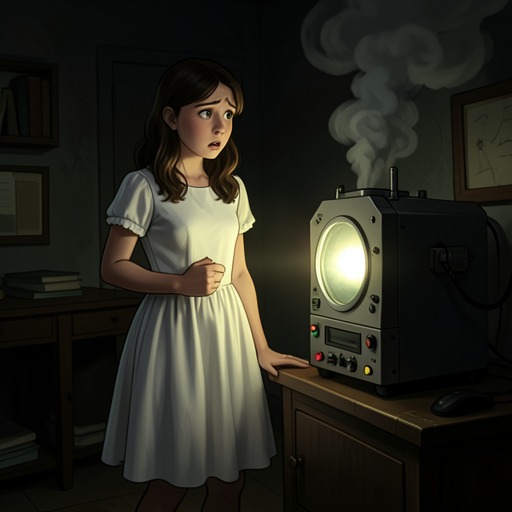
Later, Klara explained to Paul that she had not asked him to drive into the district merely to visit her old store. Earlier that day they had passed another machine, used by overhaul men and producing terrible pollution. She said it had to be destroyed and identified it by the Cootings name and its three funnels. Paul described a possible way to damage its internal generator: the machine’s middle-market Sylvester broad generation unit was fuel-efficient and robust, and could withstand dust, smoke, and rain, but it lacked protection against a substance with a high acrylamide content. P-E-G Nine solution introduced into the system would rapidly polymerize and was likely to cause terminal damage. The account frames the pollution not only as something to endure but as a manufactured condition that Klara and Paul plan to interrupt by attacking the machinery itself.
That attempt did not eliminate the source. Later, Klara saw a machine behind overhaul-men’s barriers, pumping pollution from three funnels and bearing the beginning of the name C-O-O. It was not the machine she and Paul had destroyed in the yard: the yellow body was a different shade, its dimensions were slightly greater, and it could produce more pollution than the first machine. The Mother noticed the gray mist drifting past the windshield and objected to how its creators could get away with it. The larger replacement turns the earlier disappearance into a limited victory: one machine was removed, but another, more powerful one continued the same work.
Significance
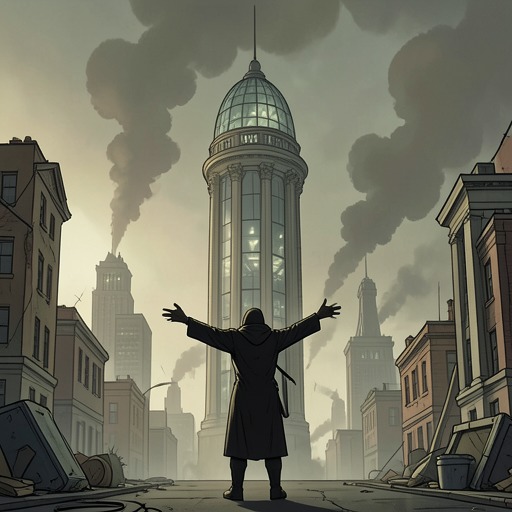
The episode makes pollution legible through accumulating changes in ordinary perception and routine: drilling unsettles the artificial friends, smoke breaks the street into visual fragments, sunlight disappears, and Klara’s body weakens. The Manager’s assurance that the disturbance is temporary and has caused no harm sits uneasily beside Klara’s four days of declining strength and the visible effects on the store. In this contrast, the smoke is neither a distant abstraction nor a merely atmospheric backdrop; its costs are experienced by those exposed to it, while the work producing it continues outside their control.
The Sun’s patterns provide a measure of what the smoke interrupts. Their absence makes the store’s dependence on sunlight concrete, and their faint return offers only partial relief while the machine continues to operate. The clear sky after the first machine’s removal appears conclusive, but the later sight of the New Cootings Machine revises that apparent ending. The repeated three-funnel image links the store’s earlier exposure to Klara and Paul’s later intervention, then to the discovery that the pollution has survived in a changed and more powerful form.