Josie's portrait
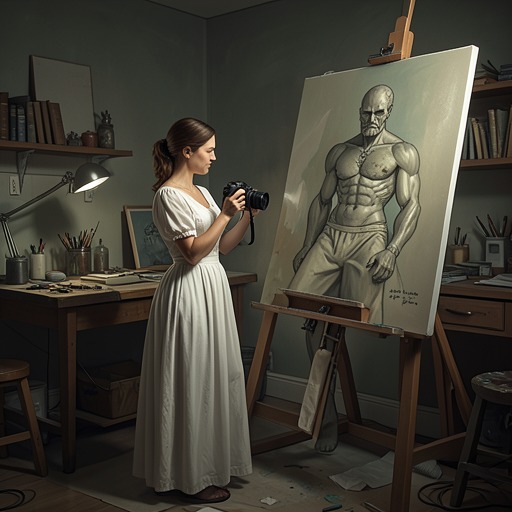
Klara and the SunJosie's portrait is a sculpture whose existence becomes part of the difficult honesty between Josie and her parents. The conversation about it leads into Josie’s explicit wish that Klara be allowed to remain in her room and move freely through the apartment, making the portrait part of a wider question about what will happen to the people and things she leaves behind.
What the Portrait Is
The Mother explains to Paul that she told Josie only that the portrait was not a painting but a kind of sculpture. Josie already remembers Sal’s doll, and that memory gives the disclosure a personal context: the portrait is not an ordinary image or painting, but an object associated with the family’s preparations for the possibility of Josie’s absence.
Disclosure and Trust
The Mother says that she and Paul cannot keep everything hidden from Josie. Josie suspects many things, she argues, and refusing to speak with her about them risks losing her trust. Paul’s alarm at the disclosure shows that he had understood the portrait as a matter the parents had agreed not to discuss. Their disagreement is therefore not only over what Josie has been told, but over whether protecting her requires silence or whether honesty is necessary to preserve their relationship with her.
Josie's Instructions for Klara
Josie later makes clear that she does not want the portrait sealed away in the manner of Sal’s doll. Instead, she wants Klara to have sole use of her room and to be able to come and go as she pleases. The portrait’s significance thus extends beyond its sculptural form: the discussion places it alongside a concrete request about how Klara is to be treated and what space she is to occupy in the household.
Significance
The portrait connects an object prepared around Josie with the family’s fear of discussing what it represents. Yet Josie’s instruction shifts attention from the object itself to a future arrangement that gives Klara access and freedom. In the same exchange, her parents speak as though she will recover, while Josie makes plans that assume her absence must be considered. The portrait consequently stands at the intersection of concealment, trust, and Josie’s attempt to shape what happens after her.