Josie’s worsening illness and Klara’s care
Klara and the SunJosie’s worsening illness and Klara’s care is a prolonged crisis in which danger is repeatedly recognized, denied, monitored, and feared. Its stakes reach beyond medical recovery: the illness reshapes household routines and relationships, exposes the limits of Klara’s role, and makes care a shared but unequal responsibility among Josie, her mother, Dr Ryan, Melania Housekeeper, Rick, and Klara.
Early Alarms and the Work of Care
The crisis first becomes unmistakable three weeks after the interaction meeting. One morning, Klara notices that Josie’s posture and breathing are unlike those of ordinary sleep and uses the alarm button. The Mother comes immediately and calls Dr Ryan; Melania Housekeeper later calls again to urge him to hurry. After examining Josie, Dr Ryan says there is nothing to worry about. The immediate reassurance does not erase the alarm that prompted the visit, but it gives the adults a moment in which to return to familiar explanations and plans.
The Mother’s response joins practical admonition to fear. Sitting on the edge of Josie’s bed, she blames the episode on the energy drink she has long considered bad for her. Josie minimizes what happened, saying she was simply very tired and pointing out that her mother will be late for work. The Mother answers that worrying about Josie is her work, and explicitly includes Klara in the responsibility: Klara had done well to raise the alarm. The exchange establishes Klara not merely as a companion but as a watcher whose observations can initiate the household’s response.
The Mother also makes recovery into a condition attached to a shared plan. She asks Josie to get better by the weekend so they can go to Morgan’s Falls, a place Josie still loves. The trip offers a future to anticipate, but the bargain also places the illness in the language of promises and family wishes: Josie agrees that she will be fine, while the Mother tries to secure that assurance through a destination they can share.
Morgan’s Falls and Conflicting Judgments
The planned outing becomes a test of how differently Josie’s condition is understood. At a later point, the Mother recognizes that Josie is sick again, while Josie insists she is fine. The disagreement is not resolved by a reassuring plan: it becomes sharper when the family is already in the car for Morgan’s Falls and the Mother confronts the fact that Josie concealed her illness. She objects not only to the danger but to the concealment, which has brought everyone into the car with the whole day ahead of them.
Melania Housekeeper, who has said that she helps Josie and that Josie may be all right, does not readily move to help her get out of the car. The Mother questions whether Melania considers Josie well enough for the outing and treats her hesitation as cause for concern. Josie asks her mother to let them go; the Mother refuses, saying that Josie is sick and that keeping it secret is unfair to the people who have come along. The disagreement makes visible a care problem without an easy solution: protecting Josie may mean overriding her account of her own strength, while accepting that account may expose her to risk.
When the outing is cancelled, Josie turns to Klara with an apology, promising they will go another time. Klara accepts the decision as what is best for Josie. Her response is characteristic of her position: she is emotionally present and committed to helping, but she does not claim authority over the family’s choice. The cancelled trip nevertheless leaves a relational aftereffect. Josie’s manner toward Klara stays cold for a long time, and the Mother also becomes more distant. Klara had thought the trip went well and cannot initially understand why it has created such shadows; she wonders whether her limitations beside a B3 have become apparent, even as she recognizes that human attempts to escape loneliness can be complex and that the consequences may not have been within her control.
Collapse, Recovery, and Vigilance
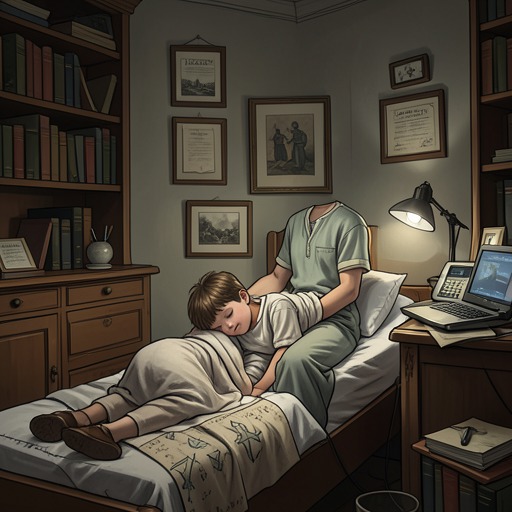
Several days after the outing, Josie’s health collapses. She becomes too weak to come downstairs for the Mother’s quick coffee, a small but important daily meeting that had helped keep loneliness from entering her day. The Mother now brings her coffee upstairs and stands over Josie’s sleeping figure, looking down at the bed. Once the Mother leaves, Melania Housekeeper takes over, moving an easy chair close to the bed and watching Josie while using her oblong. The care that had once been organized around a shared morning routine becomes bedside watch.
Klara’s place in this changed routine is precarious. Standing just inside the bedroom door ready to help, she is told by Melania to go outdoors because her constant presence is unsettling. For a time Klara waits outside, watching the grass move and wondering how she might help rescue Josie from her sickness; she is not yet accustomed to being alone outdoors and eventually returns to the house. The episode contrasts Klara’s readiness to attend with the human household’s need to determine when her presence is useful or intrusive.
Dr Ryan visits frequently while Josie sleeps for long stretches. Sunlight falls across her sleeping form in its familiar pattern, but Klara sees no sign of the Sun’s special help. She nevertheless interprets the Sun’s delay as possibly appropriate: Josie gradually grows stronger and eventually can sit up in bed. Because Dr Ryan has warned her not to resume her oblong lessons, she spends these days drawing with sharp pencils in a sketchpad. When she finishes or abandons a picture, she tears it out and tosses it into the air; Klara gathers the drifting pages into ordered piles. This small, repeated task is one way care adapts to recovery: it does not restore ordinary lessons, but gives Klara a concrete role beside Josie as she begins to sit up and make things again.
As Dr Ryan visits less often, Rick visits more. Melania Housekeeper, previously wary of Rick, allows him to see Josie because she can tell that his visits lift Josie’s spirits, though she limits them to thirty minutes. She also orders Klara to remain in the room to supervise. Rick sometimes signals that he wants Klara to leave and almost never addresses her, but Josie appears happy with Klara’s presence and may take comfort from it, even while leaving her out of the conversation. Klara tries to give the pair privacy from the Button Couch, looking over the fields while listening because she believes that learning as much as possible about Josie is part of her duty.
The Limits of Klara’s Role
Klara’s commitment is challenged most directly when Josie’s need changes from general watching to a demand for her mother. During a frightening episode, Josie’s voice sounds doubled, and she tells Klara to get Mom. Klara replies that her mother needs rest and insists that she is Josie’s AF and is always there. Josie corrects her: she did not mean Klara; she needs Mom. The distinction is painful and exact. Klara’s constancy is real, but it cannot make her interchangeable with the parent Josie is asking for.
The Mother arrives and embraces Josie at the edge of the bed. In the shifting darkness and moonlight, their bodies and hair mingle as they rock together, in a movement reminiscent of their prolonged goodbyes. Josie says that she does not want to die. The Mother answers softly, at the same level as Klara had spoken. The scene clarifies both the depth and boundary of Klara’s care: she can remain present, respond to danger, and offer reassurance, yet Josie’s fear calls for the particular intimacy of her mother’s embrace.
That division of responsibility becomes more complicated as the crisis continues. The Mother and Dr Ryan repeatedly argue in the Open Plan over whether Josie should go to hospital, but each time they conclude that a hospital would only add to her misery. The recurrence of the debate records how care has become a series of decisions made under uncertainty rather than a settled treatment plan. Meanwhile, Rick comes each day and takes his turn sitting with Josie while the Mother and Melania Housekeeper rest. The adults have abandoned traditional hours, sleeping only when exhaustion overwhelms them; their fatigue shows in their movements.
Klara’s presence is appreciated but is not considered sufficient by itself, although the Mother knows Klara is likely to notice danger signals before anyone else. This qualification captures the novel’s care structure: Klara contributes a distinctive capacity for observation, while human companions supply forms of closeness and judgment that her vigilance cannot replace. The household depends on her and still sets limits on what her presence can accomplish.
Hope, Risk, and the Meaning of Recovery
The illness is narrated through competing accounts rather than a single authoritative description. Josie sometimes insists that she is fine or merely tired; the Mother and Melania recognize signs of renewed sickness; Dr Ryan’s early reassurance is followed by a later collapse; and Klara reads posture, breathing, and danger signals closely. These views do not simply cancel one another. Each changes what the others do: a reassuring assessment does not prevent the alarm, Josie’s denial does not persuade the Mother to continue the outing, and Klara’s observations give her a recognized part in the response without giving her final authority.
Hope persists in concrete forms: the promised visit to Morgan’s Falls, the sunlight that continues to fall across Josie, the gradual return of strength, and the drawings made while lessons are suspended. But the language of hope is shadowed by the possibility of loss. In the later crisis, the Mother asks Rick whether he feels he has come out the winner after choosing the safer path while Josie took a high-stakes gamble on her future. She recalls Josie’s hunger for life and frames her daughter’s choice as a demand for a future worthy of her spirit. The exchange places Josie’s illness within a wider conflict over risk and possibility, without reducing her to a diagnosis or making recovery a guaranteed reward.
The crisis therefore changes the meaning of care from a set of ordinary services into a continuous negotiation among attention, autonomy, and attachment. Klara’s vigilance matters from the first alarm to the later bedside watches, but the episode in which Josie calls for her mother makes clear that care cannot be measured only by alertness or usefulness. The family’s response depends on different kinds of presence: Klara notices, Dr Ryan assesses, Melania and Rick take turns, and the Mother remains the person Josie reaches for when fear becomes explicit.