Loneliness
Klara and the SunLoneliness is a recurring condition in Klara’s account of human life, connecting economic exclusion, family intimacy, social performance, and unequal opportunity. It first appears in the sadness of children who can only look at Artificial Friends through a shop window; later, Klara sees it shaping Josie’s mornings, Rick’s fears, and the different futures available to lifted and unlifted children. Her growing understanding turns loneliness from an isolated feeling into a condition produced and managed through relationships and social structures.
Exclusion and the Store Window
Klara begins to understand loneliness through children who come to the store but cannot choose an Artificial Friend. After seeing several such children, she raises their sadness with the Manager. The Manager explains that the store is beyond their reach: those children may dream of having Klara or Rosa, but are unable to bring either home. Their expressions of bitterness or sadness, and even unpleasant remarks through the glass, are therefore signs of frustration rather than simple hostility. The window marks a boundary between wanting companionship and being able to obtain it.
Klara draws a further conclusion: a child without an Artificial Friend would surely be lonely. The Manager quietly agrees, giving the observation a weight that her earlier practical explanation cannot dispel. The exchange also establishes a contrast between Klara’s own sheltered place in a special store and the children excluded from it. Loneliness is not presented only as the absence of company; it can arise from seeing a form of companionship available to others and knowing it is out of reach.
Josie’s Morning with Her Mother
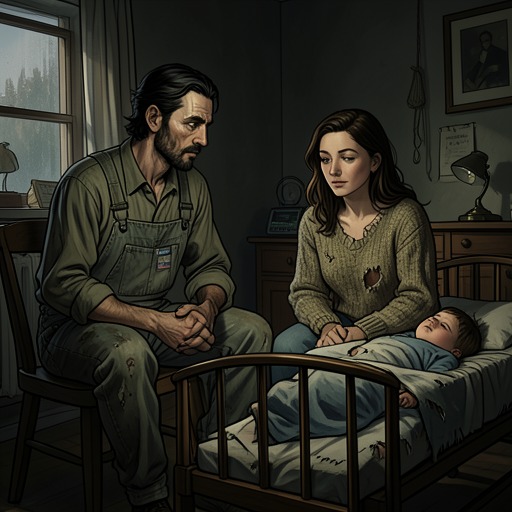
At Josie’s house, loneliness takes a more intimate form. Klara’s morning task includes waking Josie in time for the Mother’s quick coffee, when Josie can sit with her mother before the day pulls them apart. The importance of this brief meeting becomes unmistakable when Josie has slept badly because of her illness. Klara lets her rest after waking her, believing more sleep would help; Josie then rushes downstairs, but the Mother’s car is already leaving. Josie does not shout again, yet she eats breakfast without smiling.
Klara understands that missing the coffee can leave loneliness creeping into Josie’s day, regardless of what other events follow. The scene gives that insight a concrete measure: the absence of one short encounter changes the emotional texture of the morning. On less hurried days, the Mother sometimes drinks slowly, walks around with her cup and saucer, or stands by the windows beneath the Sun’s morning pattern. Those occasions show the routine’s value not as a grand declaration of affection but as repeated time together, vulnerable to the pressures of illness and departure.
Rick’s Fear of Change
At Josie’s interaction meeting, loneliness enters the room through Rick’s sense that he does not belong. He recognizes that the gathering is for lifted children and worries that Josie, now mixing with them, is changing into someone he may no longer know. He had hoped that attending might somehow keep her the same. His fear is not simply that she will leave him physically; it is that the familiar relationship will be altered as she adapts to a social world from which he feels excluded.
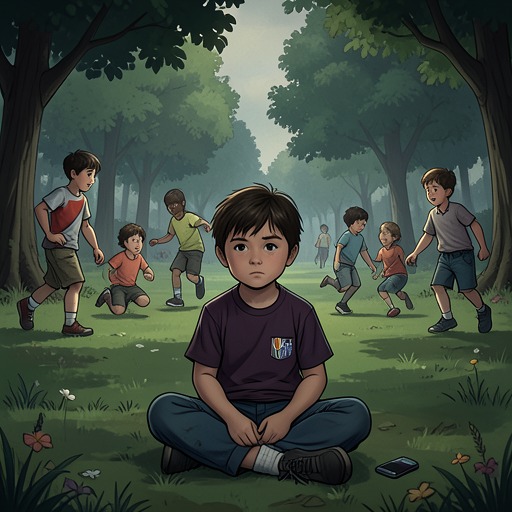
Klara reads the other children’s rough behavior in relation to that same fear. They may seem unkind, she observes, but they fear loneliness too; Josie may share that fear. This interpretation complicates Rick’s wish to save Josie from the group. The children’s conduct can hurt or unsettle others, but it is also a way of managing vulnerability and belonging. Klara learns that people may present a side of themselves for an audience, as if standing in a store window, and that such performances should not automatically be treated as the whole person. After the meeting, Josie remains cheerful and kind to Klara and never brings up the encounter, so the feared damage to their friendship does not materialize then.
Opportunity, Support, and Unequal Futures
Loneliness is also connected to the networks that determine who receives help. The Mother explains that Rick, though never lifted, has a possible route to college: Atlas Brookings accepts a small number of unlifted students. The places are scarce and competition is severe, while the available screen tutors are either barred by TWE rules from tutoring unlifted students or charge fees Rick’s family cannot afford. The obstacle is therefore not a lack of intelligence or ambition alone. Educational opportunity depends on scarce places, access to guidance, and the willingness or ability of others to provide it.
Josie asks that Rick attend her gathering because she wants him there, and the Mother accepts, affirming that he is a good person and their neighbor. Later, Rick’s technical ability receives recognition from the Father, who praises his drone work and insists that genuine ability should be noticed, lifted or not. These moments of support matter against the larger limits surrounding Rick: he has caring connections, but those connections do not erase the institutional barriers he faces. His loneliness is thus not reducible to being alone; it is also the experience of standing outside a social and educational order that offers him fewer routes forward.
Different Futures and Klara’s Understanding
Near the end of Klara’s account, she identifies a tension that links loneliness to separation without making it identical to it. Rick and Josie still show kindness to one another, yet they are preparing very different futures. Klara remembers having asked the Father whether the love between them was genuine, and he had answered that it was real and everlasting. She now worries because affection persists even as their plans diverge. Their continuing kindness does not guarantee that their lives will remain joined.
Across these episodes, loneliness appears in several forms: exclusion from a desired companion, a missed moment of family closeness, fear of losing a friend to change, and restricted access to support and opportunity. Klara’s observations resist treating it as a personal defect. Children may act harshly because they fear being left alone; a morning can feel diminished when a small bond is missed; and a person can be loved while still facing a future apart from someone important. The pattern gives loneliness both an emotional and a social dimension, shaped by who can be included, who can help, and whether relationships can endure divergent paths.