TWE ban on tutoring unlifted children
Klara and the SunThe TWE ban on tutoring unlifted children is a restriction that bars TWE members from teaching children who have not been lifted. Its force is visible in Rick’s case: despite his ability, he cannot obtain the screen tutors his family seeks, while the alternative of Atlas Brookings admits fewer than two percent unlifted students. The rule makes educational opportunity depend not only on talent but also on a child’s status and access to scarce support.
Scope and Operation
When the Mother explains Rick’s educational prospects, she says the original plan was to have him home-tutored by screen professors, as other smart children were. That route fails because potential tutors are either TWE members, who are forbidden to teach unlifted students, or private tutors demanding fees the family cannot afford. The ban therefore operates alongside a market barrier: even those outside TWE who might teach Rick are effectively unavailable to his family.
The evidence identifies the restriction specifically as a rule governing TWE members, not as a universal prohibition on all tutoring. The Mother’s account distinguishes its members from the fee-charging tutors she calls bandits, showing how a formal institutional boundary and unaffordable alternatives combine to close the same educational route. Her description of the tutors’ fees also makes clear that the family cannot simply circumvent the rule by purchasing equivalent instruction elsewhere.
Consequences for Rick’s Education
With screen tutoring inaccessible, Rick’s prospects depend on a narrow institutional exception. The Mother describes Atlas Brookings as the only proper college still willing to accept some unlifted students; each year offers only a few places, and competition is severe. Elsewhere, the admission share is described as less than two percent. The small opening does not compensate for the lost tutoring route: it makes independent preparation and admission substantially more consequential.
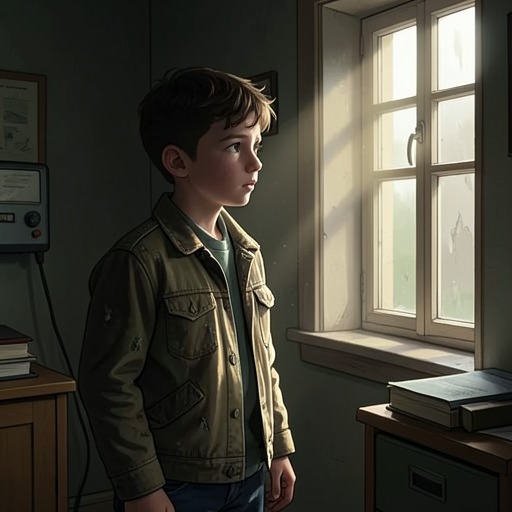
Rick’s own account to Vance underscores the unequal circumstances behind his application. He has devised a drone system by himself using online information and has had no tutors; his mother has supported him by ordering expensive books. He presents his work modestly and acknowledges that he is unlikely to achieve more without expert guidance. His initiative and his mother’s purchases partly fill the gap, but neither amounts to the structured instruction the family had originally hoped to secure.
Family Support and Institutional Exclusion
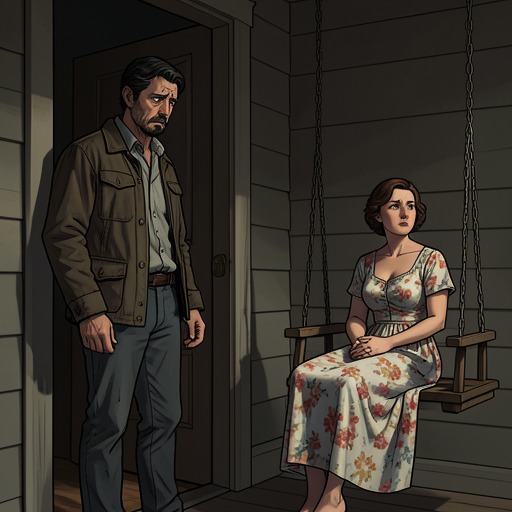
The Mother treats Rick’s application to Atlas Brookings as a remaining possibility, urging him to study harder and try for it even as he doubts that he has a chance. Her argument places the family in the role of advocate and educational support system: she encourages him, supplies books, and seeks a path around a tutor shortage they cannot solve. The ban is thus experienced not as an abstract policy alone but as a constraint that redirects effort into the household.
The rule also sits within a wider pattern of unequal preparation. The Mother contrasts her own childhood, when she spent years alongside other children, with Josie’s generation and insists that children who do poorly at college are those who did not attend enough interaction meetings. That remark concerns peer experience rather than tutoring directly, but it reinforces the book’s picture of educational preparation as dependent on access to structured forms of learning and social participation. For Rick, the tutoring ban removes one such resource precisely when his unlifted status already narrows his options.
Significance and Limits
The ban’s consequence is not that Rick lacks intelligence or ambition; it is that his ability must be demonstrated without the expert guidance available to others. Atlas Brookings may present itself as generous and liberal in considering high-caliber unlifted applicants, yet its tiny intake leaves the exception highly selective. The contrast between Rick’s self-taught work and the scarcity of professional help exposes how a nominal opportunity can coexist with practical exclusion.
The rule’s effects remain part of Rick’s changing educational trajectory. After Josie recovers, he no longer wishes to attend Atlas Brookings, and the college is rarely raised amid disagreements about Josie’s own future. His later withdrawal from that particular ambition does not erase the earlier constraint: the ban helped shape the terms on which he could pursue higher education, while family labor and exceptional admission became substitutes for support that had been closed to him.