Triana District
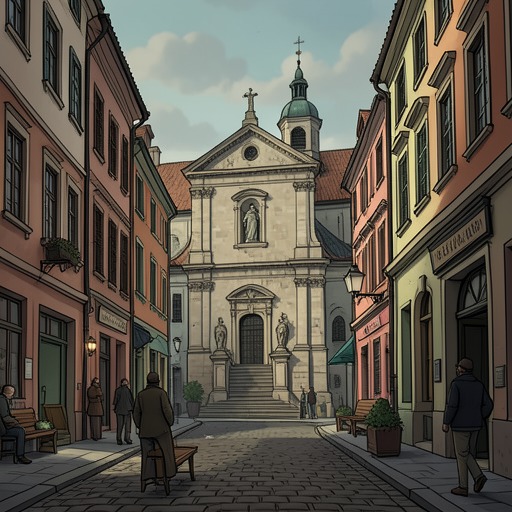
La piel del tamborTriana District is the familiar Seville neighborhood from which Don Ibrahim, Potro del Mantelete, and Niña Puñales leave to undertake work for Pencho Gavira’s assistant, Celestino Peregil. Its bars, river crossing, and recognizable skyline establish a lived-in local world; the trio’s departure across the Guadalquivir turns that geography into a boundary between their accustomed ground and the unfamiliar city beyond.
Setting and local texture
In Triana, Peregil walks toward Casa Cuesta with the magazine Q+S in hand. He is in a foul mood for three reasons: a stubborn ulcer, the delicate errand taking him across the river, and the magazine’s cover photograph of his employer’s wife with another man. The complication is personal as well as professional: Peregil himself supplied the journalists with the information that made the photograph possible. His rueful position connects the quarter’s everyday streets to the polished world of banking, gossip, and surveillance that has become his livelihood.
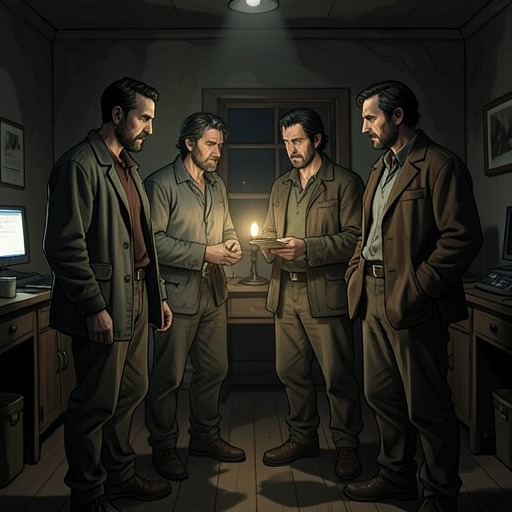
Casa Cuesta is rendered through concrete, old-fashioned details: marble tables, tiled walls, dusty bottles of Centenario Terry, a dark wooden counter decorated with golden flowers, and a sign advertising the daily steamer service between Seville and Sanlúcar at the mouth of the river. Don Ibrahim, Potro del Mantelete, and Niña Puñales are waiting there at a marble table, with fino La Ina already being passed around at eleven in the morning. The scene gives Triana the feel of a familiar social territory, measured in neighborhood bars and habitual meeting places rather than the carpeted offices and international finance Peregil now prefers.
The meeting at Casa Cuesta
Peregil sits with the three waiting companions, straightening his shirt cuffs in an elegant gesture learned from Pencho Gavira. His greeting is not a genuine inquiry into their welfare: the three pairs of eyes make clear that all parties understand the purpose of the meeting. When Peregil leaves, Don Ibrahim discreetly counts the money he has received for initial expenses. The total is one hundred thousand; he divides it into three equal bundles of thirty-three thousand, gives one each to Potro and Niña, and leaves the remaining bill on the table. The quiet accounting gives the meeting a practical consequence: a conversation in a neighborhood bar has become the beginning of a funded undertaking.
Streets, bars, and the river crossing
The trio’s route is mapped with unusual precision. In the three hundred meters between Casa Cuesta and Triana Bridge are exactly eleven bars, a density Don Ibrahim calculates as one every twenty-seven meters and twenty-seven centimeters. The companions have stopped at each one to discuss their strategy. The bars are not interchangeable backdrop; their repeated passage through them marks the time spent preparing and turns a short walk into a measured progression toward action.
As they cross the bridge, the three move shoulder to shoulder, with Niña in the middle and Don Ibrahim and Potro flanking her like loyal gentlemen in an old American film. They avoid looking left toward the modern buildings on Cartuja Island and instead take in the more familiar view to the right: the palm-lined opposite bank, Tower of Gold, Arenal, Giralda, and the Maestranza bullring beside the river. That contrast makes their crossing a passage between competing images of Seville: modern development on one side, the city’s storied landmarks on the other. The bullring, imagined as a cathedral where people come to worship brave men, also echoes Niña’s songs about bullfighters.
From home ground to campaign
The companions’ spirits have been warmed by the fino they drank along the way. In the blue, ochre, and white morning light reflected on the river, an Andalusian guitar seems to accompany their quick, short steps—music the narration leaves uncertain as either imagined or real. The scene lends their walk the formality of a bullfighter’s paseíllo, the entrance made between sun and shade before a performance. The comparison transforms an ordinary bridge crossing into a small ceremonial departure.
Their familiar Triana is explicitly the safe ground they leave behind. On the far side of the Guadalquivir, the trio will enter what they regard as hostile territory and go looking for a living. Triana therefore matters not merely as their point of origin but as the boundary that gives their venture its shape: local knowledge and companionship on one bank, uncertainty and work on the other. The movement from Casa Cuesta to the bridge carries the narrative from a carefully negotiated meeting into action, while the district’s bars and landmarks remain the measure of what the three are leaving behind.