Vísperas Message to the Pope
La piel del tamborThe Vísperas Message to the Pope is an unsigned appeal placed on the Pope’s personal computer by an anonymous intruder, demanding that the Church’s highest authority look toward a vulnerable parish in Seville. It turns a local struggle over Nuestra Señora de las Lágrimas into a matter requiring attention in Rome, while its hidden author and method make the appeal an object of investigation as well as a plea. When the identity and purpose behind the message emerge, its apparent voice from the digital underground proves to belong to Cruz Bruner, acting without first consulting either the priest she hoped to help or her daughter.
The Appeal and Its Discovery
The message presents its intrusion as justified by the gravity of the matter. Addressed to the Pope, it says that the See of Peter can be too distant for humble voices to reach, then identifies a place in Spain, Seville, where merchants threaten God’s house. It describes a small seventeenth-century church, abandoned by both ecclesiastical and secular power, as defending itself by killing. The appeal asks the Pope to turn his attention to the least powerful members of his flock and demand an account from those who have left them exposed. It ends by invoking Jesus Christ and seeking a blessing, but bears no signature.
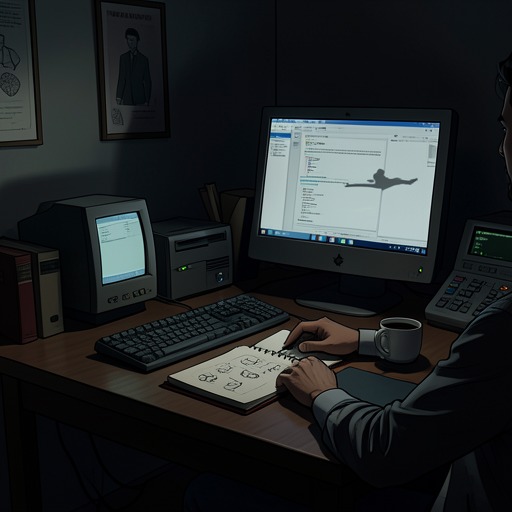
The document’s setting gives its appeal unusual force: it appears not in an ordinary petition or a channel controlled by church authorities, but on the Pope’s personal computer. Monsignor Spada presents the printed memorandum to Lorenzo Quart, who reads it aloud and mechanically repeats the words indicating that it is unsigned. For him, the absence of a name is not a minor omission. It leaves the message as an order or accusation without an identifiable speaker, and raises the question of who has reached into the papal system and why.
The Vatican investigation establishes that the message was written in Seville, on a computer connected to the telephone network, although the intruder used tricks to conceal the exact point of origin. The intrusion is traced through a restricted list of eighty-four cardinals and senior officials; the cursor stops at VOIA, the code associated with the Pope’s personal terminal. A rising transfer record indicates that the intruder has broken the security key and is injecting an unauthorized file. Father Arregui, after hesitating, calls the emergency number at the Apostolic Palace and reports that an intruder has entered the Pope’s computer.
The Message as a Trigger for Investigation
The appeal does not settle the local church’s fate; it prompts an institutional response focused on discovering its author. The director of the Institute for External Works orders Quart to stay in Seville for several days, identify the writer, maintain prudent contact with local ecclesiastical authority, and conduct the matter discreetly and reasonably. The instructions place two tasks beside one another: investigate the person who broke into the papal system, and handle the church dispute without allowing the breach to become a public or uncontrolled confrontation.
The message’s urgency rests on a precise local vulnerability. The Archbishop explains that demolishing Nuestra Señora de las Lágrimas requires its secularization, but an old privilege from 1687 complicates that process. Under the privilege, the church retains its rights so long as Mass is celebrated there every Thursday for the soul of its benefactor, Gaspar Bruner de Lebrija. The practice is tied to the day of his death; Macarena later specifies that the Thursday Mass must be held at eight in the morning, the hour protected by the inherited condition. The papal appeal gives this obscure arrangement a wider audience, but the immediate danger remains governed by the local observance.
That protection is precarious in practice. Macarena tells Quart that each Thursday an emissary of the Archbishop and a notary paid by Pencho Gavira sit in the last row, watching for an irregularity or oversight. The church’s survival can therefore hinge on a Mass being said correctly and consistently, while people interested in its demolition monitor the ceremony for a lapse. Macarena fears that with Father Óscar away, someone may act against Father Príamo. The message’s language about an abandoned church defending itself thus speaks into a conflict shaped not only by property and power, but also by a ritual condition whose fulfillment is scrutinized week after week.
Technical Traces and Countermeasures
The intrusion is not treated as an inexplicable feat. Father Arregui’s team prepares what it calls Sadducean Traps: networked decoy areas designed to misdirect intruders or expose information that could help identify them. Against Vísperas, the Jesuits build an electronic labyrinth intended to reveal the hacker’s methods and make the intruder vulnerable. The process gives the investigation its own contest of access and concealment: a hidden sender has exploited the system, and the defenders attempt to turn the architecture of the system into bait.
One trap is designed around INMAVAT, a protected file that the intruder must pass through to reach VOIA. If someone enters by the normal, authorized route, the trap remains inert. An outside intruder unknowingly carries a concealed code across the threshold. At VOIA, that code blocks access to the real destination and redirects the hacker to a fictitious terminal, VOIATS. The intruder can then leave a message believing it has reached the Pope’s computer, while the actual system remains protected. The trap does not merely record a breach after the fact; it changes where the intruder’s action lands.
The Vatican staff watch as the cursor passes through the list of eighty-four INMAVAT users and stops at VOIA. After ten seconds of held breath, it clicks, and the system displays a waiting clock. The team’s technical response reflects their familiarity with Vísperas’s evasions: the hacker disguises the entry point by jumping across different telephone networks. The police contact Simeón Navajo reports that the people on Quart’s list have not acquired advanced computer equipment under their own names and tax numbers, while Telefónica’s security chief describes a broader field of clandestine users who travel through networks and leave programs designed to erase their traces. These findings explain why the message’s appearance is easier to establish than its author’s identity.
The Author and the Motive
The anonymity is eventually resolved through Cruz Bruner’s own account. Nearly seventy years old, she says that she entered the world of computers through an online acquaintance using the nickname Mad Mike and sometimes the name Vizconde Valmont. His voice and face remained unknown to her. Through him she discovered a pirate bulletin-board system and joined a community of technology enthusiasts, including young people who spent hours alone in their rooms manipulating other people’s computers. The Pope’s system was not her first point of entry into that world but the culmination of a learned practice, a network of contacts, and a sustained curiosity about what protected systems contained.
Cruz says that a contact in Rome, Deus ex Machina, had been moving around the Vatican system peripherally for amusement and gave her useful leads. She suspects the contact was a seminarian or young priest. Six or seven months before she explains the operation, while the dispute over Nuestra Señora de las Lágrimas had become especially serious, neither the Archbishop’s Palace in Seville nor the nunciature in Madrid was listening to Father Ferro. Cruz decided that reaching Rome by computer might make the neglected case heard.
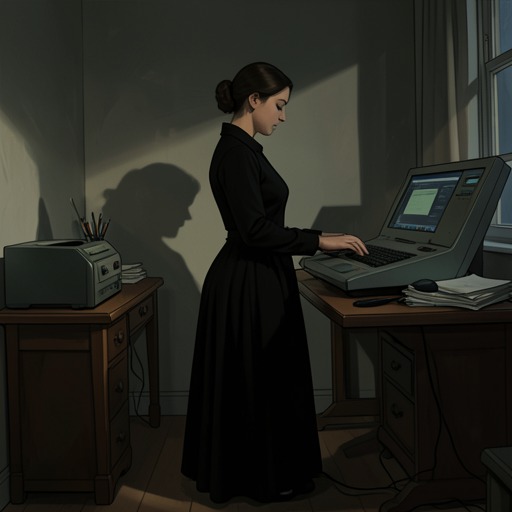
She did not tell Father Ferro or her daughter before acting. At first, she intended to leave a message in the Vatican’s central system, hoping it would reach receptive hands. As she explored further, she discovered INMAVAT, recognized that the protected file contained something important, tested ways in, and relied on more experienced friends for technical advice. She says she visited INMAVAT for a week before understanding what it was. Only later did she decide to manipulate the Pope’s personal computer itself. The progression matters: the message was not simply an impulsive dispatch but the end point of increasingly deep access, undertaken by someone who had learned the system through anonymous digital companionship.
Significance
The message’s route contrasts two systems of communication. In the local church dispute, the old privilege, the Thursday Mass, and the authority of diocesan officials determine what can be done; a priest’s conduct can preserve the church’s rights, while a missed obligation could clear the way for demolition. But Cruz’s account describes local appeals failing to reach either the Archbishop’s Palace or the nunciature. The computer breach supplies an alternate route to Rome, bypassing the ordinary hierarchy by placing the complaint directly before the Pope.
That route is effective precisely because it is both intimate and illicit. The appeal appears on a personal machine, yet its writer remains absent; the official investigation can locate its city of origin and reconstruct pieces of its passage, but not immediately name its author. The eventual revelation changes the meaning of the anonymous intervention. Vísperas is not an outside agent acting on behalf of the parish, but Cruz, whose family history connects her to the church and whose private technical world gives her a means of acting when established channels have failed. The message turns anonymity from a way to evade accountability into a means of making an ignored local conflict visible.