
The Community’s Belief and the Seller’s Fraud
Lazarillo de TormesThis thread traces how public doubt is converted into belief through spectacle, religious language, and collective pressure.
increasing Bearing strength in each event
 decreasing
Bearing strength in each eventdecreasingReluctance to Buy
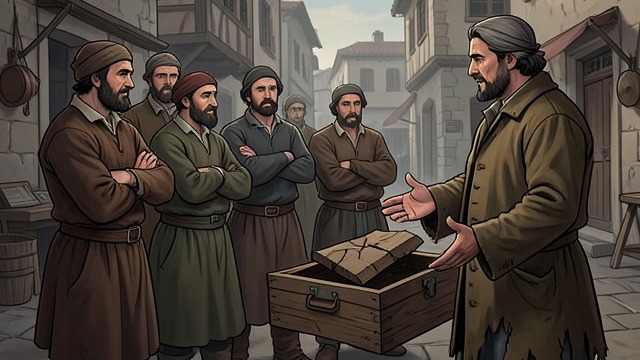
Doubt Blocks the Sale
A Skeptical Community
Villagers have little desire to buy the seller’s indulgences, despite his usual persuasive devices.
Conflict Grows
Their resistance threatens his earnings and motivates a more dramatic strategy.
A Planned Quarrel
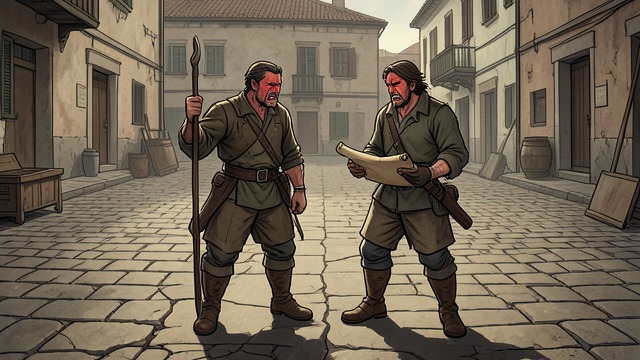
A Credible Accusation Is Staged
Insults in Public
The seller and alguacil argue and accuse one another of fraud.
A Seed of Suspicion
The scene equips the alguacil’s later denunciation with the appearance of spontaneous truth.
The Denunciation
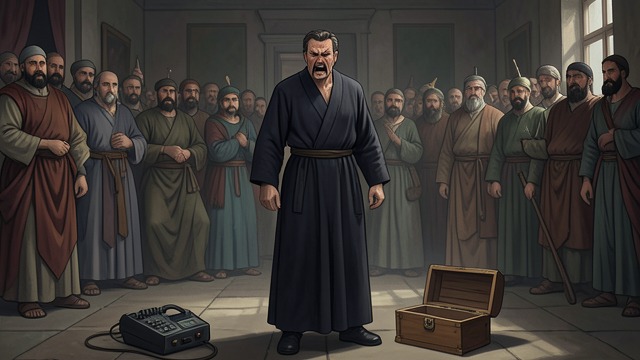
Fraud Is Named Before the Crowd
The Alguacil Speaks
He tells the congregation that the indulgences are false and urges them not to buy.
A Public Test
The seller allows the accusation to stand, making his response appear to expose a higher truth.
A Convulsion as Verdict
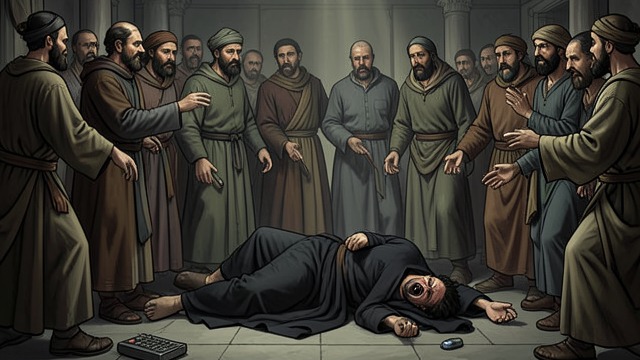
Spectacle Reorders Belief
A Collapse
The alguacil falls, thrashes, and foams at the mouth after the seller prays.
Crowd Interpretation
Fear and religious expectation recast a planned performance as punishment for false testimony.
Collective Purchase
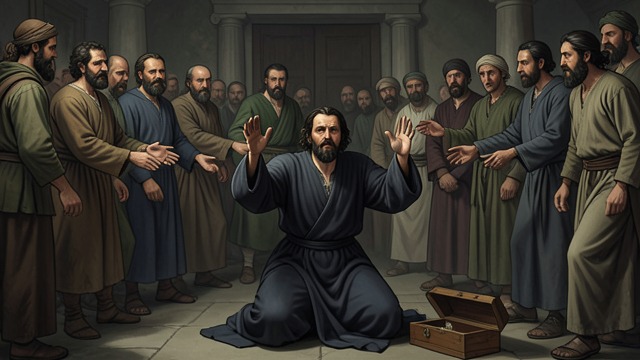
The Crowd Accepts the Story
A Confession
The alguacil claims the devil made him lie, and the seller forgives him.
A Profitable Ending
The villagers buy the indulgences in large numbers, showing how shared belief can be produced and monetized.
After the seller’s initial preaching in a village
The evening before the withdrawal sermon
During the next morning’s church sermon
Immediately after the seller’s invocation
After the alguacil recovers in the church
