Lhasa ro stole the food of the blind and embezzled the alms
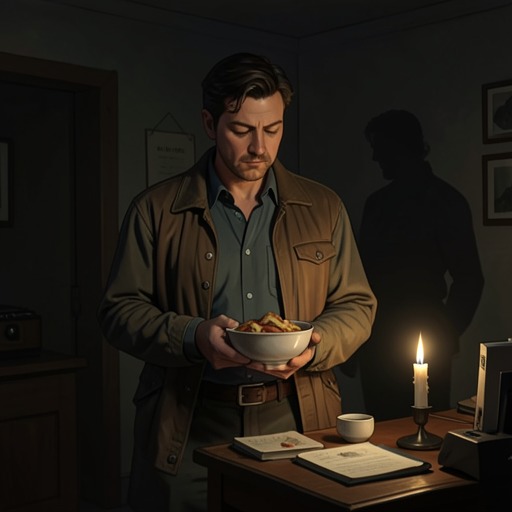
Lazarillo de TormesLázaro’s theft of food and reduction of the blind man’s prayer fees make survival a contest of attention, timing, and material control. Starved by a master who earns well but gives him less than he needs, he secretly cuts into the man’s provisions and skims the alms paid for prayers. The episode establishes hunger not as a passing discomfort but as the pressure that teaches Lázaro to turn observation into a means of staying alive.
Hunger and the Unequal Household
The blind man’s apparent success sharpens the injustice of the arrangement. He earns more in a month than a hundred blind men would in a year, drawing especially large profits from women who trust his claims about remedies and illnesses. Yet, as Lázaro recounts it, the master gives him not even half of what he requires. The disparity between the blind man’s income and Lázaro’s deprivation makes their household an economy of unequal control: one man keeps the food and handles the payments, while the other must use his wits to obtain a share.
The provisions are secured in a cloth bundle, closed at its mouth by an iron ring and padlock. The blind man is so cautious in taking food out and putting it back that Lázaro describes him as allowing no one to steal even a crumb. The lock is more than a practical obstacle: it makes the master’s power over food visible, enclosing bread and other provisions behind a mechanism Lázaro cannot openly command. His response is not to attack the lock itself, but to find the vulnerable point in the bundle’s construction.
Opening the Bundle
After consuming the meagre portion allotted to him in fewer than two bites, Lázaro waits for the blind man to lock away the food and turn his attention elsewhere. He has unpicked and restitched a corner of the seam, creating a discreet opening through which he can reach the provisions without disturbing the padlock. Instead of taking only crumbs, he removes substantial pieces of bread, bacon, and sausage. The seam, apparently a minor weakness, becomes an alternative entrance into a store of food that the formal lock is meant to keep beyond his reach.
Lázaro presents this theft as a calculated answer to ongoing deprivation. He does not describe himself as patching a small leak but as trying to withstand the “diabolical tide” of hunger in which the blind man has left him to drown. The image turns the theft into a countermeasure against a force already acting on him. His ingenuity is real, but it is also constrained: he steals from the food controlled by the man who is supposed to provide for him because the allotted share cannot sustain him.
Half Coins and Interrupted Prayers
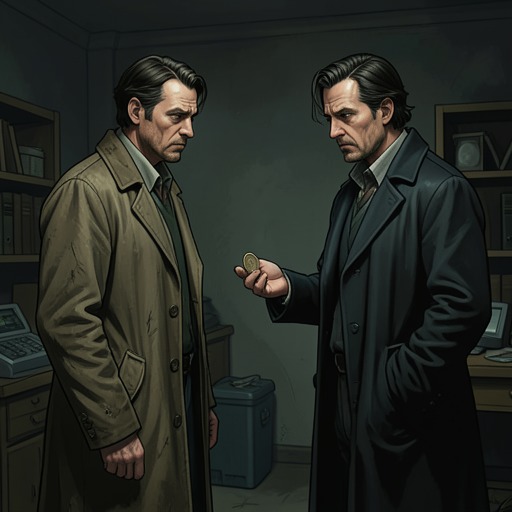
Lázaro also converts what he can steal into half blancas. Since the blind man cannot see, Lázaro intercepts the money offered for a prayer and substitutes a half coin before the master can collect it. The loss is small at each exchange, but it repeatedly shifts part of the alms into Lázaro’s possession. The maneuver depends on a precise mismatch between the blind man’s reliance on touch to identify coins and Lázaro’s speed in handling them.
The blind man notices that the payments have changed. He complains that since Lázaro joined him, people give him only half blancas, whereas before they usually paid a full blanca and sometimes even a maravedí. He suspects that Lázaro is responsible, but suspicion alone does not expose the method. The boy’s advantage rests on the gap between the master’s recognition of the reduced coin and his inability to observe the exchange as it happens.
The master responds by shortening the prayers themselves. He has instructed Lázaro to tug his cloak as soon as the person who paid has gone, using the signal to stop reciting and begin calling out for another customer. The routine makes the transaction a paired economy: Lázaro reduces the payment, while the blind man reduces the service. Their repeated exchange reveals how thoroughly both have learned to treat prayer as paid work, and how each tries to make the other bear the cost of the arrangement.
A Contest of Adjustment
Food and alms show the same pattern of action and counteraction. The blind man’s locked bundle prompts Lázaro to exploit its seam; the half coins prompt suspicion; the shortened prayers help the master recover lost time and solicit more payments. Neither side has complete control. Lázaro’s tactics succeed often enough to make him less hungry and less dependent on his master’s stated allowance, but the blind man’s caution and ability to detect changes force him to keep adapting.
The episode’s significance lies in the knowledge produced by this unequal contest. The blind man’s blindness does not make him helpless: although he cannot see Lázaro’s movements, he secures the food, recognizes coins by touch, notices reduced receipts, and changes his habits when he suspects loss. Lázaro, in turn, learns to read the material details his master relies on—the seam, the lock, the coin, the cloak signal—and to act in the brief interval before those routines close around him again. Hunger becomes a teacher, but its lesson is neither comfort nor escape; it is the sharper skill required to survive under a master who keeps more than he gives.