Mouse
Lazarillo de TormesIn the priest’s household, rats are both a plausible explanation for missing food and a fiction Lázaro learns to make useful. The old chest’s holes give his thefts an alibi: the priest blames rats, unwittingly grants Lázaro more bread, and tries to seal the damage. The nocturnal contest that follows makes hunger visible in the house’s patched wood, while the priest’s mousetrap and the neighbors’ suspicion of a snake extend the deception into anxious farce.
The Rats as an Explanation
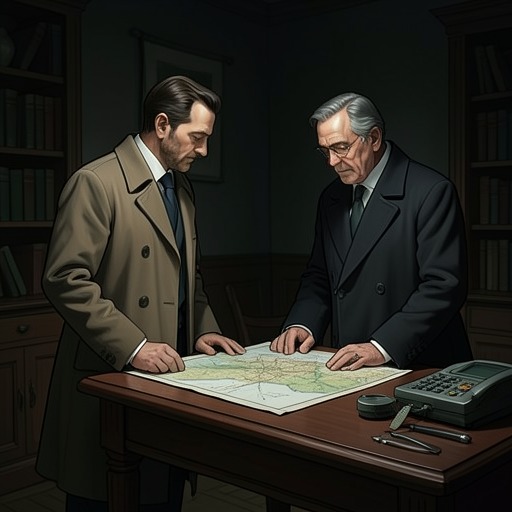
Lázaro’s first opportunity begins when he notices that the priest’s old chest is already worn and punctured in several places. Rather than take a whole loaf and risk discovery, he crumbles bread across nearby cloths and scatters the damage among three or four loaves. The traces look like the work of rats. When the priest opens the chest, he accepts that explanation, points out the holes, and tells Lázaro that rats spare nothing. The theft has succeeded not simply because the chest is vulnerable, but because Lázaro understands how to make its vulnerability tell a convincing story.
The priest’s response even turns the apparent loss into a meal for the hungry servant. He scrapes away the bread he believes the rats have touched and gives it to Lázaro, calling the rat a clean animal. The joke has a material edge: the priest’s suspicion supplies bread that his ordinary ration withholds. Rats become an unwitting accomplice in a household where food is guarded more carefully than it is shared.
A Contest of Repairs and Openings
The priest soon nails up the holes, leaving no opening even for a fly. Lázaro’s old key can still open the chest, but no longer promises food. Hunger instead drives him to a more direct method. While the priest sleeps, Lázaro uses a knife as a drill at the weakest point in the old wood, cuts a new hole, and takes bread that is already broken. The next day the priest sees damage to both the bread and the chest, curses the rats, and begins searching the house for nails and scraps of wood to stop their supposed entry.
The conflict becomes a repeated exchange: the priest closes holes by day, and Lázaro opens them again at night. The chest accumulates nails and patches until its battered condition seems to call its identity into question; the narrator says it would be more accurate to call it an old carcass than a chest. The proverb “Dove una porta si chiude se ne apre un’altra” gives the episode its governing pattern: each repair creates the occasion for another breach. The rat story is comic, but the rhythm beneath it is relentless. The priest acts to protect his food; Lázaro acts to stay alive.
The Mousetrap and the Snake
When the priest concludes that the rotten chest cannot keep rats out, he borrows a mousetrap and sets it inside, baiting it with cheese crusts obtained from neighbors. The device, intended to end the losses, becomes another source of food for Lázaro. He takes the cheese from the trap and continues to nibble at the bread, while the priest finds the bread gnawed and the bait gone but no rat caught. The trap’s failure makes the household’s explanation harder to sustain: if a rat were responsible, the priest reasons, it ought eventually to be trapped.
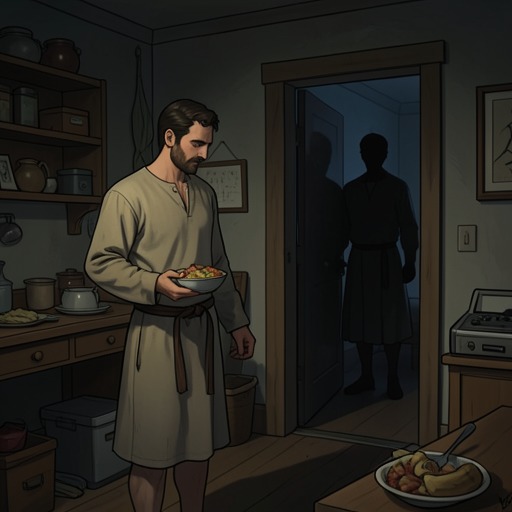
A neighbor offers a different culprit, recalling that a snake had once been in the house. Because it is long, the neighbor suggests, it could reach the cheese while escaping the falling trigger. The suggestion convinces the others and frightens the priest. From then on, the noise of a woodworm at night is enough to make him fear that the snake is gnawing at the chest. He keeps a club by his bed, leaps up to strike at the imagined intruder, wakes the neighbors, and searches Lázaro’s bedding, worried that the animal might hide in the straw or inside the boy’s shirt. The rats that began as a cover for theft thus lead to a larger domestic panic, even as Lázaro’s concealed hunger remains the real cause of the damage.
Hunger, Ingenuity, and Unequal Provision
The episode belongs to a broader pattern in which Lázaro’s access to food depends on working around the people who control it. The priest’s rations leave him hungry, and the chest’s locked, carefully guarded contents make ordinary appeal or access impossible. Lázaro accordingly treats the chest not as a neutral container but as a barrier whose weak points can be studied, opened, and disguised. Crumbling bread, drilling rotten wood, and taking cheese from the trap are different tactics, all shaped by the same practical need.
The narrator calls necessity a great teacher and links hunger to the alertness required to invent these stratagems. The rats are therefore more than a passing joke: they name the false account that makes Lázaro’s survival temporarily possible. His success is real but limited. The priest’s repairs repeatedly threaten to shut off the food, and every apparent solution—patched holes or a sprung trap—produces a new obstacle or opportunity. The episode’s comedy rests on that imbalance: Lázaro can outwit his master over the chest, but only because he must keep finding ways to eat in a household that gives him too little.