Poor country gentleman
Lazarillo de TormesThe impoverished squire is the third master Lázaro serves, and the most revealing reversal in their relationship is that the servant must beg and provide food for the man who is supposed to support him. Immaculately dressed but unable to pay rent or buy provisions, the squire preserves the outward forms of noble honor as his household goes hungry. Lázaro’s mixture of pity and criticism turns the squire’s predicament into an incisive portrait of poverty concealed beneath status.
Identity and Introduction
Lázaro meets the squire while going from door to door in search of a master. The man is decently dressed, carefully combed, and dignified in his walk and bearing. His appearance promises a different life from service under masters who had kept Lázaro hungry through avarice; Lázaro follows him in the hope that a well-presented gentleman will have food at home.
The squire takes Lázaro into a house whose entrance is dark and gloomy, though it has a small courtyard and decent rooms within. He enters with a key drawn from his sleeve, removes his cloak, and asks whether Lázaro’s hands are clean. Together they shake out and fold the garment, which the squire places on a stone seat after carefully blowing dust from it. These gestures establish an exacting concern for decorum, but the house offers no sign of the substantial meal Lázaro expects.
Hunger and Reversed Dependence
The squire explains that he has already eaten breakfast and expects to last until evening, telling Lázaro to manage as best he can in the meantime. Lázaro hears the statement as confirmation that his luck has once again failed him: the new master does not feed him, and the prospect of death from hunger seems close. The household’s hierarchy is reversed almost as soon as it begins, though neither man initially names it so.
The squire leaves each morning with a satisfied air and an erect bearing, while Lázaro goes out to beg for him. Lázaro brings home bread and tripe, reporting that respectable people gave them to him. The squire approves of asking for alms rather than stealing, but tells Lázaro not to let the town know that they live together, because discovery would damage his honor. His concern for appearances persists even when the food in the house has been obtained by his servant’s public begging.
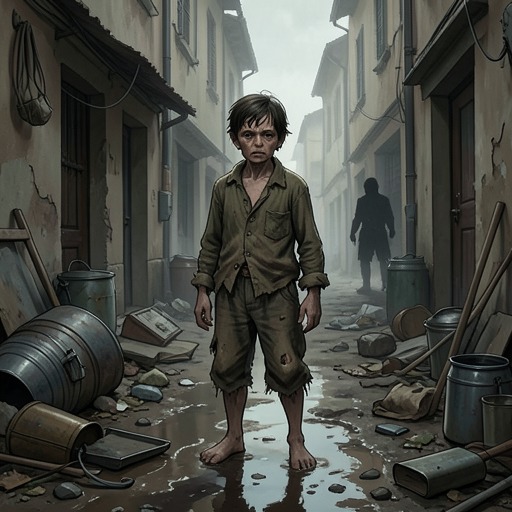
For eight or ten days Lázaro supports them as best he can, often bringing home just enough to feed his master while leaving himself short. He confirms the squire’s poverty by finding a limp velvet purse with not even a blanca in it, nor any sign that it has held money for a long time. This discovery changes the nature of Lázaro’s resentment: unlike the blind master and the priest, who possessed resources yet denied him food, the squire cannot give what he does not have. Lázaro says he feels more pity than anger and would rather serve this destitute man than those earlier masters.
That sympathy does not erase Lázaro’s judgment. He wishes the squire were less proud and would lower his haughtiness to match his wretched circumstances. In Lázaro’s rueful formulation, a hidalgo may lack a penny, but his cap must remain properly set on his head. The squire’s poverty is real; so is his insistence that status must still be enacted through posture, dress, and deference.
Honor, Appearance, and Social Conflict
The squire eventually explains that he is from Old Castile and left his home rather than remove his cap before a local gentleman. The dispute turns on who should greet whom first: though the other man was richer and of higher standing, the squire believed that after he had repeatedly removed his own cap, the gentleman ought on some occasion to have anticipated him. To Lázaro, this is a poor exchange for abandoning one’s home; the squire treats it as a matter of rank that cannot be casually yielded.
He presents the code more fully through the way he describes encounters with a count. If a count does not take off his cap properly, the squire says he will evade him on the next meeting—by entering a house as though occupied or taking another road—rather than be forced to greet him first. An hidalgo, he insists, owes nothing to anyone but God and the king and must never neglect the high regard due to his own person. The principle makes honor less a reward secured by wealth than a status he must continually claim through conduct.
His story about a craftsman gives that claim a sharper, coercive edge. When the craftsman addressed him with a respectful blessing, the squire rebuked him for failing to use the form he considered appropriate for a gentleman. Afterward the craftsman removed his cap when they met. Lázaro questions the squire’s interpretation, asking whether it is not good manners for one man to wish another God’s protection. Their exchange reveals the distance between the squire’s rank-conscious etiquette and Lázaro’s practical, skeptical response.
Lázaro sees the contradiction most clearly when the squire goes out to hear mass, still carrying himself as though he were prosperous. In a bitter aside, Lázaro recalls that his master had spent the previous day without eating anything but a piece of bread the servant had kept in his shirt. The squire had washed his hands and face but, lacking a towel, had dried them on the edge of his coat. To strangers, the mantle and dignified bearing conceal precisely the deprivation Lázaro knows at close quarters. The irony is not simply that the appearance is false: the squire spends his remaining effort sustaining that appearance, even as hunger and dependence expose its cost.
Poverty and the Household’s Last Resort
Their fragile arrangement is further weakened when a poor grain harvest leads the municipality to order foreign beggars out of the city. The public decree threatens captured beggars with flogging. Four days after it is issued, Lázaro sees a procession of poor people driven through the Cuatro Calles under the whip and becomes too frightened to risk begging again.
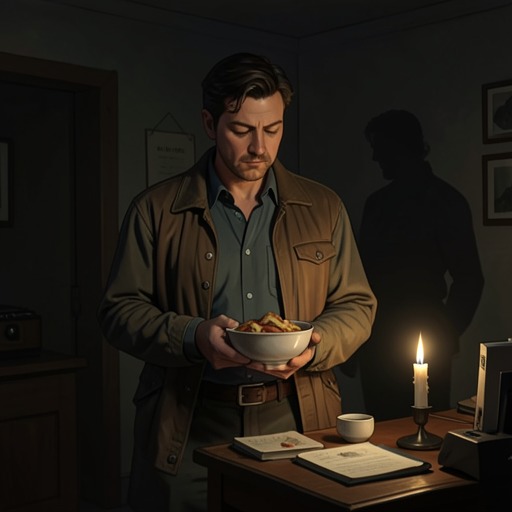
The household falls into silence and hunger. Lázaro says they sometimes spend two or three days without a bite to eat or a word spoken. Neighboring women who spin cotton and make caps give him small amounts from their own scant resources, enough to keep him barely alive. He is especially distressed for the squire, who, as far as Lázaro can tell, has not eaten a single bite in eight days. The squire returns at midday with his body gaunt and dry; yet to protect his honor, he steps outside with a straw in his mouth as if picking his teeth after a meal. Even the gesture that might signal a full table becomes an improvised disguise for its absence.
The squire’s history and the household’s material conditions converge when a man arrives demanding rent and an old woman demands payment for the bed. Their bill for barely two months amounts to more than the squire could have gathered in a year—about twelve or thirteen reales. He tells them he will go to the market to change a double and asks them to return in the evening. Instead, he leaves and does not come back. When the creditors return the next morning, the women can offer only Lázaro and the house key as evidence of his whereabouts; the squire has vanished.
Departure and Narrative Significance
The squire’s flight completes the reversal that began when Lázaro entered his service: rather than a servant abandoning an unsatisfactory master, the master abandons the servant. Lázaro describes himself as left behind by the very man he had been feeding, and the escape exposes the practical limit of their bond. His compassion had been sustained by the squire’s genuine inability to provide, but it cannot prevent the servant from bearing the consequences when the household collapses.
As one episode in Lázaro’s successive service under masters, the squire’s story contrasts deprivation through unwillingness to share with deprivation through inability to give. The blind man and the priest possess food or money and withhold it; the squire has neither, but protects the signs of social standing with the care he gives his cloak, his cap, and his bearing. Lázaro’s access to the hidden household makes that contrast legible: the public sees a gentleman, while the servant knows who has gone hungry and who has begged for their meal.
The episode also advances Lázaro’s changing relationship to survival. With the squire, he does not merely use cunning against a withholding master; he recognizes poverty and chooses pity over the hatred he reserves for those who could have fed him. But the rent demands and flight leave him exposed to other people’s claims, without a master able or willing to protect him. The squire’s polished exterior therefore marks not an escape from poverty but its strained performance—and his departure leaves Lázaro to meet the debt and uncertainty that performance could not conceal.