Reign of Charles V
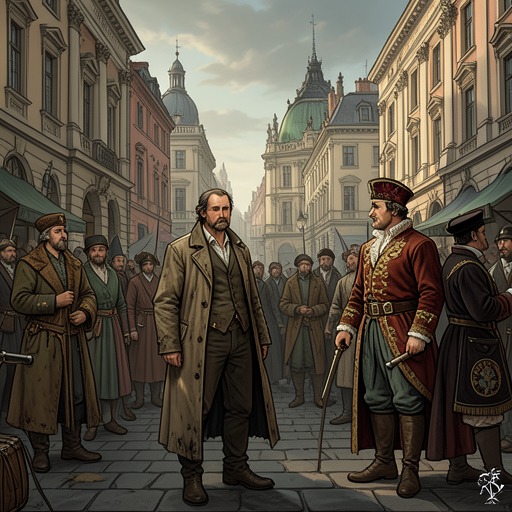
Lazarillo de TormesThe Reign of Charles V is the historical frame against which the Lazarillo sets its account of poverty and social survival. The emperor’s power enters the book not through a portrait of imperial life but through two chronological markers: a campaign at Gerba mentioned in Lázaro’s family history and the Cortes at Toledo used to date his declared prosperity. Both markers are historically ambiguous, while the contrast between imperial Spain and the lives of its poor is central to the work’s social vision.
Historical References
The book’s two principal historical references are the campaign at Gerba recounted in the first chapter and the Cortes at Toledo invoked near the end. Each has two possible historical referents during the reign of Charles V. Spanish forces fought at Gerba in 1510 and again in 1520; the first campaign ended disastrously and became known in popular sayings, while the second was a successful action directed largely against Mediterranean pirates. The Cortes at Toledo were convened in 1525 and in 1538–39.
Chronology and Uncertainty
The proposed span of the story, approximately fourteen to seventeen years, links the two references without resolving them. If Lázaro’s family history points to the 1510 Battle of Djerba, the Cortes at Toledo would be those of 1525; if it points to the 1520 Battle of Djerba, the corresponding Cortes would be those of 1538–39. The identification matters not only for reconstructing the protagonist’s timeline but also for estimating when the novel was composed. The evidence does not permit a definitive choice between either campaign or either meeting of the Cortes.
The Imperial Frame and the Lives of the Poor
The closing reference to the Cortes places Lázaro’s account of his prosperity against the public history of Charles V’s Spain. The novel’s focus, however, is the country left outside official accounts of political and military greatness: beggars, petty thieves, and other people struggling to live, to whom the wealth arriving from the Americas does not reach. Their appearance as protagonists gives the book its strong realist character and helps make it an early modern novel and a formative work in the picaresque tradition.
Social and Religious Context
The reign also frames scenes in which law, official authority, and religious practice shape precarious lives. Lázaro’s father is imprisoned for taking grain from millers’ sacks and later dies on a military expedition; his mother and stepfather are punished after the stepfather’s thefts from the stables are exposed. In Toledo, a poor harvest prompts an order expelling foreign beggars, enforced by the public whipping of those caught begging. Later, the indulgence seller exploits the population’s required attendance at sermons presenting and withdrawing indulgences, turning a religious obligation into an opportunity for a staged fraud. These episodes do not make imperial rule the direct subject of the narrative; they show how ordinary people encounter authority through punishment, scarcity, and the practices of local officials and clergy.