Stingy priest
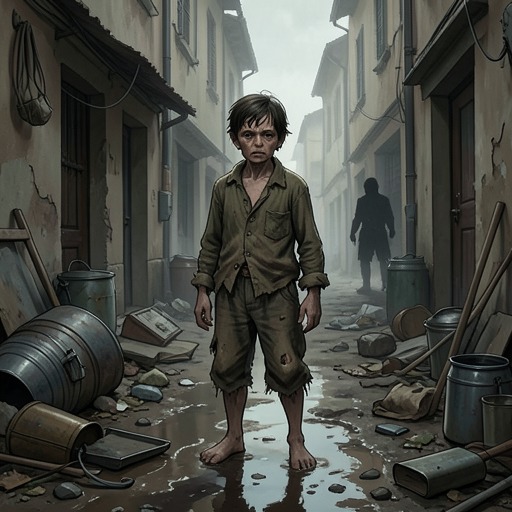
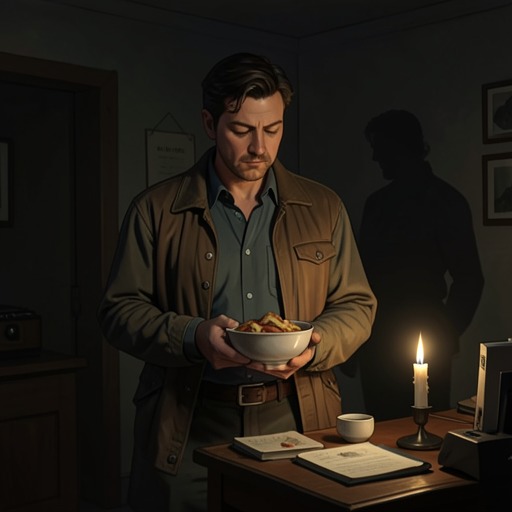
Lazarillo de TormesThe Miserly Priest, the second master of Lázaro de Tormes, makes hunger the governing fact of their service in Maqueda. Though entrusted with church offerings and able to feed himself, he keeps food under lock and key and gives his servant less than he needs to live. Their conflict shifts from Lázaro’s attempts to obtain bread to a dangerous contest over the priest’s cassapanca, and exposes the distance between clerical language and clerical conduct.
Identity and Introduction
The Miserly Priest hires Lázaro after the boy leaves the blind man and comes to Maqueda. Asked whether he can serve Mass, Lázaro says that he can, a skill learned from his previous master despite the harsh treatment he suffered there. The new employment is immediately presented as a reversal for the worse: compared with the priest, the blind man seems generous. The comparison establishes the episode’s bleak measure of improvement—changing masters offers no assurance of escaping hunger.
The Household of Scarcity
The priest keeps the church’s votive bread in an old chest secured by a padlock, carrying its key tied to his cassock. He personally puts each offering away and locks the chest at once. Elsewhere in the house, Lázaro sees none of the ordinary stores that might offer a hungry servant comfort, even by their mere presence. The sole accessible food is a string of onions kept locked in a small room beneath the roof. Lázaro receives one onion every four days, and must return the key immediately; the priest warns him against giving in to appetite.
The priest’s restrictions extend to meals. He spends five blancas a day on meat for lunch and supper, shares the broth with Lázaro, but keeps the meat for himself and gives the boy less than half the bread he needs. On Saturdays, when the local custom is to eat a sheep’s head, he sends Lázaro to buy one for three maravedís. The priest eats the eyes, brains, and meat around the jaws, then leaves the boy the picked bones. The disparity is not simply between a full meal and a meagre one: the master controls the food, its portions, and the terms in which deprivation is presented.
The Locked Chest and the Contest for Bread
Lázaro’s first opening comes by chance. While the priest is away, a tinsmith arrives, and Lázaro asks him to repair the chest’s lock. Once he can open it, the boy takes small amounts of bread, carefully enough to avoid detection. As his hunger grows, he reasons that whole loaves would make their absence obvious, so he crumbles several loaves and leaves the damage looking like the work of rats. The priest accepts the explanation and inspects the chest for holes. Lázaro’s stratagem turns the chest’s age and damage into cover, making the priest’s own suspicion serve the theft.
The priest responds by patching the chest. When he decides that it is too old and rotten to keep repairing, he estimates that replacing it would cost three or four reales and chooses instead to borrow a mousetrap from the neighbours. He baits it with cheese crusts, which Lázaro also eats, while continuing to take bread. The traps and repairs become part of the struggle: each measure meant to defend the food creates another small opportunity for the boy, and the deteriorating chest records the material cost of their unequal contest.
The Key, the Blow, and Dismissal
As the priest’s repairs and precautions tighten the contest, Lázaro turns to the chest itself. Awake at night while his master sleeps, he takes a knife he has set aside and uses it like a drill against a weaker part of the rotten wood. The old chest gives way, leaving him a new opening through which to take bread in the dark. Hunger, rather than comfort or leisure, drives this ingenuity: Lázaro describes need as a great teacher, sharpening the resourcefulness that allows him to stay alive.
The chest’s key offers a more precarious route. Lázaro keeps it in his mouth at night so the priest cannot find it beneath his straw mattress. One night, air passing through the hollow key makes him whistle in his sleep. The priest mistakes the sound for a snake and approaches with his club, trying to strike the presumed animal beneath Lázaro’s bedding. Instead he hits the boy on the head with such force that Lázaro is left unconscious and badly wounded. When the priest brings a lamp, he finds the key still lodged halfway in Lázaro’s mouth; its teeth match the chest’s lock, exposing how the bread has been taken.
Lázaro remains incapacitated for fifteen days. When he can rise, he is no longer in immediate danger, but is still weak and hungry. The priest takes him by the hand, pushes him out of the door, and tells him to find another master, adding that he must have been the blind man’s boy. He then crosses himself as if Lázaro were possessed and shuts the door. The dismissal closes their struggle not with the boy’s escape through a clever trick, but with the discovery of his theft, a severe beating, and the loss of his place.
Clerical Language and Narrative Irony
The priest’s economy is accompanied by a claim to religious restraint. He tells Lázaro that priests must be moderate in eating and drinking, and that this is why he does not gorge himself like others. The narrator undercuts the explanation with a pointed contrast: when meals are paid for at confraternity prayers or funeral vigils, the priest eats voraciously and drinks heavily. His abstinence is therefore selective, imposed on the hungry servant at home but abandoned when someone else bears the cost. The episode’s anticlerical force lies not only in the priest’s cruelty, but in the gap between the pious language used to defend it and his conduct when food is freely available.
That gap also shapes the story’s treatment of religious giving. The bread stored in the chest comes from church offerings, yet the priest guards it from the servant who needs food most. At the offertory he watches the congregation and Lázaro’s hands, counts every blanca, and removes the collection as soon as the offerings are finished. He puts any wine received into the chest and portions it out to last the week. The sacred setting thus becomes part of an intensely material system of surveillance and control: devotion yields provisions, but the priest determines who may consume them.
The larger account of the book identifies this priest as a deliberately negative clerical figure and notes that the episode’s language can caricature ecclesiastical speech. Lázaro recounts the boy’s suffering from the standpoint of an adult writing afterward, so the voice carries both the remembered deprivation and the later telling of it. The priest’s self-justification is consequently exposed by the very details he cannot make fit it: the locked food, the measured portions, and his appetite at other people’s expense. The episode makes hunger a practical force that trains Lázaro’s ingenuity, while setting the priest’s professed moderation against the actions that reveal his miserliness.