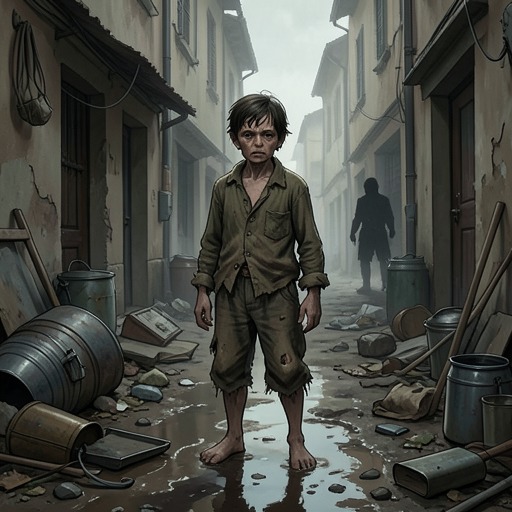
Tomé González
Lazarillo de TormesTomé González is Lázaro de Tormes’s father, a miller whose life joins the family’s poverty to the tale’s recurring entanglement of survival, law, and social respectability. Accused of taking grain from customers’ sacks, he confesses, is imprisoned, and later dies while serving as a muleteer on a military expedition against the Moors. His fate leaves Lázaro fatherless and his mother without protection, setting the material conditions for the boy’s precarious upbringing.
Identity and Background
Tomé comes from Tejares, near Salamanca, and works at a mill on the banks of the Tormes. Lázaro says that his mother gave birth to him inside that mill, where Tomé had ground grain for more than fifteen years; the river gives the child his name. The account thus makes the family’s livelihood and Lázaro’s origin part of the same waterside setting.
Prosecution and Death
When Lázaro is eight, Tomé is charged with making improper withdrawals from the sacks of people who bring grain to be milled. He is imprisoned, confesses rather than denying the accusation, and comes under the pursuit of justice. The narrative does not elaborate on his trial or sentence, but makes clear that the prosecution removes him from the household.
During a campaign against the Moors, Tomé joins the expedition as a muleteer in the service of a knight who takes part in it. Lázaro presents his father as dying alongside his lord, in the role of a faithful servant. His death occurs after his imprisonment and leaves his wife widowed, with a young child and no protection.
Family and Consequences
After Tomé’s death, Antona Pérez moves to the city, rents a small house, cooks for students, and washes clothes for stable boys. Her search for work and connection brings her into the stables, where she meets Zaide. The family’s later dependence on what Zaide brings home—bread, meat, and firewood—extends the economic vulnerability created by Tomé’s absence.
Lázaro’s account remembers Tomé through a morally complicated phrase: he hopes his father is in glory because the Gospel calls the persecuted blessed. The allusion neither erases the accusation nor dwells on condemnation; it places the father’s prosecution within a wry, defensive religious register that recurs in the son’s narration. Tomé’s brief biography therefore establishes an early pattern: poor people’s efforts to get by meet the force of law, while their losses become the starting point of Lázaro’s successive dependencies.