
The Changing Meaning of Knighthood
Le Morte d'ArthurThis flow traces how knighthood moves from a military status to a moral ideal, and how the story measures the distance between them.
increasing Bearing strength in each event
 decreasing
Bearing strength in each eventdecreasingThe Knight as Servant
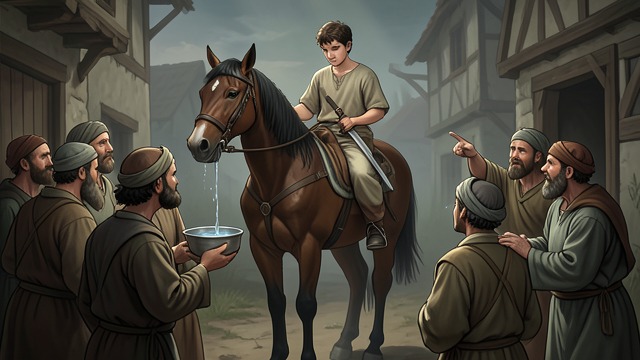
Power Must Serve
A rider becomes a servant
The introduction connects the chevalier’s mounted power with the knight’s duty to serve. Strength is meant to protect the poor, weak, and oppressed rather than merely secure private advantage.
An ideal enters daily life
Religious ritual and feudal obligation help give knighthood a public moral shape. The book’s adventures test whether that shape governs actual behavior.
Education in Service
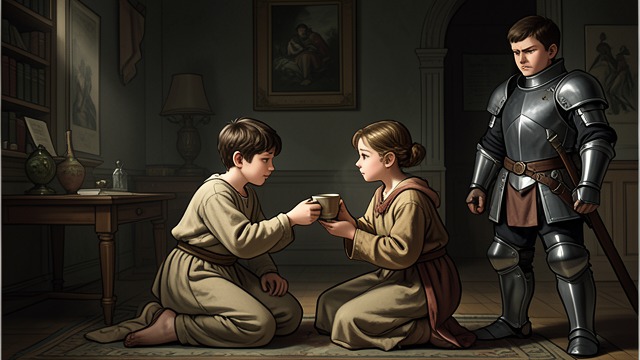
Courtesy Is Learned
A page serves others
Young knights learn obedience, horsemanship, weapon use, and household service. Attending to ladies is presented as an early discipline in respect and self-command.
Birth is not sufficient
The introduction emphasizes that personal merit, not lineage alone, should qualify a man for knighthood. The narrative tests this principle through figures such as Gareth and other overlooked youths.
The Gentleman Among the People
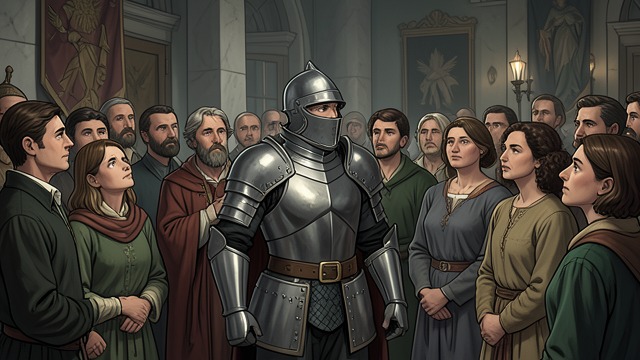
Rank Is Measured by Conduct
Deeds define gentility
The story repeatedly contrasts noble behavior with arrogance, cruelty, and betrayal. A knight’s courtesy matters as much as ancestry or martial skill.
A standard for readers
Caxton’s preface asks readers to imitate the good and leave the evil. The introduction treats the book as a moral storehouse, not a simple approval of every knight’s conduct.
Chivalry and Violence
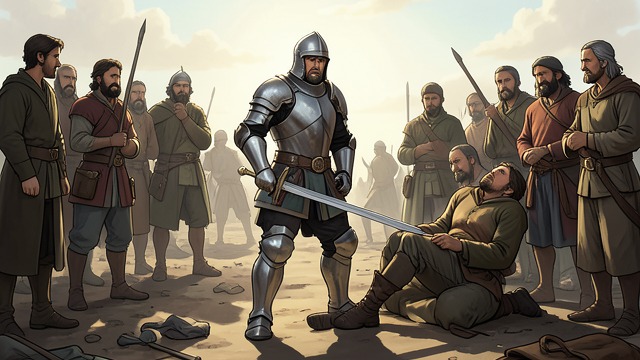
Civilization’s Uneasy Shield
Violence restrains violence
Knights defend kingdoms and the vulnerable, but their weapons can also produce slaughter and private revenge. The same institutions that promise order can generate new disorder.
Better conduct is possible
The narrative distinguishes cruelty from necessary defense, while showing both can become entangled in battle. Chivalry is an aspiration tested under pressure, not a settled achievement.
Manners as Inheritance
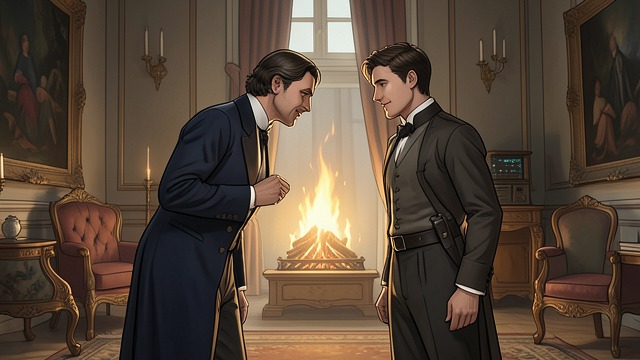
Courtesy Outlives the Castle
Small acts shape life
The introduction argues that politeness, deference, and kindness make room for virtue in ordinary life. Such manners are part of human beauty, not merely a tool for avoiding conflict.
An unfinished inheritance
The old knights’ institutions disappear, but their ideals remain available to later generations. The book’s legacy lies in conduct that can be practiced after the armor and castles are gone.
In the introduction’s account of medieval chivalry
During the childhood and training of noble youths
Across the adventures of Arthur’s court
During the wars between Arthur and rival kings
Near the conclusion of the book and introduction
