
The Knight Without a Name
Le Morte d'ArthurThis flow traces how anonymous and disguised knights move through Arthur’s court, testing whether recognition follows appearance, lineage, or deeds.
increasing Bearing strength in each event
 decreasing
Bearing strength in each eventdecreasingThe Kitchen Youth

Status Conceals Identity
A strange petitioner
Gareth asks for a year of food rather than immediately claiming his royal family. Sir Kay interprets this as evidence of humble birth and mocks him.
Merit remains hidden
Gareth’s noble lineage is real, but his chosen anonymity lets him test the court’s treatment of an outsider. His later recognition exposes the limits of judging by appearance.
The Knight with the Black Shield
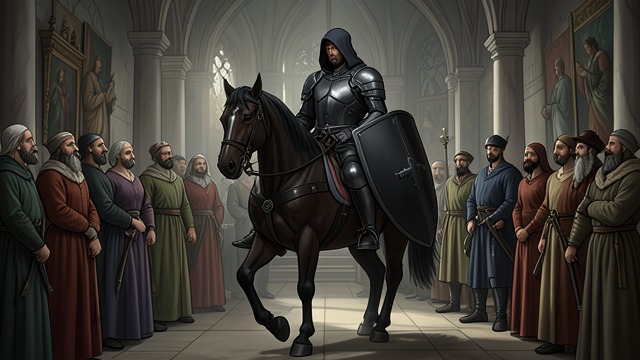
A Disguise Opens a Path
Tristram conceals himself
Tristram enters the tournament under a changed name and bears a black shield. His disguise allows him to challenge Palamides without immediately revealing their history.
Deeds disclose character
Tristram’s skill and restraint create a reputation before his identity is known. The concealed name is temporary; the court eventually learns who has been acting.
Launcelot in Kay’s Armor
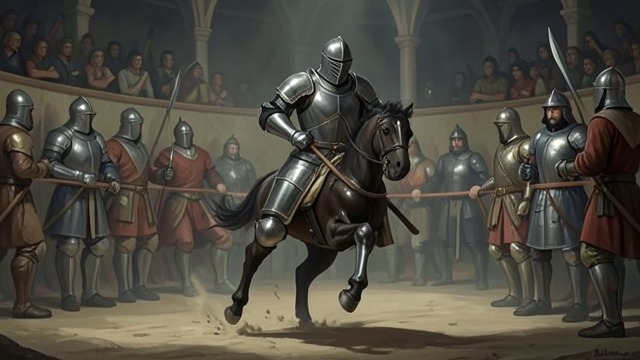
A Familiar Shield Misleads
The knight borrows Kay’s harness
Launcelot rides in Kay’s armor, so other knights challenge him believing he is Kay. He defeats them while concealing his identity.
Reputation crosses disguise
The size and skill of the unknown knight make his true identity imaginable. The disguise protects him from recognition, but his deeds still signal who he may be.
The Many-Colored Knight

Gareth Hides in Plain Sight
A ring changes colors
Gareth uses Liones’ ring to alter the appearance of his arms, appearing in different colors as he rides. His disguise lets him compete without immediately revealing his name.
Recognition follows the tournament
A herald finds Gareth’s name on his helm, and the court understands who has won. His identity arrives after his merit has already been established.
The Red-Sleeved Champion
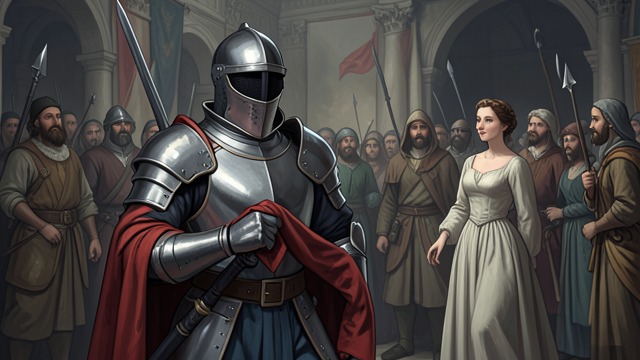
A Favor Becomes a Sign
Launcelot wears Elaine’s sleeve
Launcelot accepts a sleeve from Elaine and competes under its sign. The token hides none of his identity, but reveals a relationship that others interpret differently.
Public meaning exceeds intent
The queen sees the sleeve as a rival’s favor, while Elaine sees it as a promise of affection. The same object becomes a mirror for different hopes.
At Gareth’s arrival in Arthur’s court
During Tristram’s Irish tournament
During Launcelot’s wandering before Pentecost
During the Assumption tournament at the Castle Perilous
During the Winchester tournament
