Sir Uwaine
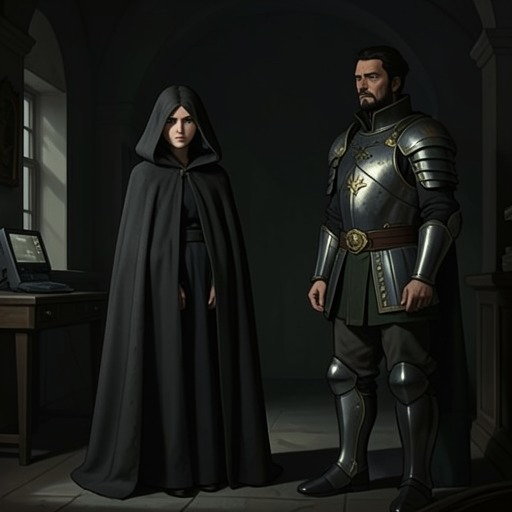
Le Morte d'ArthurSir Uwaine, also called Uwaine le Fise de Roy Ureine and Uwaine le Blanche Mains, is the son of King Uriens and Morgan le Fay, and a knight of Arthur’s court. His episodes repeatedly place him at the meeting point of kinship, fellowship, and combat. He rescues his father from Morgan’s attempted killing, wins a long fight that restores a lady’s lands, and later refuses a challenge from Sir Gaheris because they are fellow knights and cousins.
Identity and Family
Sir Uwaine’s parentage gives his conduct a double significance: he belongs both to the courtly world of Arthur and to the family of Morgan le Fay, whose plots threaten the king and her own husband. The narrative identifies him as Uriens’s son when he intervenes in his mother’s attempt to kill the sleeping king. Later, he names himself to Sir Tristram as Uwaine le Fise de Roy Ureine, while another passage records that some called him Uwaine le Blanche Mains.
The family connection is not merely background. Morgan’s treachery places Sir Uwaine in a direct conflict of obligations, and Arthur’s suspicion of him eventually leads to his expulsion from court. Sir Uwaine’s actions in these scenes distinguish his loyalty to his father and his own knightly conduct from his mother’s designs.
Saving King Uriens
While Morgan believes Arthur dead, she sees an opportunity to kill her husband, King Uriens, as he sleeps. She orders a maid to bring her his sword. The maid instead wakes Sir Uwaine and warns him of the plan. He tells her to go on, then waits for his mother to approach the bed with the weapon.
As Morgan raises the sword, Sir Uwaine seizes her hand and stops her. He condemns the intended act and tells her that, were she not his mother, he would strike her down. Morgan asks him for mercy, saying she was tempted by a devil, and promises not to repeat the deed. Sir Uwaine agrees to forgive her on the condition that she never again attempt such an act. The scene resolves the immediate threat through his intervention, but leaves a sharp division between the family bond he honors and the crime he prevents.
Exile and the White Shield
After Morgan’s enchanted mantle kills the woman who brings it to Arthur, the king concludes that his sister is still plotting against him. Though he says he does not greatly suspect Uriens, he distrusts Sir Uwaine and orders him out of court. Sir Gawaine responds that whoever banishes his cousin will banish him too, and the two depart together. Their shared exile carries Sir Uwaine from the royal court into a forest adventure.
There they see twelve damsels spitting on and throwing mud at a white shield. The women explain that it belongs to Sir Marhaus, whom they say despises ladies and gentlewomen. Sir Uwaine knows Marhaus by reputation and says he is an exceptionally good knight, recalling that no one could withstand him at a tournament. He and Sir Gawaine question the women’s treatment of the shield and leave shortly before Marhaus arrives. The episode sets Sir Uwaine’s respect for a proven knight beside the damsels’ grievance, while leading directly toward their encounter with Marhaus.
Fighting for the Lady of the Rock
In a later adventure, Sir Uwaine agrees to fight two brothers after an agreement that neither side will use treason. The brothers break their spears against him, and he then dismounts to continue the combat on foot. They wound him severely, and the fight lasts five hours. At last Sir Uwaine strikes Sir Edward so hard that his sword cuts to the collarbone; Sir Hue then loses heart and yields.
Sir Uwaine accepts Sir Hue’s sword and takes him by the hand, showing mercy to the surviving opponent rather than pursuing the fight to its most violent possible end. The lady of the Rock is glad, and her lands are restored to her. Sir Hue is ordered to appear at Arthur’s court at the next feast of Pentecost. Sir Uwaine remains with the lady for nearly half a year while recovering from his wounds. His victory thus secures the lady’s inheritance, but the success comes at the cost of a long recovery and delayed return to the company of other knights.
Fellowship, Combat, and Restraint
Sir Uwaine’s later encounters test whether prowess must always answer a challenge. When Sir Tristram wounds Sir Lucan the butler and defeats Sir Uwaine in a subsequent encounter, the episode shows Sir Uwaine taking up combat against a formidable opponent; Sir Tristram says he would rather not fight him, but Sir Uwaine insists. Their meeting ends with Sir Tristram overcoming him and returning to his lodging.
In Cornwall, Sir Uwaine challenges the knights present and defeats Sir Andred and Sir Dinas. Sir Gaheris then rides out to meet him, but Sir Uwaine recognizes him and reminds him of the oath he swore on becoming a Knight of the Round Table: not knowingly to fight a fellow member. He acknowledges that he is capable of meeting Gaheris in combat, but points out that they are sisters’ sons. Sir Gaheris is ashamed, and the knights part without fighting. Sir Uwaine’s refusal is not fear or inability; he explicitly protects both the fellowship’s pledge and their kinship.
Later, Sir Dinadan recognizes Sir Uwaine among six knights of Arthur’s court resting by a well. His presence among that company reaffirms his place in the Round Table fellowship, after episodes of exile, wandering, and conflict. Across these scenes, the narrative presents a knight who can fight for another person’s rights and endure the consequences, but who also treats an oath between companions as a limit on what prowess permits.