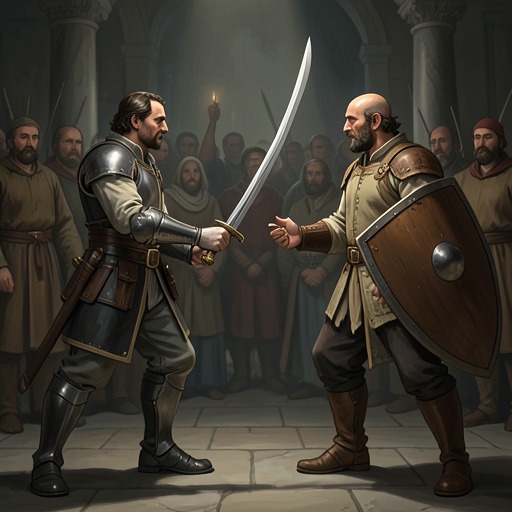
Transience of worldly glory
Le Morte d'ArthurThe Transience of worldly glory is the book’s closing lesson about the limits of kingship, conquest, beauty, and knightly fame. Its final reflection sets the once-feared King Arthur, Queen Guenever, and Launcelot—figures who possessed sovereign power, royal splendor, or peerless prowess—against their lowly graves. Their remembered greatness and bodily ruin make worldly honor appear both real and impermanent: the book preserves their fame even as it insists that no earthly eminence can withstand death or the instability of life.
The Closing Meditation
The final note addresses powerful lords and accomplished knights as people surrounded by the signs of worldly security: extensive realms, fortified castles and towers, and wealthy cities. Yet these possessions belong to an unstable life. The meditation asks its audience to look at Arthur, whom the world once feared, and Guenever, once enthroned amid gold, pearls, and precious stones; both now lie in graves beneath earth and clay. It then turns to Launcelot, once so formidable in arms, now feeble and faint in the grave. The parallel between royal display, martial power, and bodily frailty makes the argument concrete: rank and prowess may distinguish a life, but neither prevents its end.
Fame, Virtue, and the Book’s Purpose
The ending does not dismiss knightly achievement as meaningless. It says that the book recounts the gracious, virtuous warfare of noble knights and the lasting praise they won, and urges readers to follow their worthy deeds. But this praise is placed within a moral discipline: readers should fear God, love righteousness, and serve their sovereign faithfully and courageously. Triumph calls for greater meekness, not self-assurance, because the world is deceptive and unstable. The book thus holds two truths together: virtuous conduct can earn remembrance, while worldly success cannot guarantee permanence or salvation.
The Theme Across Arthur’s Reign
The contrast between precarious power and rightful rule appears well before the conclusion. When Uther Pendragon dies, the succession is unsettled: powerful lords strengthen themselves, and many expect to become king. His blessing names Arthur as heir, but the realm remains in jeopardy. Arthur’s later recognition through the sword in the stone, his coronation, and his promise to govern with true justice answer that uncertainty with a claim to legitimate rule. His restoration of lands taken from their owners gives justice a practical political form, while the expansion of his authority through warfare shows that even a promising reign is bound to the hazards of power.
Oaths, Sovereignty, and the Limits of Dominion
The fragility of political order is also visible in the eleven kings who bind themselves by oath to destroy Arthur. Their coalition gathers a vast force, turning affront and rivalry into a threat to the king’s rule. Later, Roman ambassadors demand tribute in the name of Emperor Lucius and the empire’s inherited claims over Britain. Arthur refuses the demand, denies that he owes tribute to any earthly prince, and asserts his own claim to sovereignty; his allies promise military support. These confrontations make authority a matter of inheritance, obligation, and force, not an uncontested possession. Read beside the closing graves, the struggles over kingship and empire acquire a larger measure: even the greatest political claims belong to a worldly order the book calls unstable.
The Book as a Warning and a Remembrance
The conclusion makes the book itself part of the theme. It recommends repeated reading as a means of learning virtuous conduct, yet its instruction begins by showing what became of the people whose deeds it preserves. The remembered honor of Arthur, Guenever, and Launcelot survives in narrative, while their earthly splendor and strength do not. This is the distinction on which the ending rests: fame can continue as a record and moral example, but it is not the same as lasting worldly power. The final appeal asks those who enjoy triumph to become humbler, mindful that fortune changes and earthly honor is dangerous to desire without restraint.