
The Choice Between Two Kinds of Honor
Le Morte d'ArthurThis flow traces the repeated tension between public fame in arms and the quieter obligations of mercy, honesty, and faith.
increasing Bearing strength in each event
 decreasing
Bearing strength in each eventdecreasingA Sword Confers Kingship
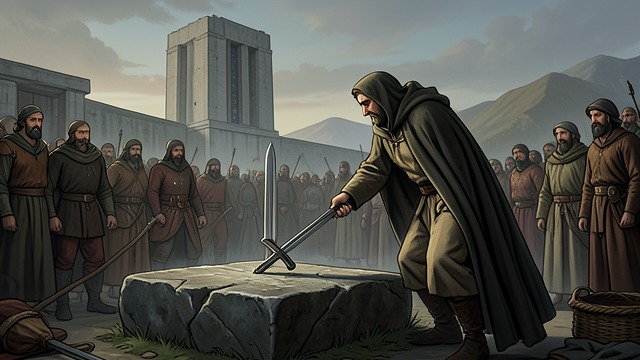
Authority as a Sign
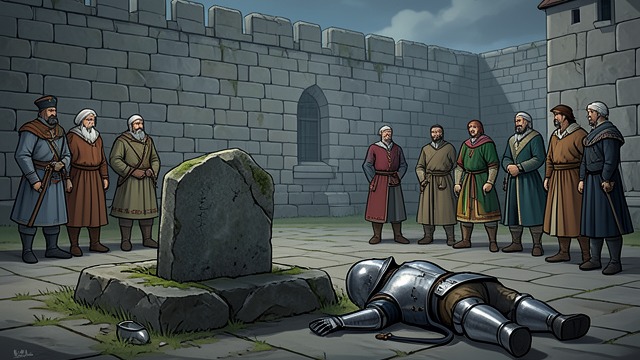
A sword in the stone
The sword announces the rightful king through a test that power and birth cannot simply command. Its public presence gives a visible sign to a divided realm.
The sign requires conduct
Arthur’s legitimacy is not completed by drawing the sword. He must restore lands, keep justice, and build relationships that make royal power useful.
Worship Requires Mercy
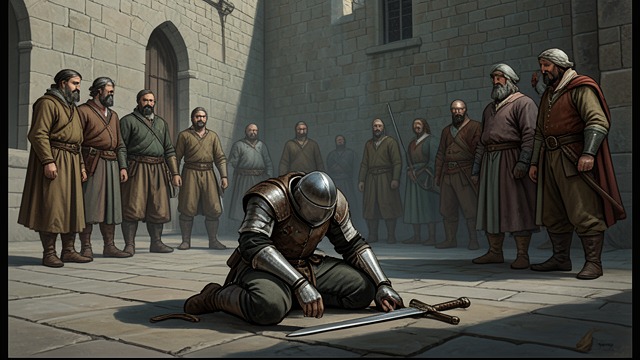
Honor Beyond Victory
A defeated knight asks mercy
Arthur’s code warns against cruelty and requires knights to spare those who ask. The stories make a knight’s response to a plea as revealing as his skill in combat.
Reputation is moral, not only martial
Gareth’s victories are strengthened by restraint, while other knights lose honor through revenge. The story makes worship depend on conduct as well as battlefield success.
A Knight’s Name and Deeds
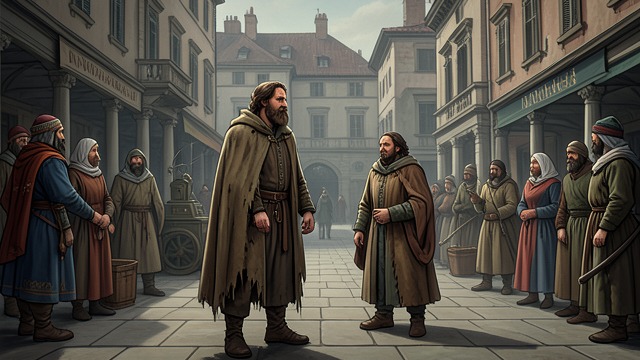
Identity Is Earned
Names can conceal or wound
Gareth receives the mocking name Beaumains, while La Cote Male Taile accepts a name created in scorn. Neither identity determines the worth of their deeds.
Recognition follows action
Their courage and loyalty gradually turn ridicule into respect. The narrative asks readers to judge knights by how they act, not by clothing, lineage, or reputation alone.
A Knight Must Choose His Quarrel
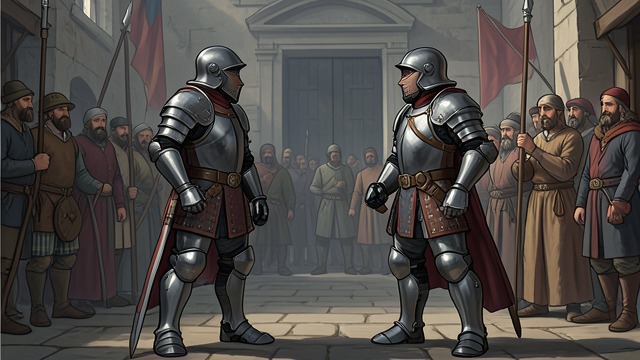
The Cause Matters
Not every challenge is righteous
Knights are repeatedly tempted to fight for pride, love, or vengeance. The story distinguishes just defense from combat undertaken for vanity or malice.
Judgment remains imperfect
Even a good knight can misread a situation, as Launcelot does in the press of battle. The moral burden lies in choosing the quarrel carefully and accepting its consequences.
Glory and Its Afterlife
Fame Is Not Salvation
The great are brought low
Arthur, Guenever, and Launcelot lie in graves after lives of extraordinary renown. The narrator’s reflections make earthly power visibly temporary.
Inheritance remains
Their manners and ideals pass to later readers, even when their realm and fellowship have vanished. The story values noble conduct while warning against the desire for glory alone.
At the Christmas gathering after Uther’s death
During the early Round Table adventures
During the Gareth and La Cote Male Taile adventures
During the Grail quest and later court conflicts
At the deaths and burials of the final knights
