
The End of the Round Table Fellowship
Le Morte d'ArthurThis flow traces the fellowship’s formation, its high point, and its final disintegration into death, exile, and religious retreat.
increasing Bearing strength in each event
 decreasing
Bearing strength in each eventdecreasingArthur’s Table Is Given
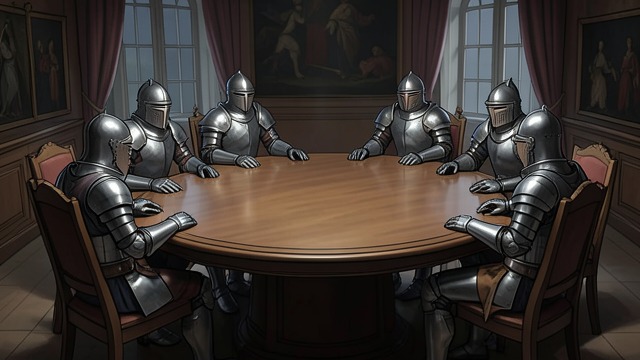
A Shared Institution
A gift accompanies marriage
King Leodegrance gives Arthur the Round Table and knights to sit at it. The gift strengthens the marriage alliance and gives the court a lasting emblem.
A fellowship forms
The knights’ seats and oaths establish a community greater than any one adventure. Their common identity becomes the measure against which later divisions are judged.
The Table at Its Height
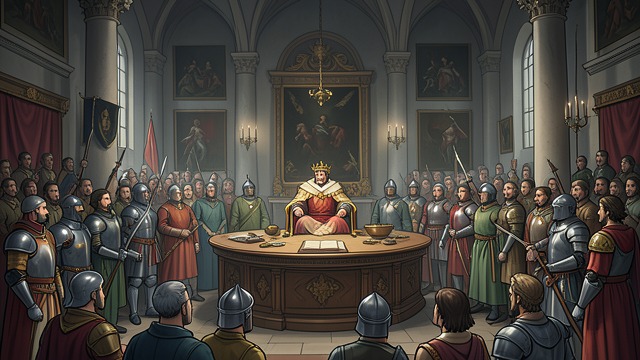
Knights Serve the Crown
A renowned court
Kings, princes, and knights gather around Arthur, and the Round Table’s members win fame across Britain and beyond. Their victories strengthen the king’s authority.
Prosperity creates confidence
Feasts and tournaments suggest a world where courage and courtesy can work together. Yet the fellowship’s size cannot prevent personal rivalry or spiritual failure.
The Grail Separates the Knights
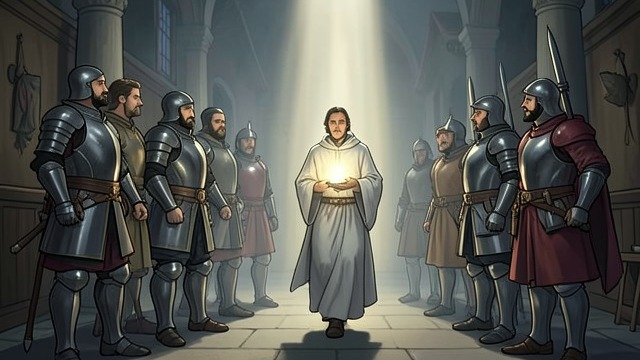
A Shared Vow, Different Outcomes
Knights depart together
The Grail’s appearance leads the Round Table to take a common vow. Their departure is mourned by the court because it threatens the fellowship’s daily life.
Worthiness diverges
Only a few knights achieve the quest, and many do not return. The Grail divides the fellowship according to spiritual character rather than military rank.
The King’s Court Divides
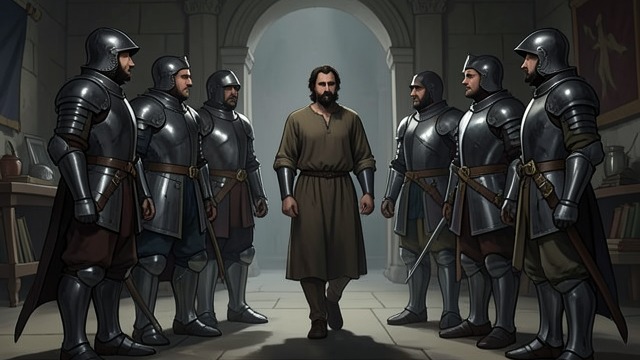
Friends Become Enemies
Launcelot acts for Guenever
His rescue kills knights loyal to Arthur, including members of Gawaine’s family. Gawaine’s grief becomes a demand for war.
The institution loses trust
The Round Table’s common oaths no longer guide its members’ actions. The court divides into factions and can no longer serve as a shared center.
A Fellowship Ends in Memory
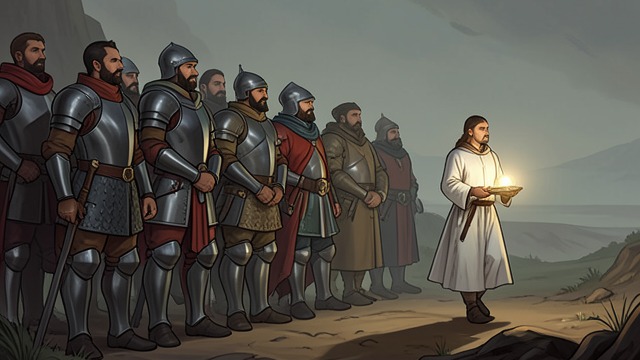
The Knights Depart
The survivors scatter
Bors and several companions leave for the Holy Land; others become hermits. The Round Table ceases to function as a living fellowship.
A moral inheritance remains
The book closes by preserving the knights’ manners and failures together. The fellowship survives as a story readers can judge, rather than a body that can be reassembled.
At Arthur’s marriage to Queen Guenever
During Arthur’s successful reign and imperial campaign
At Pentecost when the Grail quest begins
After the queen’s condemnation and rescue
After Launcelot’s burial and Constantine’s succession
