Sir Palamides
Le Morte d'ArthurSir Palamides is a celebrated Saracen knight, distinguished by exceptional courage and skill but repeatedly measured against the gentleness, meekness, and delicate honour associated with the Christian knight. His story is shaped by two persistent pursuits: the Questing Beast, which he vows to follow, and La Beale Isoud, whose love for Sir Tristram makes Palamides a rival. His eventual baptism does not end his adventures; it marks a change in religious status within a career still defined by combat, service, and the pursuit of the beast.
Identity and Chivalric Reputation
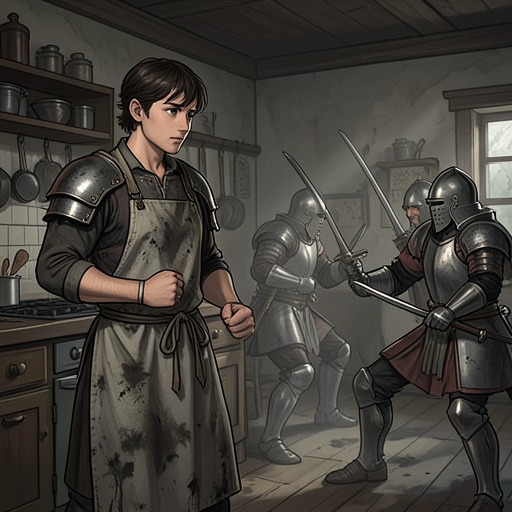
Sir Palamides is presented as a capable and formidable knight, not as a warrior whose Saracen identity precludes fidelity or good conduct. When the people of the Red City welcome him, they praise his bearing and physical fitness, and the narrative describes him as faithful, true to his promise, and well conditioned, though not baptized. His courage and chivalric skill are unquestioned; what distinguishes him from the Christian ideal is a lack, in the book’s evaluative terms, of gentleness, meekness, and a refined sense of honour.
That contrast does not make him a simple foil. Palamides can recognize when conduct would be dishonourable, show mercy, and serve people beyond his own interests. His story repeatedly places physical prowess beside moral judgment: he may defeat a knight decisively, yet refuse an unfair advantage; he may pursue a woman who does not return his love, yet perform acts of rescue and protection. The tension between his formidable public reputation and his capacity for restraint gives his recurring appearances their shape.
The Questing Beast and His Vow
Palamides’s pursuit of the Questing Beast is a defining commitment. He makes an avow that he will not be baptized until he has achieved the beast, whose significance is associated with Merlin’s prophecy. At the same time, he has vowed not to receive full baptism until he has fought seven battles within the lists. The vows bind his religious transition to both an extraordinary quest and a series of martial trials.
The beast remains a recurring direction for his life rather than a quest completed in the surviving episodes described here. He follows it after the Round Table fellowship separates, and the ending leaves him still on its trail. This continuing pursuit stands alongside, rather than replacing, his other attachments and conflicts: his rivalry over Isoud, his dealings with Tristram, and his service to those who call on his prowess.
Rivalry with Tristram and Isoud
Palamides’s love for La Beale Isoud brings him into direct rivalry with Tristram. When Tristram is recovering in Ireland from a poisoned wound, Isoud tends him, and he grows to love her; Palamides, already cherished at the court, also loves her and offers gifts. Tristram notices his attentions and resents them. At a tournament, Isoud secretly equips Tristram in a white horse and armour, while Palamides, bearing a black shield, defeats numerous knights, including Gawaine, Gaheris, Agravaine, Bagdemagus, Kay, Sagramore le Desirous, and Griflet.
Tristram then enters the field in disguise. Palamides recognizes and challenges him, but Tristram knocks him down at the first stroke. He demands that Palamides forsake Isoud and wear no armour for a year and a day. Palamides swears to obey and, in anger and shame, cuts off and discards his harness. The defeat establishes Tristram’s immediate advantage, but it does not extinguish Palamides’s attachment or resolve their rivalry.
The conflict returns in further encounters. A chapter heading records that Tristram rides after Palamides and fights him until Isoud brings the battle to an end. Later, when the two meet while Tristram is unarmed, Palamides refuses to press his advantage: he judges that killing a naked opponent while himself armed would bring dishonour. His refusal makes explicit that the rivalry is governed not only by desire and competitive pride but also by a code of fair combat.
Combat, Service, and Restraint
Palamides’s strength is repeatedly demonstrated in public contests and encounters with other knights. He fights Sir Galahalt, and he is also connected with Sir Dinadan in the account of their meeting. In a pursuit of the Questing Beast, he strikes down both Tristram and Lamorak with a single spear. His success, however, does not prevent recognition of another knight’s claim: after fighting Lamorak, Palamides learns his identity, kneels, and asks mercy, acknowledging that he had wrongly demanded battle after witnessing Lamorak’s exertions.
He is also shown in peril and rescue. When Bragwaine is found bound in the forest after being sent there by two hostile ladies, Palamides frees her and takes her to a nearby nunnery to recover. Isoud, grieving for her attendant, later accepts Palamides’s offer to bring Bragwaine back. He does so, although Bragwaine is reluctant to leave the nunnery because she had risked her life for Isoud. The rescue reveals a practical benevolence alongside Palamides’s unreturned love: he can help Isoud through an act that does not secure her affection.
A later episode turns on loyalty and misrepresentation. Palamides believes that Sir Bors and Sir Ector have wronged him, and in distress he throws his sword into a fountain. Tristram recognizes him as one of the best knights in the realm, though Palamides does not recognize Tristram in return and tells Dinadan that Tristram will not escape him if they meet. Dinadan reminds him that he has already had Tristram in his power and gained little honour from the encounters. The exchange punctures Palamides’s boasts without diminishing his acknowledged prowess.
Palamides also answers a call for vengeance in the Red City. After hearing the account of King Hermance’s betrayal and seeing the letter concerning the crime, he agrees to avenge the king’s death. The city’s people welcome him despite his unbaptized status, emphasizing his reputation for keeping faith and promises. In combat against Helius and Helake, he kills Helake, is unhorsed by Helius, and continues the struggle. Elsewhere, Sir Launcelot recognizes Palamides’s labour in a tournament and allows him the honour of the day, even while warning him that his love for Isoud may be discovered by Tristram.
Conversion and Continuing Pursuit
Palamides’s conversion is prepared by the vows that have delayed baptism, but it comes through his relationship with Tristram. When Tristram asks about his status, Palamides explains that he believes in Jesus Christ and Mary but has one battle remaining before he will be baptized. Tristram refuses to let the vow continue to delay his conversion. He arranges to take the armour of a knight Palamides has defeated, so that he can fight and complete Palamides’s remaining obligation.
Their ensuing combat lasts more than two hours. Tristram strikes Palamides repeatedly, while Palamides cuts away pieces of Tristram’s shield and wounds him. Palamides nevertheless holds back at points because he fears Tristram’s strength. At the close, he asks Tristram to forgive his offence, requests confession, and asks to be baptized. He says that Isoud has brought him much of his honour and that he has not dishonoured her personally; he distinguishes that attachment from the offence he has committed against Tristram. Tristram grants forgiveness, and Palamides proceeds to baptism.
The conversion changes Palamides’s religious standing without closing his narrative arc. When the Round Table knights disperse, Tristram returns to Joyous Gard, while Palamides follows the Questing Beast. The conclusion thus leaves him in motion: no longer awaiting baptism, but still pursuing the creature that had governed his vows. His career holds together martial excellence, rivalry, service, and a gradual capacity to temper force with honour, while preserving the unresolved quest that defines his final direction.