Trial of Meister Eckhart
LongingThe Trial of Meister Eckhart turned a dispute over mystical theology into a test of how far a preacher could express the soul’s union with God without being judged to endanger Christian teaching. It unfolded amid heightened suspicion of heresy: authorities feared that people might mistake claims about mystical experience for permission to disregard moral obligations. Eckhart defended his ideas before Church commissions, but the process continued to Avignon and its formal judgment came after his death, leaving the controversy unresolved in the simple sense of either vindication or condemnation.
Causes and Background
By the early 1320s, Eckhart had become a prominent Dominican preacher and spiritual director. In late 1323 or early 1324 he moved from Strasbourg to Cologne, an intellectual center of the Dominican Order in Germany. His preaching attracted friars, nuns, beguines, and ordinary listeners seeking transformation in God. He increasingly preached and wrote in German rather than the customary Latin, because he wanted people without formal education to understand spiritual teaching. That accessibility was part of his pastoral purpose, but it also made the interpretation of his language a matter of institutional concern.
The atmosphere in Cologne was already charged by anxiety about the Brethren of the Free Spirit. They were said to teach that people who had experienced mystical union with God were no longer bound by moral teaching. Church authorities therefore feared that unusual formulations about the divine life within the soul could be taken as a license to sin. The account distinguishes Eckhart’s teaching from that position: the concern was that an uneducated audience might misunderstand a mystic, not that Eckhart openly endorsed the Brethren’s claim.
His theology gave the scrutiny a specific focus. Eckhart taught that the soul had a ground untouched by anything other than God, and that the birth of the Word in the soul belonged to the life of mystical transformation. He also urged detachment from inadequate images and ideas of God. Some later historians observed that teachings condemned in the proceedings had parallels in the Church Fathers. The investigation thus concerned not only the wording of particular propositions but also whether a bold mystical vocabulary could be reconciled with orthodox teaching and responsibly communicated to listeners.
The Proceedings at Cologne and Avignon
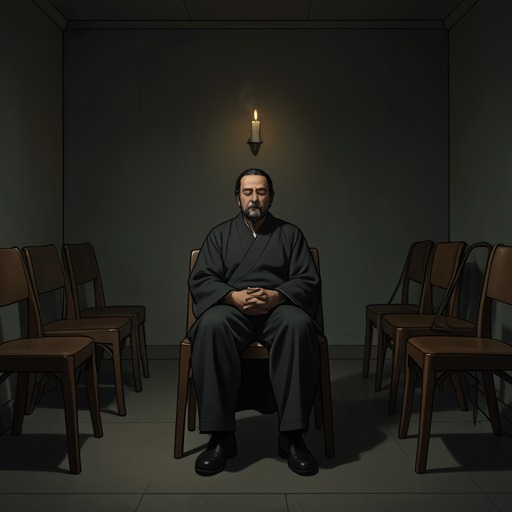
In 1326 Eckhart appeared before a diocesan commission in Cologne to answer a charge of heresy. The opening account presents the appearance as a serious and dangerous confrontation, not a routine exchange about theology. Eckhart was willing to renounce errors in his preaching or writing, but that willingness did not satisfy the inquisitors. The pope had appointed two commissions to investigate his ideas, and the case proceeded beyond the local hearing.
Eckhart wanted the matter referred to Avignon, where the papacy then resided. He set out for France accompanied by members of his religious order. The journey shifted the dispute from a diocesan inquiry to a papal proceeding, while the suspicion surrounding mystical teaching remained in the background. At the papal court in 1327, Eckhart was prepared to retract any error. The account does not describe a successful defense: it notes that he was near the end of his life and that he did not put up a good defense.
The scale of the examination narrowed as it went forward. Investigators considered 150 articles, which were ultimately reduced to twenty-eight. Eckhart denied having preached two of them. He also drew a distinction between error and heresy: error, he argued, concerned the intellect, whereas heresy concerned the will. The distinction did not halt the proceedings. It reveals the central difficulty of the case: Eckhart could concede the possibility of intellectual error while resisting the conclusion that such error made him a heretic.
Judgment and Aftermath
The following year, a papal bull listed the twenty-eight articles. Seventeen were judged heretical; the remainder were said to bear the mark of heresy. By then Eckhart had died. His death meant he could no longer be treated as a living threat, but it did not erase the judgment or the dispute about what he had taught. His followers believed Church authorities had misunderstood him, and the contested status of his ideas continued to cast a shadow over his reputation.
The account also records a qualification in the pope’s final treatment of the case. The pope absolved Eckhart of heresy, stating that at the end of his life he had professed the orthodox faith and had revoked and deplored twenty-six articles he had preached. That number corresponds to the twenty-six propositions other than the two he denied preaching. The record therefore holds together condemnation of propositions and acknowledgment of Eckhart’s final profession of faith; it should not be reduced to an uncomplicated acquittal or a verdict against every aspect of his teaching.
Significance of the Trial
The proceedings show the institutional risk faced by a mystic who addressed broad audiences in language that authorities considered potentially dangerous. Eckhart’s German preaching aimed to make spiritual teaching accessible, yet accessibility heightened the fear that listeners might misconstrue difficult ideas. The trial consequently joined questions of theology to questions of audience, education, and the limits of vernacular religious instruction.
Its aftermath also shaped how his legacy was understood. The cloud of heresy did not extinguish his popularity, and people who knew him remained grateful for his ministry. His enduring concern was the realization of an inner union with God. The trial’s lasting significance lies in the tension between that spiritual aim and the Church’s fear that mystical claims, detached from careful interpretation, could unsettle moral and doctrinal authority.