Guillermo García Priego
Los pacientes del doctor GarcíaGuillermo García Priego is the son of Guillermo García Medina and Amparo Priego Martínez, whose birth and identity were hidden in the political aftermath of the Spanish Civil War. Registered a second time as José Antonio Urbieta Priego at six months old, he grows up under an assumed name and a false account of his parentage. His eventual discovery of the family documents and his reunion with his father make him a figure through whom the novel traces how war, secrecy, and state power persist inside a family long after the fighting ends.
Identity and Background
Born in Madrid on 11 September 1938, Guillermo was entered in the civil register a second time, at six months of age, as José Antonio Urbieta Priego. The new name replaced his original identity with one that could pass within the political order taking shape after the Republican defeat. As an adult he is known publicly as Guillermo, while José Antonio Urbieta Priego remains the name attached to his official records and childhood.
His mother, Amparo, raised him with the story that his father was a Falangist who had died in Russia. A framed photograph of a young man in a blue shirt and military belt occupied a prominent place in her sitting room, beside a small vase that held a single flower. The portrait and its carefully maintained place in the home gave the story a visible, domestic form: Guillermo grew up with an image of the supposed father, while his actual father remained close enough to watch him from a distance.
Childhood and the Hidden Family Record
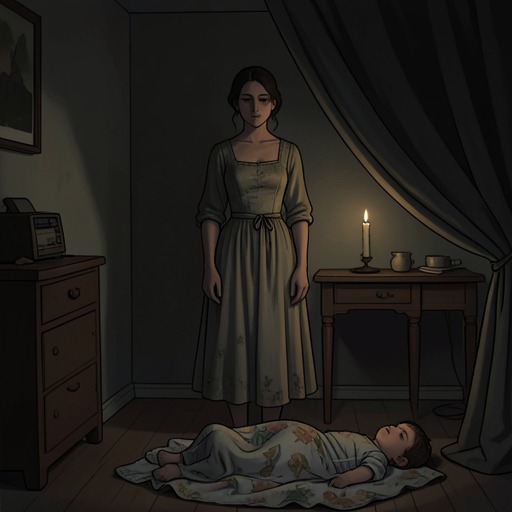
Guillermo’s early life is shaped by separation rather than by an open account of what happened. Guillermo García Medina, who had lived with Amparo until 1939, sometimes watched the boy arrive at her home. He saw him grow taller and more awkward, but did not openly claim him. When he later learned that Amparo’s lessons had ended, he realized that he would miss even the chance to see his son from a street corner. Their relationship thus begins as a concealed connection sustained by observation, memory, and withheld knowledge.
The evidence of Guillermo’s birth survived in a white envelope kept among family papers. It contained the family book issued in the names of Guillermo García Medina and Amparo Priego Martínez, Guillermo’s birth certificate identifying him as their legitimate son, and a photograph of his parents’ wedding. A short note dated 28 March 1939 apologized to Guillermo García Medina, saying that Amparo had not wanted what had happened; the few words ended in a blot of black ink. The papers preserved what the altered registration and the false paternity story had obscured.
As a child, Guillermo also made a wooden toy train for the man he thought of as his father: the portrait’s supposed hero. He did not know that the man who had painted it for him was his real father. The train’s importance lies in this crossed, unrecognized act of affection: Guillermo’s own childhood gift joined him to Guillermo García Medina before either could acknowledge their relationship.
Discovery of His Parentage
As a university student, Guillermo struggled academically. In the winter of 1958, he was repeating his first year of Economics; he had passed only one subject in his first year and was doing poorly in his second attempt. When Amparo stopped giving him money near the end of January, he had already spent his Christmas allowance. Hoping to find forty duros for a date, he searched a drawer where a school friend had said the friend’s mother kept money. There was no cash, but he found a carefully concealed envelope.
Inside were the documents that contradicted the identity he had been given: his birth certificate, a Republican family book, a photograph of an apologetic note, and a photograph of Amparo pregnant and standing beside the doctor who had visited Guillermo during a serious illness and taught him to play chess. Guillermo understood that the doctor was likely his father. He had already learned pieces of the story by questioning Experta, who eventually told him that his mother and the doctor had lived together until 1939, that the doctor had buried his great-grandfather and sheltered Amparo, and that he was Guillermo’s father—and a leftist. The papers made that account materially undeniable. Guillermo later recalled that the accumulated clues were too strange for the doctor not to be his father.
The discovery changed the meaning of his childhood without erasing it. The man who had cared for him during illness and taught him chess was not merely a familiar doctor: he was the father from whom Guillermo had been separated. The documents disclosed the concealed family relationship, but they could not return the years during which father and son had lived under different names and different understandings of the past.
Political Life and Reunion
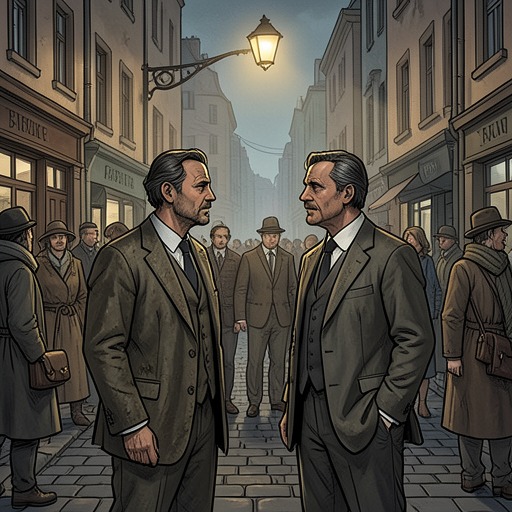
By 1968, Guillermo was a professor of Economics, a Communist militant, and a participant in underground opposition to the Franco regime. After student protests at the Complutense University of Madrid, a newspaper list of detainees identified a professor by the initials J.A.U.P. and the alias Guillermo García Priego. Guillermo García Medina recognized the initials and alias as possibly belonging to his son. A court document obtained through a lawyer confirmed that the detainee had been born on 11 September 1938 and was the son of Amparo Priego Martínez and a man named Juan Urbieta Campos—the false father’s name carried into the case record.
On 26 October 1968, Guillermo García Medina entered Carabanchel Prison using a forged Madrid bar-association card lent by Ángel Valverde Roldán and a court paper naming its bearer as the defender of José Antonio Urbieta Priego. Ricardo Ruiz Aguilar had arranged the legal cover and explained that the father and son would have twenty-five minutes to speak in a small interview room, separated by a partition with a barred opening. The false lawyer identity made the visit possible; the prison’s paperwork recognized the son under the name that had hidden him.
When Guillermo García Medina finally looked through the opening, he saw his son behind the bars, with longer hair than he himself had ever worn. Guillermo reached out and placed an open hand against the grille. He greeted his visitor as his father. The greeting brought the concealed relationship into the open without ceremony: the prisoner was calmer than the visitor, and when his father began to cry, Guillermo reassured him that lawyers did not cry. The intimate recognition took place inside a state institution that had detained Guillermo for his political activity, with the father present under an assumed professional identity.
Inheritance and Significance
Guillermo’s life joins the novel’s family history to its account of political identities imposed, altered, and recovered. His childhood registration as José Antonio Urbieta Priego and the false account of a heroic father are not merely personal deceptions; they are bound to the postwar conditions in which Republican family ties had to be concealed. Decades later, the same political order that shaped his assumed identity imprisons him as a Communist and records him under the name his mother gave him.
The delayed disclosure also gives the father-son story an intergenerational structure. Guillermo García Medina had spent years seeing his son at a distance and later found the documents that preserved the boy’s original identity. Guillermo, in turn, discovered his parentage through the very papers hidden in his mother’s home. Neither a formal record nor a family story alone could restore the relationship; recognition required both the documentary evidence and the direct meeting in prison.
The final family record preserves the distinction between the two names: Guillermo García Priego, born in Madrid in 1938, was registered again at six months as José Antonio Urbieta Priego. That administrative doubling condenses his central predicament. He is both the child whose true parentage was concealed and the adult who reclaimed the name by which his father knew him, even as arrest and political repression again placed him within a system of imposed identities.