Klooga concentration camp massacre
Los pacientes del doctor GarcíaThe Klooga concentration camp massacre was a four-day killing operation in September 1944, carried out by SS forces as the Soviet Army advanced through occupied Estonia. Rather than release the prisoners or leave them behind, the camp’s commander ordered their murder. The massacre killed thousands, and for Adrián Gallardo Ortega, a Spanish soldier assigned to the firing squads, it became the point at which guilt gave way to a self-protective, enduring moral numbness.
Evacuation and Decision to Kill
As the Soviet advance gathered pace in July and August 1944, the SS began evacuating Klooga. About five hundred prisoners were transported west by sea to other camps, including Stutthof and a camp in what was then the German city of Freiburg in Schlesien. The evacuation became increasingly difficult as German forces retreated, the front shifted, and transport grew scarce. By mid-September, with Soviet troops close to Narva, the operation stopped. Hans Aumeier chose not to free or abandon the remaining prisoners, as had happened elsewhere, but to exterminate them.
The Massacre and the Evidence Left Behind
On 19 September, armed guards surrounded the camp. Prisoners were taken in groups to nearby woods and killed indiscriminately. The executions continued for four days. In the first days, SS personnel forced prisoners to stack the bodies of their murdered companions on pyres and then set them alight. On 23 September, some pyres had been assembled but not burned; after killing the last prisoners, the SS men hurried west with the retreating German forces.
When the Red Army reached Klooga on 28 September, it found eighty-five survivors rather than the 2,400 prisoners believed to have remained after the last evacuation. Some survivors had hidden in barracks; others had escaped during transport. They guided Soviet troops to the sites of the killings. In the woods, soldiers found carefully arranged pyres: rows of bodies face down, interleaved with cut logs laid in regular horizontal and vertical layers. The ordered construction, intended to turn the dead into ash and charred bones, made the violence legible as a methodical operation rather than an uncontrolled outburst.
Adrián Gallardo at the Firing Line
Adrián took part in the murder of two hundred unarmed people in a single day: one hundred men in the morning and one hundred women in the afternoon. During the executions, the camp guards placed the bodies face down on logs. They brought the women forward in groups, aligned them, and fired. Adrián imagined refusing the order, as Heinrich Beyer had refused to shoot prisoners, but when commanded he loaded, aimed, and shot through successive groups until all one hundred women were dead. He did not cry or pray, and he did not risk his life by resisting.
At midday, the men were given unusually generous food and drink: stewed meat with potatoes, chocolate shared between every two soldiers, and vodka shared between every four. A corporal’s drunken joke about how much good the Jews of Klooga had done for them broke the silence for some of the men. Adrián walked into the devastated woods until he smelled burning flesh, vomited, and sat on a stump. His thoughts raced through his life. He recognized that he wanted to live, even as the example of Beyer’s refusal made him imagine his own death as a possible alternative to becoming a murderer.
That possibility ended when Adrián obeyed Kleiber’s order and fired on the women. To bear what he had done, he reversed the meaning of the killing in his mind: he decided that the prisoners’ supposed passivity made them responsible for turning him into an assassin. The victims became, in his distorted account, the cruel enemies who had chosen their own deaths. This self-exculpating explanation brought him a fierce exhilaration and released him from the fear and remorse that had troubled him. He understood himself as a murderer, but no longer found the knowledge frightening or repellent; the people and memories that had once judged him seemed to fall silent.
From Immediate Euphoria to Lasting Impunity
The killing did not end when the firing stopped. On the truck returning to the front, Adrián embraced Jan Schmitt de Wandaleer, saying he loved him and that the two men were now alike and bound together. Jan pushed him away but smiled. The scene makes the violence’s first consequence visible in the perpetrators’ altered fellowship: Adrián’s attempt to turn shared guilt into intimacy met not an embrace but a joking rebuff.
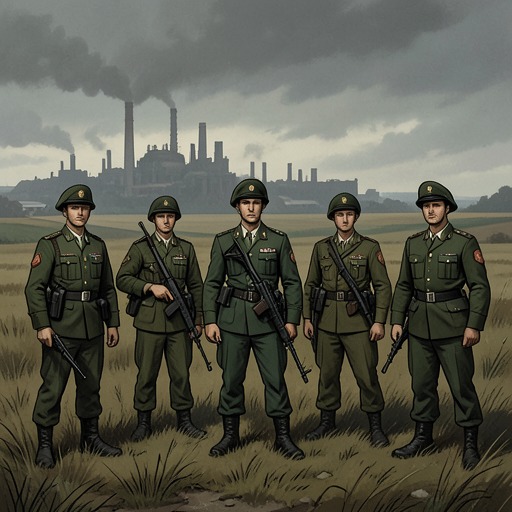
Vodka continued to flow during the return to the front and through the next three days, 20–22 September 1944. Kleiber’s men—soon known by his name within the III Panzerkorps der SS—drank at breakfast, meals, and bedtime while helping Klooga’s guards kill roughly 550 prisoners a day, including 400 assigned to their unit and 1,200 in total. Jan stopped repeating that the victims were not human at every volley. Adrián still knew they were human, but that recognition no longer restrained him.
On 23 September, the group withdrew from the Narva front with the retreating German forces. Their sudden drunken exhilaration dissipated at the border. They did not speak openly about the forest, but fear returned in recurring questions: had the Soviet Army reached Klooga, found the bodies, or discovered survivors? Some tried to reassure themselves that survivors would not recognize German insignia. The reassurance lasted only days, then hours, before the questions began again.
Adrián remained silent through these conversations. He understood that his companions feared eventual defeat and exposure, and that the prospect of a final German defeat deepened their anxiety. He did not share their agitation, imagining that it belonged to another Adrián: the once-innocent grandson of Don Carlos Garrote whom he could scarcely remember. Yet he privately expected that the perpetrators would eventually be identified. The pyres might be found, or a prisoner might speak; someone could recite names, and he would not be mistaken for another man, since he was the group’s only Spaniard.
He nevertheless continued to fight through Latvia, Lithuania, Poland, and Germany in the final months of 1944 and the opening months of 1945, as if combat could postpone a death he believed he deserved. He had chosen Berlin as the place to die, the last point in a retreat that, in his imagination, would bring his body into alignment with the deadened state of his spirit. Klooga had remade him not simply as a killer, but as someone who could no longer imagine a country, a home, or a life to return to.
Historical Record and Continuing Significance
The novel sets the massacre’s immediate scene of complicity against the evidence by which it could later be reconstructed. In the narrative, Kleiber is accused of recruiting men who took part in the extermination of more than two thousand Jews at an Estonian camp and of killing a German soldier who refused his orders. He insists that his subordinates volunteered, including the man he executed, and offers to identify them. His account exposes the chain of participation while also presenting a perpetrator’s self-serving claim about responsibility. The number in that accusation is larger than the roughly 2,400 prisoners believed to have remained after Klooga’s final evacuation, underscoring how the novel’s later inquiry encounters crimes through imperfect testimony and records as well as through the scene itself.
The massacre’s aftermath is framed not as a completed atrocity but as a question of discovery, identification, and accountability. Survivors guided Soviet troops to the pyres, where the arrangement of bodies and logs preserved evidence of deliberate, organized killing. The fleeing perpetrators, meanwhile, repeatedly wondered whether the dead would be found and whether any survivors could identify them. The contrast is stark: the perpetrators hoped that insignia would obscure who had carried out the murders, while the surviving witnesses and physical remains made concealment uncertain.
For Adrián, the forest becomes the dividing line between the person he had been and the identity he chooses to inhabit afterward. He believes the crimes will eventually be exposed, yet this expectation does not lead him to acknowledge responsibility publicly or seek forgiveness. Instead, he treats his Spanish identity as a detail that will make him easier to identify and fights on toward Berlin, imagining death as the only fitting end. The narrative thus links a documented mass killing to a private moral transformation without confusing the two: the victims’ destruction is the historical crime, while Adrián’s rationalization records how a perpetrator makes continued participation psychologically possible.
Consequences and Aftermath
The massacre continued beyond the four days at Klooga through the perpetrators’ effort to imagine what might follow. On 23 September, as Kleiber’s men withdrew from the Narva front, their exhilaration gave way to unease. They avoided speaking plainly about the forest, yet repeatedly asked whether Soviet forces had reached the camp, whether the bodies had been found, and whether anyone had survived. Some reassured themselves that Baltic Jewish survivors would not recognize German insignia. At first that comfort lasted several days; soon it lasted only hours before the same questions returned.
Adrián did not join these conversations. He understood that his companions feared defeat and exposure, but felt detached from the fear that had unsettled the man he had once been. He nevertheless believed that the killings would eventually be traced: the pyres might be discovered, a prisoner might identify the perpetrators, and he could not be mistaken for someone else, since he was the group’s only Spaniard. His expectation of accountability did not restore remorse or prompt confession. He fought on through Latvia, Lithuania, Poland, and Germany, believing that he deserved death and trying to delay it until Berlin, where he intended to complete his retreat toward a state in which body and spirit would both be dead.
Later testimony gives the crime another, compromised route into view. Kleiber was accused of recruiting men who participated in the extermination of more than two thousand Jews at an Estonian camp and of murdering a German soldier who refused his orders. He maintained that all his subordinates, including the executed soldier, had volunteered, and offered to identify them. His account points toward the participation of the unit while making responsibility itself a contested part of the record. The survivors’ guidance and the pyres provided physical traces of the murders; the perpetrators’ anxious speculation revealed how uncertain they were that those traces could be concealed.
The episode connects mass violence with the manufacture of moral evasion. Adrián knows that the victims were human, yet rationalizes their murder by blaming them for his own transformation and continues fighting without fear of himself. The survivors, the ordered pyres, and the perpetrators’ fear of identification resist that private fiction: the massacre remains a crime whose evidence and witnesses outlast the moment in which its participants try to silence their consciences.
Evidence, Identification, and Accountability
The later investigation gives the massacre another, compromised route into view. Kleiber was accused of recruiting a group of men who participated in the extermination of more than two thousand Jews at an Estonian camp, and of killing a German soldier who refused to obey his orders. He insisted that all his subordinates had volunteered, including the soldier he had executed, and offered to identify them. His account exposed the chain of participation while making responsibility itself contested: even as he named the men, he presented their service as their own choice. The accusation’s figure exceeds the roughly 2,400 prisoners believed to have remained after Klooga’s final evacuation, a discrepancy that underscores how the novel’s later inquiry must work through imperfect testimony and records.
Moral Evasion and the Record of the Crime
The episode connects organized mass violence with the means by which its participants evade responsibility. Adrián knows that the prisoners are human, but convinces himself that their supposed passivity makes them responsible for his becoming a murderer. This reversal gives him a fierce, temporary exhilaration; he accepts the name of murderer without fear or revulsion, and the voices and memories that once troubled him fall silent. The change does not erase his awareness that the killings will one day have a reckoning. He expects the pyres or a survivor to expose the perpetrators, and knows that, as the group’s only Spaniard, he will be identifiable. Yet anticipated exposure does not restore remorse: he continues to fight, believing he deserves death and fixing on Berlin as the place where his body might finally match his deadened spirit.
The massacre’s later reconstruction also comes through testimony shaped by the struggle over blame. Kleiber was accused of recruiting men for the extermination of more than two thousand Jews in an Estonian camp and of killing a German soldier who refused his orders. He maintained that his subordinates had volunteered, including the soldier he had executed, and offered to identify them. His account could name participants while framing their actions as their own choice. Against this contested testimony stand the survivors who guided Soviet troops to the killing sites and the carefully built pyres, physical traces of deliberate murder. The perpetrators’ repeated questions about whether survivors could identify them show that concealment remained uncertain even as they tried to reassure themselves otherwise.
Evidence, Identification, and Accountability
The massacre’s later reconstruction also comes through testimony shaped by the struggle over blame. Kleiber was accused of recruiting men for the extermination of more than two thousand Jews in an Estonian camp and of killing a German soldier who refused his orders. He maintained that his subordinates had volunteered, including the soldier he had executed, and offered to identify them. His account could name participants while framing their actions as their own choice. Against this contested testimony stand the survivors who guided Soviet troops to the killing sites and the carefully built pyres, physical traces of deliberate murder. The perpetrators’ repeated questions about whether survivors could identify them show that concealment remained uncertain even as they tried to reassure themselves otherwise.