Manuel Cuesta Velázquez
Los pacientes del doctor GarcíaManuel Cuesta Velázquez is the narrator’s son, born in 1951, whose welcome of Guillermo turns a hidden relationship into an everyday family bond. His attentiveness to his newly discovered older brother—first at the dinner table, then in their shared Sundays at the football ground—stands in contrast to his father’s hesitation and helps make kinship tangible. By the final confrontation with the past, Manuel is twenty-three, a recent graduate, and one of two sons whose Spanish lives their father knows cannot convey what he has endured.
Identity and Family
Manuel is one of the narrator’s children with Rita. In May 1968, when he is seventeen, he is old enough to spend weekends independently; his younger sister Rita, fifteen, usually meets her friends. Their mother’s political meeting leaves the narrator responsible for the girls, and the unusual family outing that follows takes place at the Cine Paz, where the children watch the musical Half a Sixpence. Manuel is not part of that afternoon, but his independence helps explain why his sister’s decision to join her father and Andrea is notable.
The family scenes show Manuel in relation to a household whose history is not fully legible to its younger members. He returns home during the night his mother and father finally speak privately, interrupting them to ask whether he can eat what he has brought in from outside. His mother says the food is for dinner and hurries to the kitchen to guard the packages covering the marble counter. The interruption is ordinary, almost comic, yet it places Manuel within the family’s practical rhythms while his parents negotiate a much more difficult matter.
Welcoming Guillermo
When the narrator eventually invites Guillermo to the family home, he has delayed for more than a month. He fears that the meeting might turn Guillermo into an awkward obligation, a make-believe relative whom Rita invites only to spare her father’s feelings. The narrator also recognizes that keeping a separate relationship outside his home could look like shame at being Guillermo’s father. His children, meanwhile, are eager to meet their older brother.
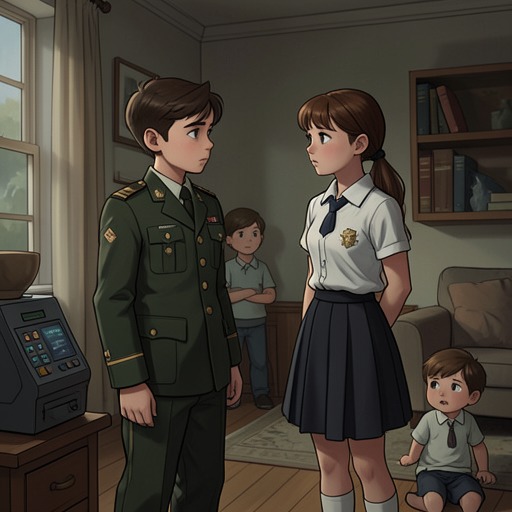
Manuel’s response is immediate and warm. During the meal he stays close to Guillermo, laughs at his jokes, and praises his remarks with an enthusiasm the narrator does not think is feigned. The father had not considered that Manuel might have missed having a male peer in the family: someone with whom to share a brotherhood unlike the close bond between his sisters. Watching the two, he senses Manuel forming a small, private alliance with the older brother.
That welcome quickly acquires a public routine. The next day Manuel changes football allegiance without hesitation and begins going with Guillermo to the Manzanares to support Atlético. Home matches provide a dependable reason for the brothers to meet. Guillermo comes to collect Manuel on Sundays; sometimes the family invites him to eat, and sometimes he takes Manuel to a tavern near the stadium. The girls become jealous when their brothers go off together, and after other matches all four younger siblings go for a snack without inviting their father. Football thus gives this newly acknowledged kinship a repeated, ordinary form, rather than leaving it as a single emotional family occasion.
Sibling Loyalty and Independence
The narrator, who does not care for football, grows envious of his children’s enthusiasm and considers becoming an Atlético member so he can accompany them. Manuel advises against it. His reason is not a rejection of his father but a recognition of the different roles at stake: Guillermo has begun courting Laura, the eldest daughter of Manolita, whom he met at the stadium because she is as devoted a supporter as he is. Manuel tells his father that Guillermo already has enough to manage while flirting in front of Silverio; the father’s presence, which impresses Guillermo, would interfere.
When the narrator asks whether Manuel himself does not also interfere, his son answers that it is different because he is Guillermo’s brother. The distinction reveals the ease with which Manuel claims the relationship. He does not treat the older brother as a guest or a rival for his father’s attention. Instead, he understands a brother’s place as something separate from a parent’s, and his protective teasing grants Guillermo room to establish a life of his own. The advice is both practical and affectionate: Manuel helps his father see that welcoming Guillermo also means not intruding on the bond the brothers are forming.
The Father’s Silence and the Past
Years later, Manuel is twenty-three and has just completed his degree; Guillermo is thirty-five, married to Laura, and the father of a young boy. The narrator looks at his two sons and knows they were both born and raised in Spain, with Spanish lives ahead of them. However much he might explain, he believes they cannot understand what he is experiencing at that moment.
The occasion is the narrator’s encounter with Otto Skorzeny at Las Ventas, where Skorzeny is enjoying his money and freedom. Rather than tell his sons who Skorzeny is and why his presence matters, the narrator calls him merely an acquaintance. He is ashamed—not of himself or of Manolo and their inexhaustible hope, but of the country in which his children live, the weakness of their cause, and the strength of their enemies. He remembers that Rita had once asked what they had done to fare worse than the Nazis. He chooses not to hand that question, and all its answers, down to his children as an inheritance.
Manuel’s importance therefore rests not on a political explanation or a confrontation of his own, but on the family bond he helps make visible. His ready acceptance of Guillermo offers the father a model of kinship that does not require the past to be simplified: the brothers can share football, meals, and private jokes even while the father remains unable to tell them everything. At the story’s end, Manuel stands among the next generation whose ordinary future intensifies the narrator’s silence. His Spanish life is both a source of familial closeness and the boundary beyond which his father feels his own history cannot be carried.