Resistencia antifranquista
Los pacientes del doctor GarcíaResistencia antifranquista is the novel’s continuing opposition to Franco’s dictatorship, carried out through clandestine aid, political organizing, and public protest across different generations. Its significance lies in the contrast between the regime’s apparent permanence and the persistence of people who keep resisting after the Republic’s defeat and after the antifranquists are left without international support.
Defeat, concealment, and survival
The resistance first appears as a matter of preserving lives and identities. During the war, a wounded man found with identification from the Public Order Council of the Madrid Defense Council is not to be entered under his own name at any hospital. A police commissioner instructs the commander to save him at any cost and conceal him if he is already dead, because another attempt may be made on his life. The order offers no explanation beyond the man’s importance to the Republic. Resistance here is a covert chain of protection, conducted under the pressure of a state of war and the threat of political killing.
After the Republican defeat, survival itself becomes a compromised form of resistance. Guillermo García Medina returns to a house that has been ransacked: the safe has been taken, family documents lie trampled on the floor, and only the gold belonging to Don Fermín has been removed. Yet the envelope Manuel Arroyo Benítez entrusted to him remains untouched in a locked desk drawer. Guillermo checks it, relocks the drawer, and spends three days in the darkened house, unable to decide what to do. The intact papers stand against the destruction around them: preserving information is one small, deliberate act in a city being remade by the victors.
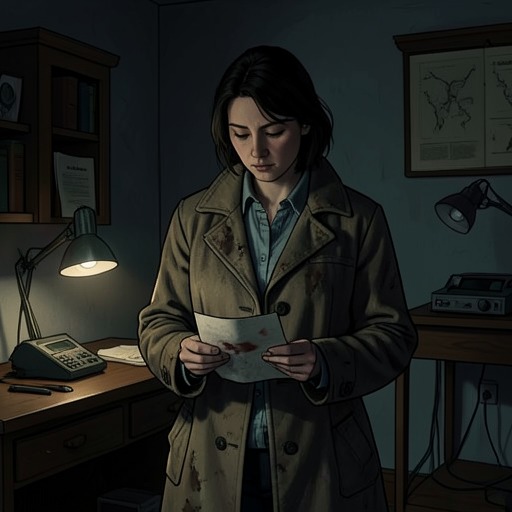
The regime’s triumph forces Guillermo into a false life as Rafael Cuesta Sánchez. On the first night of his escape, he cannot sleep, tormented by what he has lost and by his desire to live under an assumed name. The next day, that anguish does not disappear; instead, he learns to inhabit the disguise. Each night he removes a crucifix from the wall and hides it beneath the bed, returning it each morning. He walks for hours and crosses the Castellana as though the avenue divided Guillermo’s former life from Rafael’s new one. The passage makes clandestinity both protection and cost: a means of surviving, but also a boundary between a buried identity and the life that must continue.
Exile and the work of political continuity
Resistance also persists beyond Spain through the scattered networks of Republican exile. In the summer of 1939, Manuel lives in Geneva in circumstances far removed from his former public life. Meg Williams is gone, and the city’s familiar chocolates, lakeside paths, cafés, and meeting places turn into reminders of their shared past. Loneliness defines his new existence, even though he knows his relative safety and comfortable lodging are privileges unavailable to many Spanish refugees.
Pablo de Azcárate finds Manuel an unofficial position connected to Republican exile work. Under the name Felipe Ballesteros Sánchez, Manuel meets representatives of neutral and Allied countries in parks, cafés, and public squares, then sends reports to Taplow when a British military aircraft provides an opportunity. The work is modest and solitary, far from the diplomatic life he once knew, but it keeps political contact alive. His safe, dull routine is presented against the suffering and hunger of other exiles; Manuel would have exchanged it for the exposure of a French camp.
Years later, political defeat again turns exile into a route back. On 10 September 1946, Manuel enters Spain through Gibraltar because the French border is closed and a clandestine mountain crossing would risk ruining his mission. His American identity and passport provide cover, while the landscape and the wind at the Strait awaken his feeling that he has returned home. That tension between public identity and private allegiance defines the return: he can enter only as someone he is not, to undertake work for a cause the international order has failed to restore.
Opposition inside the dictatorship
The novel does not treat political defeat as the end of antifrancoist activity. It describes how the dictatorship’s coercive machinery and the international Cold War context make opposition dangerous, while the underground continues. In 1975, before the March 1976 coup in Argentina, President María Estela Martínez de Perón’s campaign against alleged subversion already divides the country into military zones and gives their commanders sweeping powers. The operation is directed not only at armed guerrillas but at civilians, including teachers, students, intellectuals, artists, scientists, and religious figures. This account places state repression in a regional political pattern and shows how the boundaries of the target expand beyond combatants.
The Argentine military dictatorship then makes clandestine repression systematic: its task groups handle abductions, secret detention, torture, executions, concealment of bodies, and the theft and reassignment of children born to imprisoned women. The account estimates that roughly thirty thousand people were forcibly disappeared between spring 1976 and autumn 1982, while stressing that the number remains uncertain because many bodies were never found. The same passage describes the death flights, in which living prisoners were drugged, bound, and thrown from military aircraft into the sea. This history supplies a stark counterpoint to the Spanish story: resistance confronts not only overt violence but an apparatus designed to erase both people and proof of what happened to them.
A new generation takes to the street
In May 1968, Guillermo’s daughter Rita attends a meeting about the Party’s response to protests at the Complutense University. That afternoon, Guillermo goes to the cinema with Rita and his younger daughter, Andrea. Outside, the film’s conventional story gives way to the sounds of a student demonstration. Near the Plaza de Bilbao, a hundred young people block traffic and shout, “Workers and students, united and forward!” They call for workers’ children to attend university and for Spain to become a republic.
The demonstrators are organized enough to scatter as sirens approach, without waiting for a shouted order. Guillermo sees students only a few years older than his son Manuel, with nearly as many young women as men, and recognizes that the street action is not the improvised spectacle he had imagined. When mounted police approach, he takes one daughter by each hand and runs with them into a doorway. A young couple rushes in after them; the woman has twisted her ankle. Guillermo and his daughters help the pair, and a police officer checks their identity documents before letting them go.
The encounter changes the meaning of caution for Guillermo. For decades, he has followed Manuel’s advice to avoid trouble and trusted that an established identity and a record of outward respectability would keep him safe. As a clandestine doctor and later a participant in the Stauffer organization, he has taken risks within networks that could protect him. In the street, however, he exposes himself without that protection, with his daughters beside him. His fear is sharpened by the pleasure and pride he feels in having acted; the episode reveals that the false identity has not extinguished the person it was meant to conceal.
Identity, inheritance, and continuing resistance
When one of the young people asks whether Guillermo is a communist, his answer comes from the self concealed beneath Rafael Cuesta Sánchez: he says that he has been one since long before the questioner was born. The scene makes the assumed identity’s endurance visible, but also its limits. The respectable older man whom the police see is a practiced cover; beneath it remains Guillermo García Medina, who has never forgotten his grandfather and can still answer publicly from a political commitment formed before the dictatorship’s long years.
That commitment also reaches the next generation through family history. After learning the truth about his father, Guillermo García Priego has to reconsider a life in which politics had seemed remote. Students in the official university union had repelled him, while clandestine communists had been difficult to find. He makes contact through a university friend, tells her that his father lives under a false name, and seeks membership in the Communist Party as the only path he can imagine toward finding him. Older comrades recognize Rafael as a doctor who had helped the movement, and the son discovers that the apparently absent father has been involved in underground work for decades.
Rafael resists the word heroism. He acknowledges that he has worked as a doctor for the Party since 1941, saved communist lives, and helped move people and materials across the country through his position at a transport company. But he says he worked in an office and did not cross the border or face police searches; the truck drivers, often unaware of what their vehicles carried, bore the greater risk. The distinction keeps resistance from becoming a simple legend of individual bravery. It is a collective undertaking, dependent on concealed labor, trust, transport, medical care, and people whose contribution may never be publicly known.
The novel sets that continuing work against a decisive international reversal. On 21 December 1959, Francisco Franco appears in a photograph with the victorious leader of the Second World War, and the narrative declares that Franco has won the war again. Antifranquists are left utterly and definitively alone in the world, yet they do not stop fighting the dictatorship. That juxtaposition defines the concept’s historical and moral force: international abandonment closes off the hope of rescue, but it does not make opposition disappear. Instead, resistance persists in hidden networks, in inherited political loyalties, and, years later, in students who take the streets and in an old man who recognizes himself at last beneath his assumed name.