Rita Guillermina Cuesta Velázquez
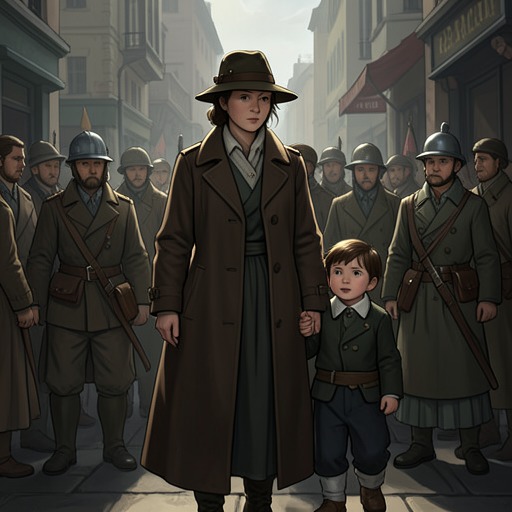
Los pacientes del doctor GarcíaRita Guillermina Cuesta Velázquez is the fifteen-year-old daughter of Guillermo García Medina and an alert, politically confident presence in the family’s life. When protests reach the streets of Madrid in 1968, she recognizes the demonstrators as her mother’s allies and reassures her frightened younger sister; afterward, her father’s attempt to evade her questions about politics and knowledge gives way to her amused rebuke. In these small exchanges, Rita embodies a generation for whom public dissent is becoming speakable again, even as her father still measures the risks of speaking aloud.
Identity and family
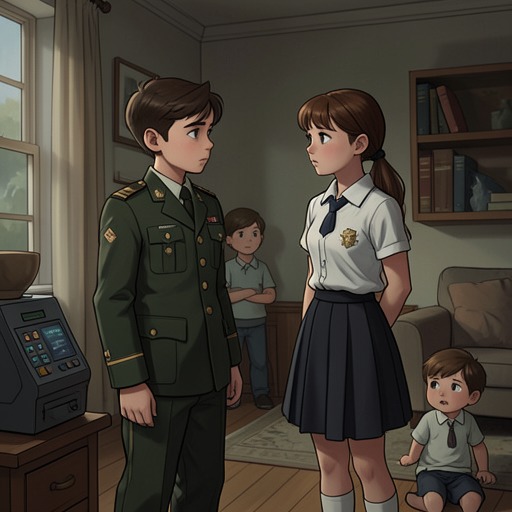
Rita was born in 1953 and is one of Guillermo’s two daughters. Her younger sister, Andrea, is seven in the spring of 1968, while Rita has just turned fifteen. Her mother is away that afternoon at a meeting about the Party’s position on the protests at the Complutense, leaving Guillermo responsible for the girls. Rita’s decision to accompany him and Andrea to the cinema brings the family together on the day that politics unexpectedly enters their outing.
The scene establishes the difference between the sisters without reducing either to a political emblem. Andrea is young enough to be frightened by the demonstrators and to hide behind her father’s coat; Rita, older and more self-possessed, takes the lead in explaining what they are seeing. Her confidence is not presented as a long speech or a formal act of leadership. It appears in the practical intimacy of a sister’s reassurance and in her willingness to stand beside her father in public.
The 1968 demonstration
On Saturday, 11 May 1968, Rita goes with Guillermo and Andrea to see the English musical Half a Sixpence at the Cine Paz. Her mother, attending a Party assembly concerning student protests at the Complutense, has told Guillermo to stay with the younger girl. The film is long, Andrea is bored, and Guillermo even falls asleep for a while. Yet the outing becomes memorable for a reason outside the screen: a demonstration, with its own political soundtrack, interrupts the ordinary family afternoon.
Andrea takes Guillermo’s hand and asks who the demonstrators are. Rita answers before her father can: they are the good people, their mother’s friends. Her description is both reassurance and political identification. She knows the demonstrators through their connection to her mother, and she presents that connection to Andrea as a reason not to be afraid. The family moves to the edge of the pavement, where they have a clear view; nobody pushes them from the front row.
Guillermo, who has not seen or heard anything like this for many years, is so astonished that he initially cannot answer. He repeats Rita’s designation of the demonstrators as the good people, but even saying it aloud feels strange to him. His hesitation marks the distance between the public political speech of his earlier life and the guarded habits formed under dictatorship. Rita’s matter-of-fact response helps him cross that distance for a moment: he agrees that they are the good people and suggests that the family go closer to watch.
Confidence and political inheritance
Rita’s response to the demonstration gives the family scene a generational turn. Guillermo has to recover the ability to speak about politics in the street; Rita does not share his immediate astonishment. Her description of the demonstrators links the protest to her mother and to the family’s political world, making public dissent legible to Andrea as well as to her father. The exchange does not establish that Rita is immune to danger or that she holds a fully articulated political program. It shows, more precisely, her ease in naming an allegiance that Guillermo experiences as difficult to voice.
After the family returns home, Andrea goes to play while Rita and Guillermo sit down to a game of chess. He asks how she knows so much, and she answers that she is fifteen and asks whether he thinks she is stupid. The teasing exchange reveals her quickness and her confidence in her own judgment. She has the white pieces, wins, and refuses Guillermo’s request for a rematch, pointing out that this is the one time she has beaten him. Their game offers a quieter echo of the street scene: Rita is no longer merely the child accompanying her father but someone capable of surprising him, answering him directly, and claiming her small victory without apology.
Narrative role
Rita’s importance lies in the contrast between her ordinary family role and the political significance of the day she shares with Guillermo and Andrea. The musical, the popcorn, Andrea’s boredom, and the chess game frame the demonstration not as a distant political report but as something encountered during family life. Rita is the figure who interprets that encounter for her younger sister and, indirectly, for her father. The words that make Guillermo hesitate are words she can offer plainly.
The novel does not turn this brief episode into a complete account of Rita’s later life. Instead, it leaves her at a revealing threshold: a fifteen-year-old who recognizes her mother’s political friends, stands with her family to watch them, and defeats her father at the chessboard. Her assurance gives the scene a note of possibility, but the contrast with Guillermo’s long silence keeps that possibility historically grounded. The demonstration can be watched from the curb; speaking its politics aloud remains, for him, a recovered act.