Rodolfo Fred
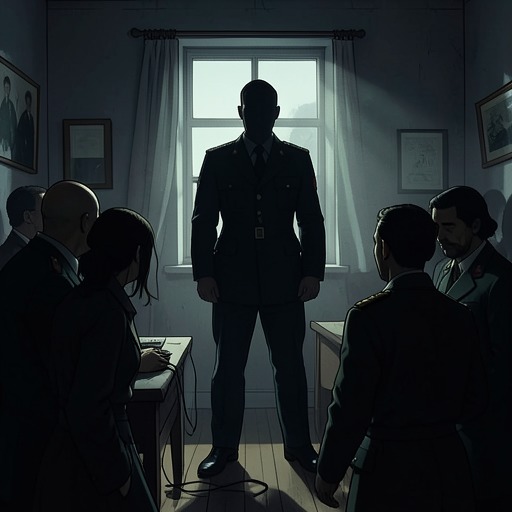
Los pacientes del doctor GarcíaRodolfo Freude is the son of Ludwig Freude, a powerful Argentine businessman and Nazi Party member. Acting as Juan Perón’s right-hand man, he convenes a meeting at which Perón advances plans to receive people associated with the Third Reich. The novel places Rodolfo at the junction of political patronage and organized refuge: his invitation brings a European collaborator into the room, while his family’s earlier support for Perón helps explain the access and influence behind the meeting.
Family and Political Leverage
Rodolfo’s father, Ludwig Freude, is described as Argentina’s most powerful German citizen and one of South America’s ten richest men. The Allies accuse him of serving as Hitler’s unofficial ambassador in Argentina and seek his extradition in 1945. When extradition is close, Perón intervenes with a false citizenship letter, signed by a judge, that allows Ludwig to remain in the country.
Ludwig repays Perón by financing the general’s 1946 election campaign, which brings Perón to the Casa Rosada. The sequence establishes a reciprocal political bond: Perón’s protection preserves Ludwig’s position, and Ludwig’s money helps Perón secure office. Rodolfo’s later role in convening the meeting grows out of this network of familial wealth and political obligation.
The Meeting with Perón
In the postwar setting, Perón receives a group of guests under the ostensible subject of his “third position,” a political stance presented as opposed to both Marxism and liberalism. The discussion soon turns to its practical purpose: Perón wants to welcome civilian and military technicians and scientists connected to the Third Reich, hoping to make Argentina a power. He anticipates that a future conflict between the West and the Soviet Union could recast those now considered enemies as useful allies.
Perón entrusts Rodolfo with convening the gathering. Rodolfo invites Víctor de la Serna, whose presence in Buenos Aires is explained by that invitation. The meeting therefore does more than provide a forum for political rhetoric: it assembles people connected to European collaboration around Perón’s project of receiving former Third Reich personnel.
From Private Gathering to State Organization
The matter is too sensitive to settle in a single audience. Perón receives the same group again the following day to work through details and personally suggests creating a discreet official body to receive these immigrants. The private meeting thus becomes the preliminary stage of a state-supported arrangement rather than remaining an isolated conversation.
On June 28, 1948, the Argentine European Reception Service, SARE, is formally established at Radu Ghenea’s home, where members of its directing committee sign its statutes. Pierre Daye, who designed the organization, attends with René Lagrou as a representative of the Belgian exiles; Ghenea represents the Romanians, while other attendees represent escapees of various nationalities. The migration director Pablo Diana subsequently recognizes SARE’s authority to accept and manage applications for residence in Argentina, and the archbishopric provides a building on Canning Street for its headquarters. Rodolfo’s convening role belongs to the earlier political groundwork for this functioning reception system: his invitation helps bring the relevant circle together before Perón’s proposal takes institutional form.