Underground Anti-Franco Resistance
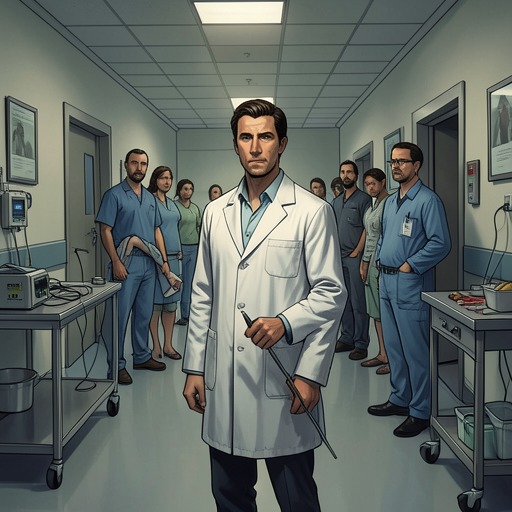
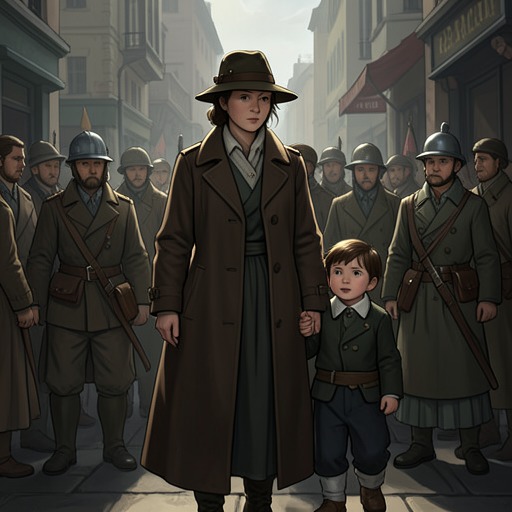
Los pacientes del doctor GarcíaUnderground Anti-Franco Resistance is presented not as a single organization or a continuous armed campaign, but as a network of people who make survival possible under dictatorship. Doctors treat patients who cannot safely enter hospitals; informants gather evidence through everyday access to offices and homes; trusted companions move messages, documents, and people across dangerous boundaries. Its work joins immediate acts of care to political opposition, while the machinery of repression repeatedly threatens to erase both its participants and the record of what has been done to them.
A clandestine system of care
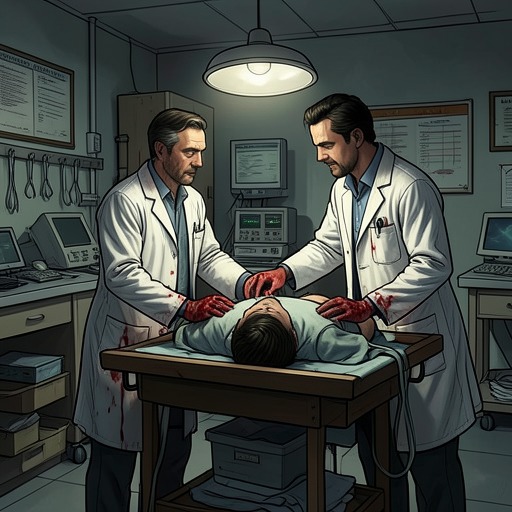
The resistance’s medical work changes as the years pass. In the earlier period, guerrilla groups still fighting in the mountains have developed rudimentary but functional arrangements: members can disinfect wounds, bandage, set fractures, and stitch injuries, while serious cases may be referred to a doctor in a nearby town. The doctor’s patients are nonetheless often brought into private dining rooms with bullet wounds, where treatment must happen beyond the official medical system. Later, the hardened veterans give way to very young patients—students, striking workers, and untrained laborers—who confront police with near-suicidal determination. Many others are not combatants at all, but poor people, members of antifrancoist families, communists, or friends of communists, unable to afford private care or unwilling to show their documents in a hospital.
The practical rule is therefore not simply to heal a wound, but to keep the wounded person alive without making them easier to find. The danger is visible in the instructions given after a badly injured man is brought to an infirmary and mistaken for a corpse. A commander discovers an identity card belonging to the Public Order Council of the Defense Junta and calls for guidance. The police commissioner Basilio Rodríguez orders that, if the man is dead, he must be buried as an unknown person and left out of every register; if he is alive, he must be saved at any cost but never admitted to hospital under his own name, lest someone try to kill him again. The commander is offered no explanation beyond the claim that the man is vital to the Republic’s interests. The exchange makes anonymity a condition of treatment: to preserve a life, the network may have to conceal the life from the state.
By 1948, clandestine patients still reach the narrator through arrangements that depend on trusted intermediaries and discreet addresses. In one case, a young man escapes the police by crashing through a pastry-shop window. A woman named Carmen pulls a shard of glass from his abdomen, worsening the bleeding; the doctor performs two operations, and the patient recovers quickly. At his request, the doctor writes to the patient’s wife in Toulouse. When she later approaches him using a password concerning bottles of El Gaitero cider, the doctor is meant to help arrange her comrade’s extraction from a Lavapiés flat. Instead, the woman’s arrival diverts him from that plan. The episode shows both the precision and fragility of clandestine care: a password, a message to another city, and a safe address can sustain a chain of protection, but the chain remains exposed to individual encounters and choices.
Shelter, information, and the work of infiltration
The resistance’s activity extends beyond treating injuries. In the account of Clara Stauffer’s house at Galileo 14, the same domestic setting that shelters political fugitives becomes a point from which information can be gathered about an opposing network. In the summer of 1945, Clara renovates rooms for an office, installs a new telephone line, hires two secretaries, and fills new cupboards with men’s clothes in every size and shoes in every size. The visitors change as well: alongside the familiar dinner and coffee guests come thin, exhausted men at unpredictable hours. Sole Ruiz recognizes the look of prisoners. They are fugitives who have escaped European prisons and crossed the Pyrenees, or prisoners released from Nanclares.
At Galileo 14 they receive food and fresh clothes and appear to be found lodging and perhaps work; they do not sleep at the house, and many return to the office to complete further errands. Sole notices that none speaks Spanish. A Spanish conscript begins bringing sealed envelopes almost weekly, bearing the letterheads of Madrid parishes, particularly the parish by the Iglesia roundabout. When one envelope is accidentally left unsealed, Sole opens it and finds a German baptismal certificate dated 1907. The regular traffic continues until she flees Spain. Shortly before leaving, she hears a secretary mention Jean-Jules Lecomte, a visitor whose name is not German. What begins as a domestic observation—the visitors’ clothes, language, movements, and papers—becomes a route into the organization’s methods.
The information reaches Meg Williams and convinces Congressman Sal Burnstein that Clara’s network is more than an unverified rumor. Burnstein has spent months investigating Nazi escape routes without finding firm evidence of a stable organization. Sole’s account offers a possible structure, but not yet a case strong enough for the United Nations or for pressure on the United States government. The political calculation is explicit: proof that Franco’s regime shelters war criminals implicated in the genocide of the Jews could force the Allies to break relations with Madrid and make intervention harder to avoid. The resistance’s intelligence work is therefore aimed not only at identifying individual fugitives, but at making state protection publicly provable.
The investigators distinguish what they know from what they suspect. They need to verify that Lecomte and Horst Fuldner are who they appear to be, establish the identities of the Argentine visitors believed to be close to Juan Perón, and show that Clara does more than provide German fugitives with food and clothes. The South American route appears plausible: Argentina is described as a desired destination for Nazis seeking to avoid international tribunals, and the CIA, Burnstein, and Meg all take the route seriously. Argentina is also the one country said to disregard the blockade and send Spain ships carrying grain and frozen meat. The investigators suspect that Clara’s network helps fugitives reach Argentina with Spanish documentation, using parish baptismal records and contacts in the state administration, but they acknowledge that suspicion is not proof. Infiltration is required to turn fragments into evidence.
Cover identities and written intelligence
Manuel Arroyo Benítez undertakes that infiltration under successive assumed names, including Adrián Gallardo and José Pacheco Hernández. To the people around him, a small rented flat in Calle del Pez is the reward of finding work and of Fräulein Stauffer’s help: she persuades the landlord to waive the deposit and gives him the first month’s rent. The move also ends the daily attentions of his previous landlady, Ingrid Weiss. He has grown attached to her despite understanding the danger in their overlapping longings: she mourns a son she has lost, while he has carried an enduring nostalgia for maternal love. His relief when Clara says his room is needed for another fugitive does not undo that attachment; it shows how his cover life has acquired emotional ties that cannot simply be switched off.
The job’s chief value to Manuel is access. He begins going to Galileo 14 almost every day, supposedly because he has nothing else to do. He brings the secretaries the newspaper, drinks coffee with them, and offers to run errands. On 15 June, when the office staff begin their holiday rotation, his assistance becomes so useful that he is effectively another secretary. Familiar, repetitive acts make his presence ordinary; that ordinary presence gives him opportunities to learn what is happening inside the office.
Manuel needs a way to preserve what he learns without exposing himself. From Ingrid’s small weekly allowance for tobacco and a couple of vermouths, he saves enough to buy a pocket-sized notebook, two pencils, and a sharpener at a stationery shop on Calle Eloy Gonzalo. The secretaries give him the money for two metro trips and send him to the sacristy by the Iglesia roundabout to collect a baptismal certificate for José Pacheco Hernández. They do not tell him that the document will be used to create his own identity papers. When he moves to Calle del Pez, the notebook is still blank. Nor does he begin writing in his new flat.
On 30 June, Ingrid accompanies him to the building where he is to start work the following day. The night porter, just hours from retirement, shows him the meter room and his locker. Manuel finds that the locker is wood-lined and has the same lock as the lockers at his school in León, where he once learned to make a homemade pick from a piece of wire. On his first night, that practical skill returns more readily than his list of Visigothic kings. The scene binds his assumed identity to a physical technique of access: the resistance’s records depend not only on papers and trusted relationships but also on the ability to open a space that is meant to remain closed.
Mutual aid and the limits of protection
The clandestine network is held together by obligations that its members seldom need to state aloud. When Manuel tries to persuade Guillermo to help with a dangerous operation, both men understand the risks. Guillermo has already taken risks for Manuel, and their earlier cooperation has brought them through danger, but each knows that the next step may expose him to arrest. Manuel could appeal to Meg Williams in an emergency; the Political-Social Brigade may arrive first, and its punctuality is compared to the clock at Puerta del Sol. Both men have saved the other’s life more than once, yet neither names that debt. Guillermo’s eventual agreement is conveyed not by a spoken yes but by his insistence that they leave because he is getting cold, followed by a request that Manuel at least treat him to a proper dinner. Loyalty is acted out through practical choices rather than declarations.
Their later work links resistance in Madrid to an effort to expose the traffic in Nazi property. Manuel believes shipments Guillermo has agreed to supervise will contain art looted from museums and Jewish owners in occupied territories, along with jewelry, valuable antiquities, and possibly gold, silver, or foreign currency from the vanished Nazi treasury. He recalls that, on his first visit to Cercedilla on 18 July 1947, Clara intended to introduce Guillermo to a man she called Ban or Bam. If the name ended in m, Manuel reasons, it could refer to Josef Hans Lazar, known to intimates as Bam. Lazar is the one person the Allied Control Council has found in Hitler’s embassy in Madrid, and the Allies suspect that he secretly moved the embassy’s treasures and missing documents to a hiding place they have never located.
Lazar’s case displays the political protection against which the resistance is working. Spain authorizes his repatriation in February 1946, but the former diplomat enters Clínica Ruber with acute appendicitis a day before his scheduled departure. His appendix is removed that same day; his pursuers nevertheless suspect that the operation provided a way to avoid returning to Germany, and he disappears from their view. The uncertainty surrounding him is part of the larger problem: the investigators suspect hidden art, bullion, and archival papers, yet suspicion alone cannot locate the cache or establish who is moving it. Manuel’s information, Guillermo’s role in supervising deliveries, and Meg’s interest in a public arrest each belong to different parts of the same fragile intelligence chain.
Repression, concealment, and historical reach
The novel places these clandestine practices against a wider machinery of Francoist and later Argentine repression. At the end of the Spanish Civil War, the narrator returns to a house already ransacked: a sledgehammer has broken through his grandfather’s study wall, a failed attempt to remove the safe has left the smell of burnt paint, and a locksmith has finally opened it. The gold of Don Fermín is gone, while family wills, the house deed, and other papers lie trampled on the floor. The narrator’s own sealed envelope of papers, hidden in a locked desk drawer, remains intact. He checks it, locks it away again, and spends three days at home with the shutters down, without lights and unable to decide what to do. The contrast between the stolen gold and the preserved envelope makes documentary survival a form of resistance amid physical defeat.
A later burial scene shows the state’s ability to disguise violence as routine administration. An unidentified body, killed by a shot to the neck, is certified as having died of cardiac arrest and sent to a common grave at La Almudena Cemetery. Officials hurry the burial and avoid an autopsy; the sack is to be returned because it costs money. Even the grave workers notice the contradiction between the bullet wound and the supposed cardiac arrest, but one proposes taking the dead man’s good coat, and the others agree to hide it in a locker and gamble for it. The passage refuses to make clandestine resistance invulnerable or its surrounding society uniformly heroic. Concealment serves the powerful, while ordinary self-interest can coexist with knowledge of what is being concealed.
The account of Argentina makes the historical comparison explicit. Before the 1976 coup, María Estela Martínez de Perón issues the decree that establishes Operation Independence, ostensibly to defeat guerrillas in Tucumán but in practice dividing the country into five military zones whose commanders receive unlimited power to repress subversives. General Acdel Vilas describes the campaign as cultural in its purpose; the terror falls on civilians, including teachers, students, intellectuals, artists, scientists, and religious figures. Under the National Reorganization Process, thousands are forcibly disappeared between spring 1976 and autumn 1982, with an estimated total of about thirty thousand victims. Repression is organized into specialized task groups responsible for kidnapping, secret detention, torture, execution, disappearance of bodies, and the theft and reassignment of children born to detained women. The death flights extend that process to the sea, where living prisoners are thrown from aircraft.
The novel’s underground networks and its historical account of state terror are not equivalent in scale or purpose, but they are joined by the struggle over bodies, names, papers, and evidence. For the clandestine doctor, a patient must sometimes remain outside a hospital register to survive. For the dictatorship, disappearance makes a victim difficult to count, identify, or mourn; for investigators, parish records and notebooks may help restore the connections that power tries to sever. The resistance’s significance lies in that double labor: keeping people alive in secret, and assembling enough verifiable knowledge to challenge the public denial that makes secret violence durable.