Chien Tan National Theatre Typhoon Disaster Relief Performance
Loveboat, TaipeiThe Chien Tan National Theater typhoon relief performance transforms the summer program’s talent show into a public fundraiser for families in Taitung affected by the typhoon. Organized through Sophie’s initiative and realized through Ever’s original dance, the event culminates in a benefit auction that raises more than 500,000 New Taiwan dollars, or US $16,000. Its significance lies both in that concrete aid and in the performance’s movement from private student effort to public, collective expression.
From canceled flights to a public stage
The plan begins when typhoon-related flight disruptions leave the National Theater scrambling after an acrobatic troupe from Singapore cancels. Sophie calls the theater again, secures the newly available Friday-night slot for the group’s return to Taipei, and learns that the theater will promote the performance through posters in its box-office windows and an email to its mailing list. The show can charge admission, and Sophie’s aunt and uncle will be in the audience. Li-Han agrees to move the talent show and open it to the public, leaving Sophie to obtain approval from the Dragon.
Ever responds to Sophie’s news by drawing Rick close, then pulling away to make room to breathe as the good news gathers around her. The venue is more than a convenient replacement for a canceled act: a public theater and its audience give the students a way to turn the program’s showcase into something that reaches beyond the camp.
A benefit shaped by collective contribution
Ever proposes donating the proceeds to Mei-Hwa’s family and to other families in her village affected by the typhoon. Rick identifies the performance as a benefit concert and adds an auction to raise more money, allowing people to contribute even if they cannot perform onstage. Ever urges Sophie to organize it and suggests asking Xavier for paintings. Sophie’s hand moves involuntarily toward the opal earring associated with him, and a small cloud passes over her face; even as the plan assembles, the proposed contribution touches a painful personal connection.
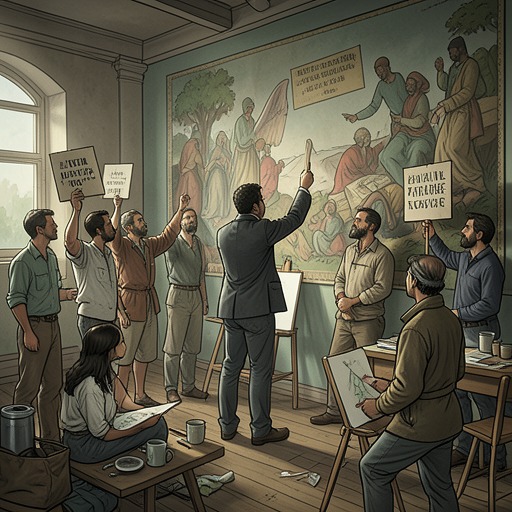
The auction becomes part of the evening’s public appeal rather than an accessory to the dance. Before the performance, Sophie announces that it has closed and says that the mural behind her will be auctioned after the finale. She makes the destination of the proceeds explicit: families in Taitung affected by the typhoon. The structure of the event thus gives different kinds of participation a place—performers contribute their work, donors compete for auction items, and audience members can support the relief effort without taking the stage.
The premiere of The Wanderer
Sophie introduces The Wanderer as the international debut of an original dance created and arranged by Ever Wong. The opening notes of “Lán Huā Cǎo” accompany the dancers as they move into three matching formations: in each, one girl turns with her arms raised while four others revolve around her like petals around a black flower. Three stage lights halo the groups. Their faces remain neutral at first, and their languid movements shape the dance against the soft drumbeat.
Ever describes the choreography as carrying a story, one that has changed with each rehearsal and each new element. As the music accelerates, the dancers remove their black robes to reveal sapphire, emerald, and orange. Silk ribbons unfurl, blue fans snap open, and the dancers’ skirts and hair spread as they whirl. The shift from concealed color to vivid motion gives the dance a visible arc of its own: disciplined formations open into an exuberant, changing field of color.
Ever and Rick later retrieve their staves and stage one last fight across the theater. Her ankle holds as the audience’s clapping becomes rhythmic and the other dancers form a semicircle behind them. Moving to ancient drumbeats with her bo staff, Ever feels the parts of herself come together: her Chinese heritage, her American life, and her sense that she is simply herself. The performance makes cultural belonging physical rather than an either-or choice, expressed through movement that can contain both sides at once.
Auction, proceeds, and aftermath
At Xavier’s request, Sophie presents his mural as the work of an anonymous student. While the bidding rises, Ever sits offstage as Lena wraps an ice bag around her angry ankle. The mural sells for US $7,100 to Xavier’s father, whose military bearing, immaculate white jacket, and steel-gray hair make him recognizable to Ever. The sale carries an irony the buyer does not know: he has purchased his son’s work without knowing its authorship.
Sophie announces that Chien Tan has raised more than 500,000 New Taiwan dollars—US $16,000—for typhoon-affected families in Taitung. Before the curtains reach the floor, the performers and organizers are already screaming and hugging. Lena cries, Spencer high-fives, and the group celebrates the result together. Li-Han, who had once thought the students spoiled Americans, tells them he is proud of them. The benefit therefore ends not only with a substantial sum raised, but with a change in how the group’s efforts are received: a talent show that might have remained a student diversion has become a public act of solidarity.