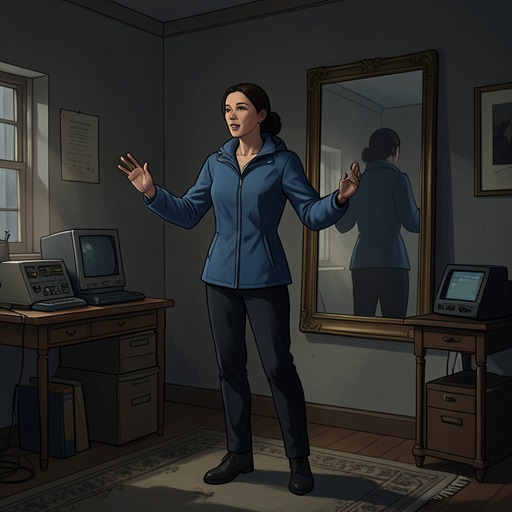
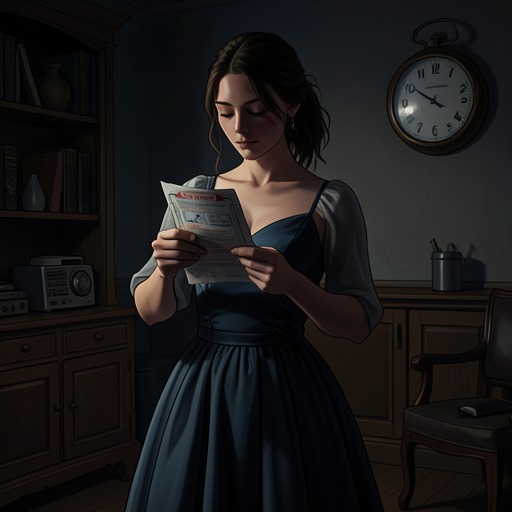
Ever joins Szeto’s ballet studio and signs up for auditions
Loveboat, TaipeiEver joins Szeto’s ballet studio and signs up for auditions at a moment when dance is still something she has been trying to put behind her. Finding a modest studio on the outskirts of Taipei, she is welcomed into a world of familiar movement and music; after learning that the studio will perform excerpts from Swan Lake in August, she agrees to audition for a solo. The commitment is costly and conflicts with Chien Tan’s Tour Down South, but Ever decides that the chance to dance is worth both the money and the effort of getting out of the trip.
Finding the Studio
After separating from Sophie Ha at the Metro, Ever walks several more blocks to the blue line, still trying to shake her worries. The studio is forty-five minutes from campus. She crosses quiet streets and enters a modest two-story building, where faded pink walls, well-loved Chinese wooden furniture, and the smell of lilacs give way to a mirror-lined dance room.
A dozen girls around Ever’s age stretch at a polished double barre, their black ponytails moving as Tchaikovsky’s “Waltz of the Flowers” plays. A red-haired instructor calls combinations in Mandarin and French. The familiar ballet environment lifts Ever’s heart before she has even spoken with the studio’s director; her response makes clear that dance remains a source of recognition and possibility, even as she tries to call it a farewell.
An elegant Chinese woman in her forties approaches Ever, her black hair arranged in a French braid and her carriage suggesting a history as a dancer. She introduces herself as Madame Szeto. Ever explains that she is with Chien Tan, saw a Coppélia album at a photography studio, and is a dancer hoping to find room in the classes or summer program. The hesitation in her description of herself contrasts with how quickly the studio’s sights and sounds draw her back toward ballet.
An Invitation and an Audition
Madame Szeto welcomes Ever and shows her an amateur playbill for the studio’s August performance of excerpts from Swan Lake at a community theater. Ever’s enthusiasm is immediate: the ballet is one of her favorites, especially the story of Odette, Odile, and the love that moves her. When she asks about lessons, she realizes that even the studio’s apparently modest fees will consume what remains of her savings for the summer.
The expense does not deter her. Ever asks whether auditions are available. Madame Szeto explains that only the solos require auditions, then names the principal roles other than the Prince: Odette, Odile, and Von Rothbart. She cautions that the roles are likely to go to students who train at the studio year-round, but Ever may try out if she prepares a two-minute piece.
Ever accepts at once. As she answers, she knocks a pointe shoe from the counter and hurriedly puts it back, a small disruption that accompanies the speed of her decision. Madame Szeto warns that the other girls have been preparing for weeks and that Ever should not expect too much. She nevertheless offers her an audition slot for Sunday after next at eight in the morning. The invitation is conditional and the competition established, but it gives Ever a concrete next step rather than a distant hope.
The Cost of Choosing Dance
The summer lessons will take the rest of Ever’s savings, and the audition requires her to prepare a two-minute solo while the studio’s regular dancers have already had weeks to work. Ever does not treat these obstacles as reasons to withdraw. The role she most wants is Odette, and she has studied its choreography obsessively; she even considers improvising to demonstrate what she can do.
The performance is scheduled for the second weekend of August, when Chien Tan will be away on the Tour Down South, the summer program’s highlight. For Ever, the tour and the performance are competing claims on the same limited stretch of summer. She decides that dancing matters more and resolves to find a way out of the trip. She imagines this as her last dance, a farewell, but the intensity with which she plans for the audition makes that farewell an active commitment rather than a passive surrender.
A Commitment Made Visible
Ever takes the eight o’clock audition slot. Madame Szeto writes “Wong Ai-Mei” into her ledger and gives her a card for a dance shop where she can buy clothes and shoes. Ever clutches the card like a lifeline: a practical object that turns her decision into preparations for training and performance.
Outside, under the hot sun, Ever puts a hand on the sidewalk and turns a cartwheel, despite her own disapproval of showy cartwheels. The gesture gives the scene a physical ending. She has not yet won a role, overcome the cost, or settled how she will avoid the tour; what has changed is that she has chosen to pursue ballet anyway. By enrolling at Szeto Ballet Studio and arranging the audition, Ever makes a private longing legible through money spent, time scheduled, and a body already moving.