Twinkie
Loveboat, Taipei“Twinkie” names the gap between Ever’s Asian appearance and her estrangement from Chinese American culture. Sophie uses the term after Ever tries bubble tea for the first time, turning a small moment of cultural discovery into a pointed recognition: among Chinese Americans, Ever finds that her ethnicity does not automatically make her feel at home.
The moment of naming
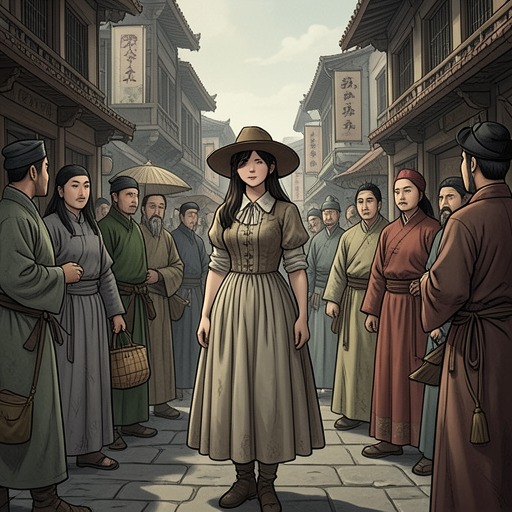
At a crowded mall, Sophie and Ever share coffee-and-cream bubble tea, its tapioca pearls gathered at the bottom of the cups. Ever has heard of the drink but is wary of its unfamiliar texture; after copying Sophie’s forceful jab through the plastic seal, she tastes the cold, sweet tea and decides she likes it. Sophie laughs and calls her a “Twinkie.”
The joke draws on the image of a snack that is yellow outside and white inside. Ever understands the implication, recalling that Grace Chin from her youth group would have reacted angrily to the label. Ever herself is not angry so much as defeated. The word makes a new experience—trying a familiar drink in a Chinese American crowd—feel like evidence that she has missed something she was expected to know.
Belonging and estrangement
Before the exchange, Ever has felt an unexpected relief in Taiwan: at the mall, her Asian Americanness seems invisible, unlike at home in the United States, where people sometimes turn to look at her family. But blending in does not resolve her uncertainty. The crowd’s familiarity with one another, the bubble tea, and Sophie’s teasing reveal another kind of distance: Ever does not feel Chinese American enough even among many Chinese Americans.
Her response is complicated by the sudden ache of missing Pearl. The label therefore touches more than her knowledge of food or customs. It arrives at a moment when her temporary relief at blending in gives way to loneliness, linking cultural unfamiliarity with separation from family and the unsettled question of where she belongs.
Identity beyond the label
Sophie identifies herself as Asian American and part Korean, then asks Ever whether she identifies that way. Ever admits that she has not really thought about it: she has considered herself American and previously wanted little to do with her Asianness. The exchange makes “Twinkie” part of a larger process in which Ever is pressed to consider an identity she had not made central to herself.
That identity is not reducible to a single cultural test. Ever explains that her parents migrated from Fujian to Singapore and then to the United States, distinguishing her family’s route from those of Sophie and Rick’s relatives in Taiwan. The term thus sits within a story of multiple migrations and uneven inheritance: appearance, family history, and cultural familiarity do not line up neatly. It captures Ever’s estrangement at this point in the story, not a final definition of who she is.