
Ever’s Choice Between Medicine and Dance
Loveboat, TaipeiThis flow traces Ever Wong’s movement from accepting medicine as her family’s destined future to claiming dance as her own vocation while seeking a more honest relationship with her parents.
increasing Bearing strength in each event
 decreasing
Bearing strength in each eventdecreasingA Medical Future

A Future Chosen in Advance
The family plan
Ever’s acceptance to Northwestern University’s medical program appears to confirm a future her parents have imagined for years. Her father’s thwarted medical career and the family’s sacrifices give that plan emotional weight beyond a college choice: medicine represents security, respect, and a chance to make their hardships worthwhile.
A private alternative
Ever has also applied to the New York University Tisch School of the Arts, keeping her dance ambition hidden beneath a pile of medical applications. When the dance department admits her from the waitlist, the offer makes an alternative life suddenly tangible, but it also exposes how little room she believes she has to choose it.
The conflict is not simply between a practical career and an artistic one. Ever experiences it as a choice between her own desire and the future her parents believe their sacrifices purchased for her. She has learned to treat their hopes as obligations, even before she has asked what she wants.
The Hidden Acceptance
The Offer She Cannot Keep
A brief opening
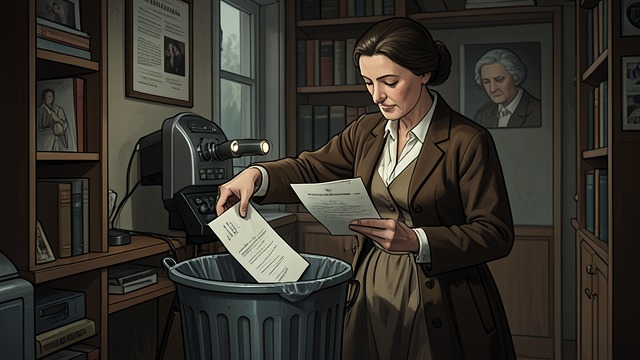
Ever initially receives the Tisch acceptance as a secret possibility. She imagines a life of dance, but she also knows that the scholarship is uncertain and tuition is beyond her family’s means. The dream feels real enough to awaken hope, yet fragile enough that she cannot bring herself to tell her parents.
The forced departure
When her mother discovers the letter, the family argument quickly expands beyond college. Ever’s parents connect dance with financial insecurity and their own lost opportunities, while Ever tries to promise that she will still study biology and prepare for Northwestern. Her mother discards the acceptance letter, and Ever feels that the future it represented has been thrown away with it.
Her parents’ plan to send her to Taiwan for an eight-week cultural program closes the immediate question without resolving it. Ever accepts the trip under pressure, carrying the guilt of her mother’s sold black-pearl necklace and the unspoken belief that her own future belongs to the family. The decision to decline Tisch turns a concealed dream into a real loss.
A Summer Without Dance
The Missing Studio
A ban that travels
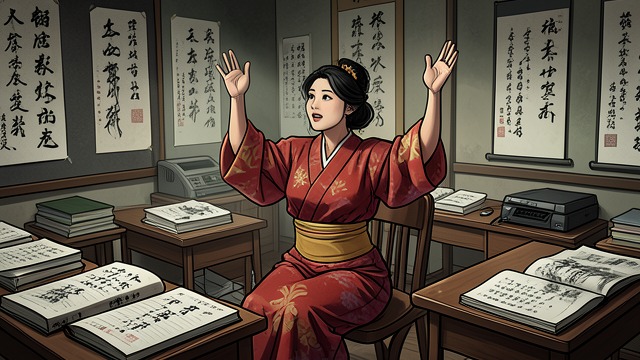
At Chien Tan, Ever discovers that her parents have selected her electives as well as her college path. Chinese medicine and calligraphy replace the dance classes she hoped to take, and every attempt to switch into fan or ribbon dancing meets a full-class refusal. The distance from home does not loosen her parents’ influence.
Searching for movement
Ever investigates dance studios in Taipei and finds that lessons would consume the money she brought for the summer. Even when she locates Madame Szeto’s small ballet studio, the cost means giving up much of her remaining savings. She accepts because dancing is not an optional pastime to her; it is the practice through which she recognizes herself.
Her effort to resume dancing complicates her understanding of rebellion. Ever is not merely trying to disobey her parents. She is trying to preserve a part of herself that their plans have repeatedly treated as expendable, while still accepting that family love and financial limits are real.
A New Creative Role
The Choreographer Emerges
Losing Odette
Ever misses her chance to audition for Odette in Madame Szeto’s production of Swan Lake. After Sophie’s betrayal leads the studio to reject her, the loss is especially sharp: Ever had treated the performance as a final farewell to dance, and now even that carefully preserved opportunity is gone.
Making a different stage
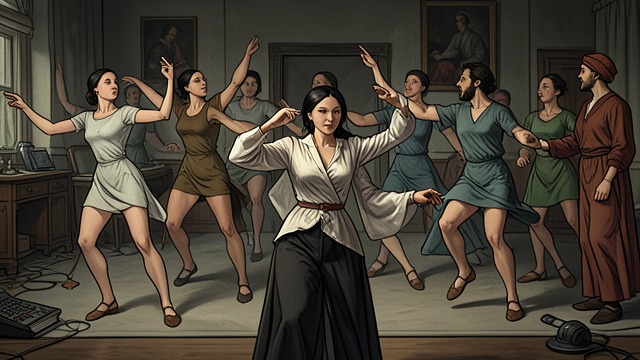
Rather than withdraw from dance, Ever begins building a new performance for the Chien Tan talent show. She recruits classmates, combines fans, ribbons, jazz, and Taiwanese music, and discovers that her strength lies not only in dancing but in shaping movement for a group. Encouraged by the other dancers, she accepts that “choreographer” may describe her more fully than the identity she had been afraid to claim.
The new work shifts the question from whether Ever can recover her old plan to what she can create under changed circumstances. Her work becomes a collaborative act: she finds a form for her own mixed influences and gives other students a way to contribute their abilities.
The Chosen Future

Choosing Dance Openly
A public decision
Back home, Ever tells her parents that she will not attend Northwestern University. She has thought through the practical risks and proposes a gap year teaching at Zeigler’s Ballet Studio while applying to dance programs and scholarships. Returning the medical-program deposit makes her decision concrete rather than another private wish.
Continuing the conversation
Her mother reacts with anger, insisting that dance is not a dependable career and accusing Ever of ingratitude. Ever answers by acknowledging what her parents gave up while explaining that their courage is part of what makes her own risk possible. Her father does not resolve the disagreement at once, but he offers support, and the family’s painful conversation continues over several days.
Ever’s decision does not erase family obligation; it changes how she understands it. She recognizes that choosing dance is not the same as rejecting her parents, and that a future made solely to repay them would not honor the life they worked to give her.
March 31, during the college decision season
June 5, shortly before Ever’s flight to Taiwan
The first two weeks at Chien Tan
After the audition fails, in the middle weeks of the program
After returning to Ohio, a few weeks after the summer program
