Ever's Dance Team
Loveboat, TaipeiEver’s dance team is the ensemble Ever assembles at Chien Tan to create and perform her original choreography. Its importance lies in the way it brings several strands of the summer together: a difficult attempt to make room for Sophie after betrayal, a disciplined collective practice that gives Ever an artistic role of her own, and a relief performance that directs the group’s work toward families struck by the typhoon in Taitung. The team’s culminating dance, The Wanderer, makes that work visible onstage; the fundraising that surrounds it turns performance into practical aid.
Formation and Reconciliation
Ever invites Sophie to join after Sophie has told her that she printed twenty of Ever’s photographs and tried to retrieve the rest, without knowing who might still have copies. Ever passes Sophie her blue fan and asks whether she might want to join the dance team. Sophie asks what she would do; Ever’s answer is simply to dance with them. The invitation comes after the harm has been named, but before trust is fully restored: it offers Sophie a place in a shared activity rather than pretending the breach never happened.
The offer is tested almost immediately. After Matteo is sent away from Chien Tan, Sophie arrives at rehearsal in the rain-soaked back courtyard, unusually sober, with a bruised eye hidden by makeup and the shadow of a straw hat. The other dancers are unhappy to see her. Debra warns Ever that the team has worked too hard to let Sophie stab them in the back, especially after what she did. Ever squeezes Debra’s hand, acknowledges her concern, and proceeds with a run-through. The scene presents inclusion as an active and contested choice: Ever does not ask the team to forget Sophie’s actions, but chooses to let the rehearsal become a setting in which their damaged relationship can be worked on.
The team’s capacity to act collectively is also practical and organizational. Sophie volunteers to speak with Li-Han and The Dragon about a proposal that would benefit Chien Tan, while recognizing that the request will need The Dragon’s approval. Ever tells Sophie that she is good at making things happen, linking this skill to the competitions and championships of her cousin Rick and to Sophie’s ability to find good deals. The exchange shows Sophie contributing more than her presence as a dancer: she helps turn an idea into something the program might authorize.
Rehearsal and the Work of Making a Dance
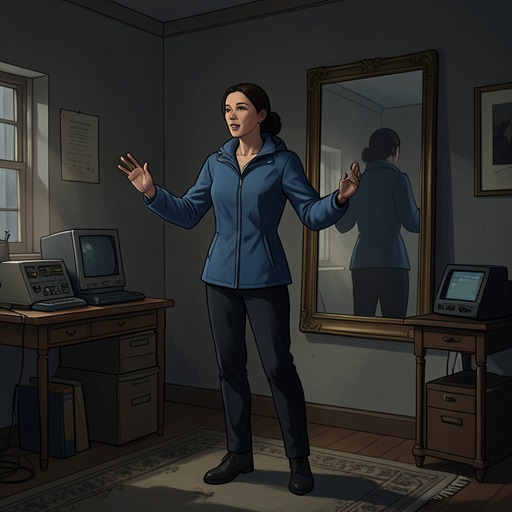
The group keeps working even as travel complicates its schedule. On the tour, buses arrive later at successive hotels after visits to tombs, caves, and temples, leaving less time for practice. The dancers search for spaces where they can rehearse away from The Dragon’s eyes. At the lodging in Kenting National Park, Debra connects speakers to her phone in a basement ballroom, where sixteen dancers run the complete routine before a wall-length mirror. Sophie has recruited Spencer and Benji, who carry in wooden drums as large as themselves. Ever touches the leather drumskin with her fingertips, making the drum sound; the instruments become part of the performance’s developing arrangement, rather than mere stage decoration.
The rehearsals give the dance a form that can change as the group adds material. Ever describes her choreography as carrying a story and notes that this story has evolved with each practice and each new element. The performance is therefore not presented as a fixed routine simply repeated until polished. Its meaning grows through collective rehearsal: music, drums, formations, costumes, and movement accumulate until the dancers can carry the work from a basement practice space onto a public stage.
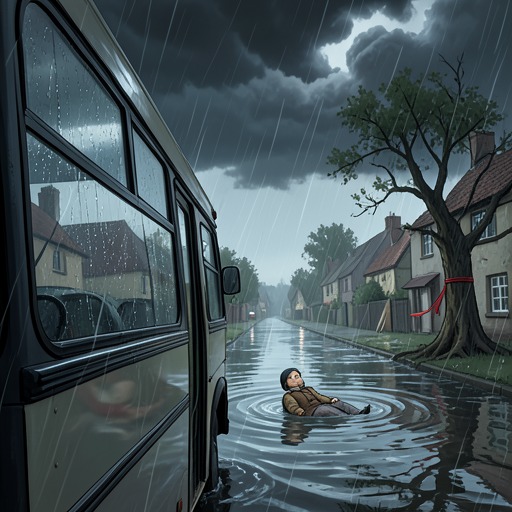
The team also responds to the worsening typhoon through travel itself. As the group’s bus passes a Puyuma village submerged by floodwater, only tin rooftops remain visible above the muddy water; debris includes an overturned rickshaw wheel, dead fish, and a doll with its striped skirt fanned out around it. The tour guide reports that no one was hurt, and conversation resumes. Later, Mei-Hwa says that her home in Taitung was hit and her whole village destroyed, so she is going back to help her parents. These encounters give the team’s eventual benefit performance a specific human context: disaster is not an abstract theme but a loss affecting people within the Chien Tan community and the places it travels through.
The Wanderer and Its Stage Image
At the final performance, the dancers wait in the wings with their black hair loose. Their bright dresses, ribbons, and fans are concealed beneath gauzy black overshirts buttoned to the neck. Before they dance, Sophie announces that an auction has closed and that its proceeds will be reported at the end of the show. She introduces one more item, Xavier’s mural, to be auctioned after the finale, specifying that all proceeds will go to families in Taitung affected by the typhoon. The announcement places the team’s performance within a wider fundraising effort rather than treating the dance as the sole source of aid.
Ever then introduces The Wanderer as an original dance created and arranged by herself. The opening notes of “Lán Huā Cǎo” accompany the dancers as they form three matching groups: in each, one girl raises her arms in a pirouette while four others revolve around her like petals around a black flower. Three stage lights halo the formations. With languid movements of hips and arms, the dancers reshape these clusters to the soft drumbeat. The subdued opening makes the later transformation legible: when the music accelerates, the dancers remove their black robes and reveal sapphire, emerald, and orange. Silk ribbons unfurl, blue fans snap open, and wrist flicks and turning skirts send the colors across the stage.
The movement supplies the story Ever says her choreography needs. The initially hidden colors emerge in coordinated waves, while the group’s formations turn individual dancers into parts of a changing design. What began in rehearsal as a routine that could absorb new elements becomes a performance with a deliberate visual arc: concealment gives way to color, and the clustered opening gives way to an expansive ensemble image. The title, music, props, and choreography all belong to Ever’s authored work, but the result depends on sixteen people rehearsing and performing it together.
Collective Performance and Public Response
The team’s performance occurs within an evening also shaped by the Gang of Five’s turn at the Ms. Chien Tan Beauty Contest. The group, previously described by Marc, David, and Sam as taking back stereotypes of Asian men, appears in the contest under playful stage identities. The audience cheers, The Dragon claps from the front row, and the contest runs overtime. This parallel makes the evening’s larger program one of public self-presentation: the dance team offers Ever’s choreography, while the contest’s performers claim control over a stereotype through their own staging.
The dancers’ own stage preparation is notably collective. Debra gives Rick a thumbs-up from the wings as the team lines up in costume. Ever centers Rick’s collar and kisses his frown before telling him she can manage the moment. The exchange happens alongside the dancers’ readiness to perform, keeping the personal and public sides of the evening in view without displacing the team’s focus. Ever steadies herself by spinning her staff once, then introduces the dance; the ensemble takes the stage and carries the piece through its planned transition from black overshirts to vivid colors.
Relief Work and Significance
The team’s dance is part of a benefit whose intended recipients are families in Taitung affected by the typhoon. Sophie’s auction announcement explicitly directs proceeds to those families, and after the performance she reports that the event raised over five hundred thousand NTs, identified in the narrative as US $16,000. The amount belongs to the benefit as a whole; the account does not assign it exclusively to the dance team. It does show, however, that the dancers’ culminating performance took place inside an organized effort that converted the students’ public event, auction, and artistic contributions into substantial relief funds.
The team’s significance rests in this combination of making and doing. It gives Ever a setting in which she can lead an original work, but the leadership is not solitary: Sophie helps organize, Debra manages the rehearsal setup, Spencer and Benji bring drums, and the dancers collectively shape the choreography in practice and onstage. By including Sophie, Ever also makes the team a site where repair can be attempted without denying past harm. Finally, the benefit gives the ensemble’s artistic labor an outward direction. The Wanderer remains Ever’s creation, yet its colors, formations, and public success are realized by a group—and that group’s work helps answer the disaster affecting people in Taitung.