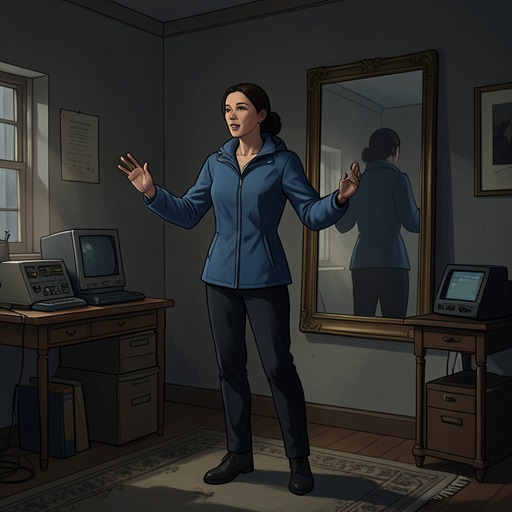
Lena
Loveboat, TaipeiLena is a gifted dancer who joins Ever’s talent-show group and becomes one of its quiet sources of steadiness. Her story gives the group’s creative work a personal counterpoint: Lena has considered a dance career, but has chosen physical therapy as a way to remain close to dance without making the ballet world her profession. In supporting Ever’s performance, she offers encouragement shaped by her own thoughtful negotiation between ambition, family, and the life she wants.
Identity and Background
Lena is an accomplished dancer, though Ever has not seen her dance before the talent-show group comes together. She has not been part of the group’s clubbing life and is involved in the weekly Bible study she started on the fifth floor. Her participation therefore brings a different kind of commitment to the ensemble: she joins the work without sharing every aspect of its social world.
Lena’s mother is a dancer who gave up her career to raise her. Lena says she considered dancing professionally herself, but discussed the choice with her mother and concluded that ballet was too cutthroat and subjective. Unlike a sport with a clear win-or-lose outcome, ballet’s judgments can feel less definite. Lena’s account makes her decision neither a rejection of dance nor a simple surrender of ambition; she is weighing the conditions of a professional career against her desire to keep dancing in her life.
A Chosen Path Toward Dance
Lena plans to apply to physical therapy school and hopes to work with dancers. The profession would let her stay within the dance world, choose her working hours, and preserve time for dancing herself. Her plan turns a perceived choice between art and a sustainable working life into a deliberate route that keeps both in view.
That practical answer strikes Ever sharply. Ever envies Lena’s ability to discuss her future with her mother and wonders why she cannot speak to her own parents in the same way. She reflects on the cultural distance between them, then recognizes how little of her inner life she shares at home: she turns instead to her best friend or a librarian to talk about books, music, and dance. Lena’s family conversation thus becomes an implicit contrast with Ever’s strained relationship with her parents, not because Lena’s path is identical to Ever’s, but because she can make a difficult choice through dialogue rather than concealment.
Role in Ever’s Performance
When Ever worries that the missing tent pole has damaged the planned routine, Lena sees a possibility in the problem. She suggests that Ever perform a moving solo that covers the stage while the others form around her. Ever objects that she is not allowed to do it, but Lena’s proposal shifts attention from the missing prop to Ever’s ability as a dancer. Debra reinforces the suggestion, arguing that the Dragon need not know until the group is already onstage and that Ever is its best dancer.
Lena’s support is not limited to a single piece of advice. During the group’s rehearsals, she is singled out for her fluid dancing: Ever tells her she moves as if made of water, and the other girls agree. The praise marks Lena as a strong performer in her own right, while her encouragement of Ever makes her an active contributor to the group’s choreography and confidence.
As tensions rise during practice, Lena acts as a peacemaker. When Debra reacts to the strain between Ever and Rick and fears that a falling-out could undo the show, Lena puts an arm around each of them and reminds Debra that she had already said the arrangement was perfect. The gesture is practical as well as conciliatory: it pulls the disagreement back toward the shared performance the group has worked to create.
The Show and Its Collaborative Form
The talent-show routine grows beyond the original dance by Ever and Megan. Ever reworks it for fifteen girls, arranging them in three groups of five with fans, ribbons, and jazz steps that braid together as the music builds. Lena participates in this larger ensemble, in which the choreography depends on coordinated formations rather than a single dancer’s display.
The rehearsal process makes room for both planned structure and spontaneous play. The girls practice to Lán Huā Cǎo, the old song Mei-Hwa shared with Ever, then move into free dancing when the music shifts to an unchoreographed song. Lena’s fluidity stands out within this collective setting, but the performance’s development remains collaborative: the group tests formations, adjusts its staging, and makes space for Ever’s proposed solo.
During the show’s second half, Debra and Laura perform a zither duet, and a trio of children and a counselor from Bus D improvise a jazz number. These acts precede the Gang of Five’s gender-bending beauty-contest performance and the dancers’ own finale. The varied program places the girls’ routine within a broader evening of music, improvisation, and theatrical play rather than treating dance as an isolated showcase.
Narrative Significance
Lena’s defining contrast with Ever is not that she is less devoted to dance, but that she has found a way to make that devotion compatible with another career plan and an open conversation with her mother. Ever’s response exposes what she lacks at home: a safe route for bringing her interests and aspirations to her parents. Lena’s example therefore helps illuminate Ever’s conflict without resolving it for her.
Within the group, Lena’s influence takes the form of concrete acts: she recognizes a solution when a prop is missing, supports Ever’s place at the center of the performance, and helps prevent interpersonal friction from displacing the work. Her dancing and her peacemaking belong to the same collaborative role. She helps the ensemble hold together while making room for Ever to become more visible onstage.