
The Jester’s Impossible Timeline
MayaThe legend of Comodín challenges linear chronology as stories, images, and memory appear to travel between generations and even backward through time.
increasing Bearing strength in each event
 decreasing
Bearing strength in each eventdecreasingA Portrait Before Photography
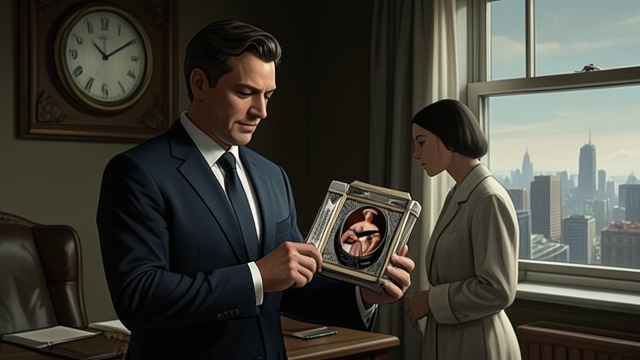
A Portrait Before Photography
A seemingly modern image
The legend places a lifelike portrait in Comodín’s possession before the invention of photography. Witnesses are said to have regarded its vividness as supernatural or diabolical.
An image without a stable origin
The portrait seems to depict a woman who will live much later, creating a temporal puzzle. It is not simply a picture of the past but an object that appears to carry a future face backward.
The Deck’s Missing Figure
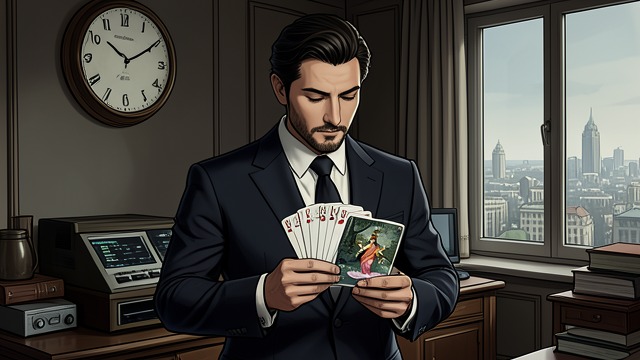
The Deck’s Missing Figure
A figure on the cards
The sailor’s deck contains small, elaborately dressed figures, including Comodín. The sailor’s isolation turns the images into companions, and the legend says the figures enter the world he inhabits.
An unresolved contradiction
The story places Comodín both in the deck and in historical encounters beyond the island. The contradiction is treated as a feature of the legend’s strange movement between imagination and external reality.
Appearances in Fifty-Two Years
Appearances in Fifty-Two Years
A recurring interval
Comodín is linked to sightings separated by 52 years: in Marseille, in Triana, and in Seville in 1946. The repeated interval connects the tale to the card deck and to a cycle remembered by the family.
Pattern or fabrication
The sequence invites belief in a temporal rule while remaining unverifiable as history. Its power lies in repetition: each later appearance gives earlier stories a renewed appearance of coherence.
The Future Picture

The Future Picture
A modern-looking image
Comodín photographs Ana shortly before her collapse. The family legend treats the photograph as a future image that has traveled back to the earlier world of the portrait.
The story folds together
Ana’s resemblance to Goya’s figure and the jester’s photograph appear to form a closed circuit. The account makes it difficult to decide whether the image predicts Ana, creates her resemblance, or merely becomes meaningful afterward.
The Rule of Invention
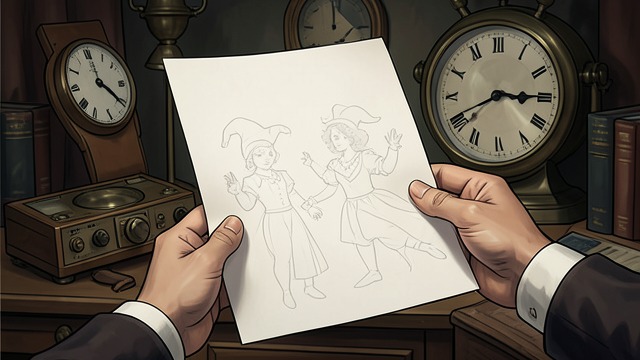
The Rule of Invention
Stories travel through time
José argues that what is fantastic may move backward only as far as its own conception. The jester’s legend can therefore appear in the past after people have imagined it, but cannot leave evidence before the story exists.
History made unstable
The explanation does not prove time travel; it gives the legend an internal logic. It also suggests that stories can alter how people interpret earlier events, making imagination a force within memory even when it cannot rewrite physical history.
At Cádiz harbor in 1790
After the sailor’s 1790 shipwreck
From Marseille in 1842 through Seville in 1946
1998, before Ana’s chase in the Alcázar gardens
José’s explanation to Frank in Madrid
