
The Moral Weight of Ecological Care
MayaEnvironmental arguments in the novel evolve from observations about island ecosystems into a broader claim that human awareness entails obligations toward other life.
increasing Bearing strength in each event
 decreasing
Bearing strength in each eventdecreasingA Chain of Unintended Harm
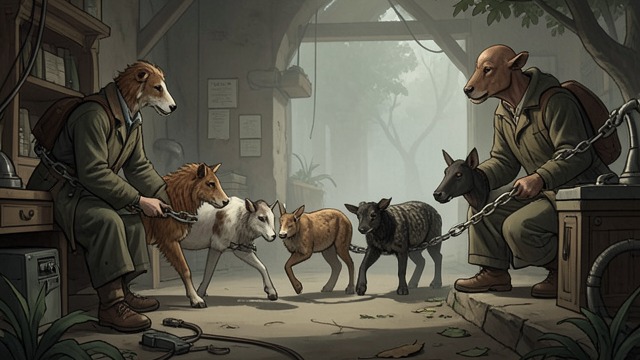
A Chain of Unintended Harm
One intervention follows another
Introduced species are used to control pests, and later introductions attempt to control the new problems. The sequence shows how a local solution can create a wider ecological cascade.
Knowledge and restraint
Frank’s fieldwork emphasizes that natural systems are difficult to rebuild once disrupted. Understanding the consequences of intervention becomes a reason for humility, not a claim that humans can manage every living relationship.
Rights and Obligations
Rights and Obligations
A colonial paradox
Frank considers the irony that fear of cannibalism may have delayed some European incursions into Fiji, while later colonization brought ecological damage, exploitation, and disease. The comparison is deliberately uncomfortable rather than celebratory.
Beyond human entitlement
He argues that talk of natural rights should be matched by natural obligations. His point is that human beings must answer for the ecological consequences of their power, not merely claim authority over the land.
The Gaia Disagreement
The Gaia Disagreement
Humanity as a temporary species
Laura argues that Earth may recover from humanity as it recovered from earlier extinctions. She identifies herself with the planet’s larger life rather than with her individual human body.
The value of persons
Frank objects that individual human lives have value that cannot be erased by planetary continuity. Their disagreement makes environmental concern a moral question about how to care for both ecosystems and particular beings.
Bouma’s Protected Forest
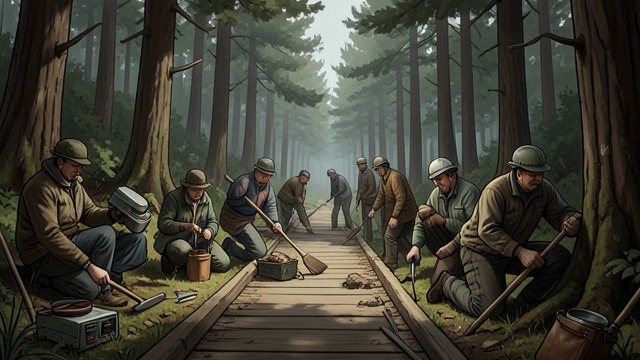
Bouma’s Protected Forest
A local refusal
The people of Bouma reject a timber offer and choose to protect their forest through a park. Their decision recognizes that conservation can support livelihoods over a longer period than a single sale.
Care made communal
Residents build and maintain visitor facilities themselves. The park shows ecological responsibility operating through local choices rather than only through abstract arguments or distant institutions.
Responsibility Beyond Earth
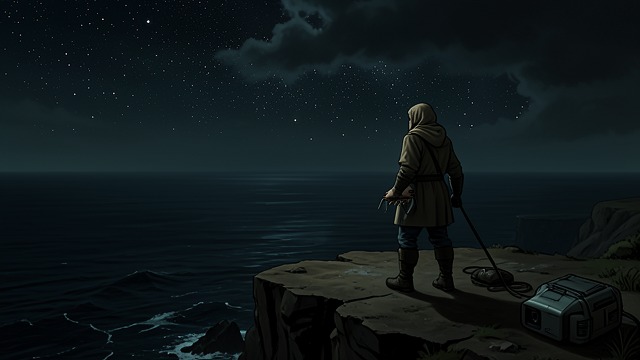
Responsibility Beyond Earth
Consciousness as a rare capacity
The maxim suggests that human beings may be among the only creatures capable of a universal perspective. Whether or not the claim is true, it makes reflective awareness a responsibility rather than a privilege.
Protection against silence
The warning that darkness may return gives ecological care a cosmic horizon. Preserving habitats matters not only because they serve people but because the world contains forms of life and awareness that may be difficult or impossible to recreate.
Frank’s account of Pacific island ecology
During Frank’s reflections on Fiji’s history
Breakfast on Frank’s second day at Maravu
Frank’s visit to Bouma Forest Park
The maxim on John’s photograph after the funeral
