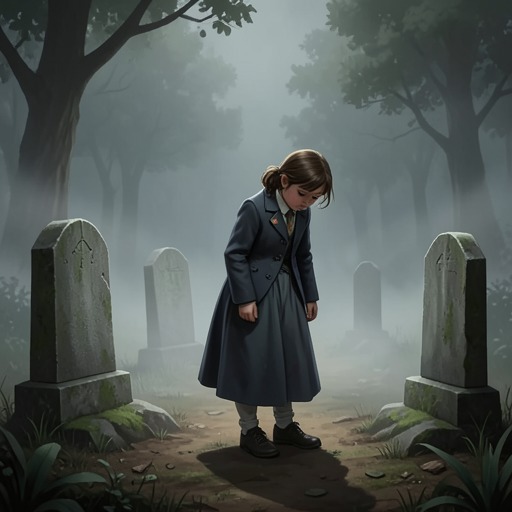
“The things I remember are more real than the things I see”
Memoirs of a Geisha“The things I remember are more real than the things I see” is a late expression of the novel’s view that memory can make the absent past more vivid than the present. The Chairman voices the thought while remembering the pine trees of his childhood; in the surrounding narrative, remembered places and keepsakes also connect Sayuri to losses that have shaped her life.
The Chairman’s Remembrance
On the Chairman’s last visit to New York City, he and Sayuri walk through Central Park and talk about the past. Among the pine trees, he stops with both frail hands resting on his cane, closes his eyes, and breathes in deeply. Sayuri recognizes that he is remembering the pines along the street outside Osaka where he grew up. His remark follows this physical pause: “Sometimes,” he sighs, “I think the things I remember are more real than the things I see.” The trees in the present prompt a childhood memory, and his words place the remembered scene above immediate sight in emotional reality.
The phrase belongs to a moment between two people whose shared life is approaching its end. The Chairman is frail, and Sayuri has already begun to fear losing him. His observation therefore carries more than nostalgia: it makes memory a way of sustaining what time and death will take from view. The novel leaves the statement in his voice, grounded in a particular remembered landscape rather than offered as an abstract maxim.
Earlier Returns of the Past
Sayuri’s own memories repeatedly break into the present. On the journey to Hakone, the prospect of travel awakens the image of an earlier train platform: the day she and Satsu were taken from home with Mr. Bekku. For years, she had tried not to think about her sister, her parents, or the family’s house on the sea cliffs; absorbed in Gion, she had come to treat it as the whole world. Leaving Kyoto reveals that life extends beyond Gion, but it also returns her to the family life she had tried to put aside. The past arrives not through deliberate recollection alone but as grief that opens unexpectedly.
An earlier package from Mr. Tanaka makes memory tangible. Auntie opens it for Sayuri and finds, inside a dark wooden box and folds of white linen, the small mortuary tablets once kept before the altar in the family home. Two tablets bear unfamiliar Buddhist names. Sayuri cannot understand why Mr. Tanaka sent them, but the tablets preserve a material link to the childhood and family from which she has been separated. Their later significance is sharpened when, facing the possibility that her life has divided irrevocably, she remembers them as the last remains of her childhood.
Objects, Loss, and What Remains
At the sea cliffs, distressed after an evening of humiliation, Sayuri takes the Chairman’s handkerchief from her sleeve. She has carried it to bed for comfort and dries her face with it before nearly releasing it into the wind. The mortuary tablets return to her mind: just as they are all that remain of her childhood, she decides, the handkerchief will remain of the rest of her life. The comparison joins two periods of loss through objects that hold personal history—the tablets from her family home and the handkerchief associated with the Chairman.
The Chairman’s reflection later gives this pattern a shared meaning. After walking among the pines, he and Sayuri return to her apartment and experience their renewed intimacy; afterward, she dreams of a man explaining that his deeply loved wife remains alive through the pleasure of their time together. In the dream, Sayuri drinks extraordinary soup and understands that the people who have died or left her continue to live within her. She names Satsu, her parents, Mr. Tanaka, Nobu, and the Chairman among those she carries. When she wakes in tears and takes the Chairman’s hand, his frailty brings back the fear that she cannot live without him. His words about memory thus resonate with her own recognition that the absent past persists within the living.
Meaning and Narrative Function
The phrase is not a denial of the visible world: it arises precisely because the Chairman sees present-day pines that recall the trees of his youth. Instead, the scene shows how perception can open onto a remembered place whose emotional presence exceeds what stands before him. Sayuri’s narrative extends the idea beyond childhood recollection. Family tablets, a handkerchief, a remembered platform, and the Chairman’s remembered pines each give absence a distinct form, while the people themselves endure in the narrator’s inward life.
Placed near the end of Sayuri’s account, the line gathers together a recurring movement in the story: the present gives way to memories of those who have left, and objects and places help make those memories present again. The Chairman dies a few months after the New York walk. The phrase therefore frames remembrance not as a substitute for the living person, but as one way their presence remains meaningful after they are gone.