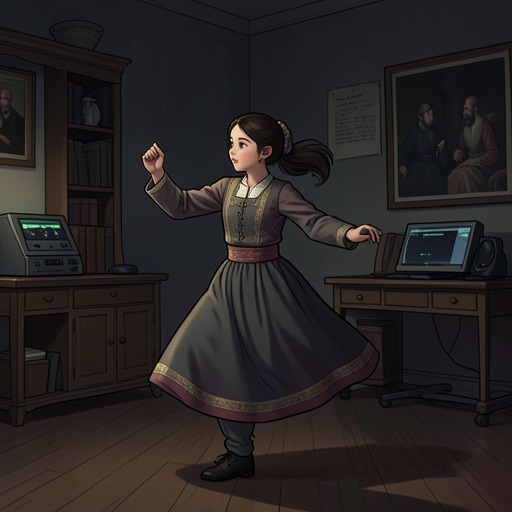
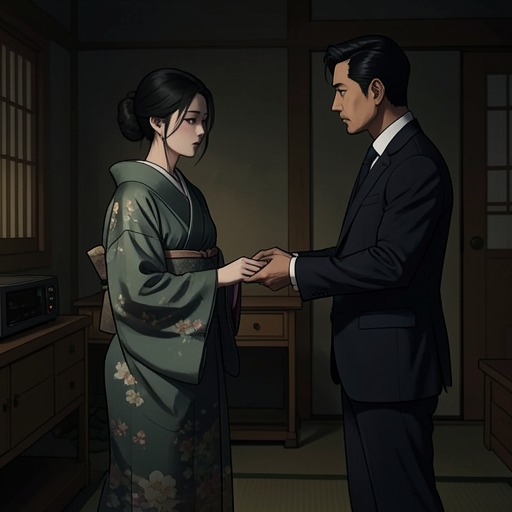
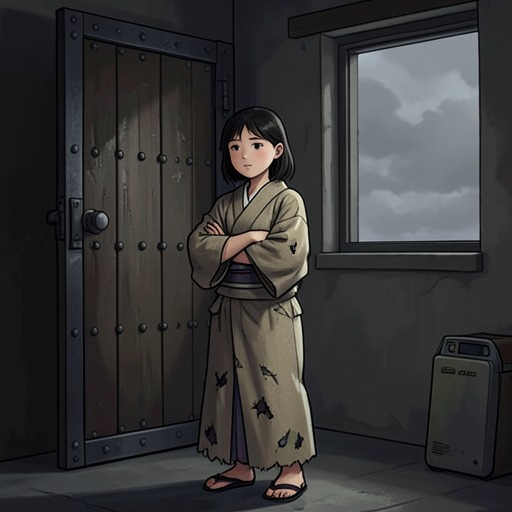
Sayuri is adopted as a daughter of the Nitta household
Memoirs of a GeishaSayuri’s adoption by Mother is both a reversal of her vulnerable position in the okiya and a financial transaction that binds her more firmly to it. The ceremony promises her the status of a daughter, protection from Hatsumomo, and eventual succession to the house; in exchange, the okiya absorbs her debts and claims her earnings. The adoption’s emotional promise and economic price are inseparable.
Debts and the okiya’s offer
From the beginning, Sayuri’s training is framed by a debt she had not known she owed. The okiya charges her not only for meals and lessons, but also for a doctor’s fees if she falls ill and the expense of acquiring her. She had suspected that money changed hands when she and Satsu were taken from home, and had wondered whether Mr. Tanaka profited from helping to sell them. What she had not understood was that she herself would have to repay that cost. Mother’s account books thus register more than household spending: they turn a child’s arrival, care, and training into an obligation against her future labor.
When Mameha becomes Sayuri’s older sister, Mother sees the arrangement as a risky investment. A girl with Mameha’s standing would normally take a larger share of her younger sister’s earnings, and Sayuri’s debts, Mother argues, would only grow before they could be repaid. Mother therefore proposes paying Mameha just half her usual share at first, with the remainder plus an additional thirty percent promised if Sayuri repays her debts by age twenty. The negotiation makes clear that Sayuri’s prospects are being assessed through competing claims on the money she may someday earn: Mother wants to limit the okiya’s immediate expense, while Mameha’s tutelage is expected to increase Sayuri’s future value.
The decision and its immediate reversal
Mother announces her decision after calling Sayuri to stay in her room. She taps out her pipe, fills and lights it, then tells Sayuri that her status in the okiya is about to change. The next week, they will perform a ceremony, after which Sayuri will be Mother’s daughter as if she had been born to her. Mother says the okiya will one day belong to Sayuri.
The proposed change has an immediate domestic consequence. As the okiya’s daughter, Sayuri will eventually move into the larger room then occupied by Hatsumomo and Pumpkin; the two will share the smaller room where Sayuri has been living. More important to Sayuri, the adoption would place her beyond Hatsumomo’s reach. She understands this as the fulfillment of Mameha’s plan, though she had not truly believed the outcome would come. Her relief is complicated by the sight of Mother’s drooping lip and yellowed eyes: the woman offering protection remains someone Sayuri regards as hateful, and Sayuri cannot simply align herself with either Mother or Hatsumomo.
Hatsumomo enters during Mother’s announcement. When conflict follows, Mother orders her to treat Sayuri respectfully from then until the adoption and to have a maid bring tea for the two of them. The instruction gives the future status an immediate force: before the ceremony has taken place, Mother is already asserting authority on Sayuri’s behalf. Sayuri, meanwhile, asks whether Mother might adopt Pumpkin as well. The question shows that her new security does not erase her awareness of Pumpkin’s position, even as the adoption threatens to divide their places in the household.
Mizuage, motive, and the financial settlement
Mameha’s apparent satisfaction with the adoption is first explained to Sayuri through the success of the mizuage bidding. She says the bidding went as hoped and that the final figure was considerable; learning of it, she says, made her certain Mrs. Nitta would adopt Sayuri. The later account complicates this explanation. The contest was not between Dr. Crab and Nobu, as Sayuri had initially been led to believe, but between Dr. Crab and the Baron. Nobu did bid aggressively during the first days, until the price passed ¥8,000, but then withdrew. The mizuage ultimately brought in a record sum, and the adoption followed when the windfall made Mother’s financial interest unmistakable.
The retrospective account states that the mizuage fee was more than enough to repay Sayuri’s debts to the okiya. Had Mother not adopted her, part of that money would have gone to Sayuri. By making her the okiya’s daughter, Mother instead caused the house to absorb the debt: Sayuri no longer owed it money, but all her profits belonged to it, not only the mizuage proceeds but her earnings thereafter. The adoption therefore does not simply cancel an account. It changes the basis of the claim, replacing a finite debt with the okiya’s continuing right to her income.
Name, status, and legacy
The adoption takes place the following week. Sayuri’s given name has already changed; now her family name changes as well. The girl once known as Sakamoto Chiyo becomes Nitta Sayuri. The change marks her incorporation into the household not merely as a trainee maintained by it, but as the daughter expected to succeed to it. At the same moment, her personal debt disappears and her economic independence narrows: the okiya absorbs what she owes and receives what she earns.
The adoption’s promises are measured against the later life of the house. During the war, Mother’s ability to turn other people’s losses into profit becomes conspicuous in her gray-market trading in heirlooms and kimonos. The account does not present this later activity as the adoption’s cause, but it sharpens the portrait of an okiya where care, ownership, and income are intertwined. Another form of practical support appears through Sayuri’s danna, General Tottori, whose payments cover expenses including lessons, registration, and medical costs; his position as director of military procurement also enables him to secure medicine for Auntie when she falls ill in 1939. These arrangements show how the household’s stability depends on networks of payment and patronage as well as the labor of its geisha.
As a turning point, the adoption gives Sayuri protection from Hatsumomo and makes her future in the okiya imaginable, but it does not free her from the institution’s economic structure. Its central exchange is exacting: daughterhood brings a room, authority, and a possible inheritance; in return, the house takes the income that might otherwise have been hers. The new name promises belonging while recording the price of that belonging.