Sayuri is cast in Dances of the Old Capital
Memoirs of a GeishaSayuri is cast in Dances of the Old Capital after an injured apprentice’s solo role becomes available, a sudden opening that makes her the target of Hatsumomo’s resentment and gives Mameha a chance to challenge Hatsumomo’s power over Sayuri’s reputation. The appointment is both a stage debut and a reversal: Sayuri has been kept from public view, yet the work she did in private has prepared her to step forward when the opportunity comes.
Background and Competition
Dances of the Old Capital is Gion’s largest annual event, and its opening is scheduled for the beginning of April, only six weeks away when Mameha raises the subject with Dr. Crab. Although the roles were assigned months earlier, the production needs no more than sixty dancers from a district where, in the mid-1950s, perhaps seven or eight hundred geisha work. The scarcity of places makes the annual casting competitive enough to damage friendships.
Sayuri initially believes Mameha is inventing a stage role to explain why Hatsumomo might lie about her. The truth is more complicated: Mameha is confident the claim will soon become true, but Sayuri has not yet received the part when the conversation takes place. By the time Sayuri learns of the casting, only a few days have passed since Mameha invoked it as a reason Hatsumomo would want to disgrace her.
Hatsumomo’s Campaign and Mameha’s Countermove
Mameha tells Dr. Crab that Hatsumomo has spread a false story about Sayuri throughout Gion, and links the attack to Sayuri’s supposed important role in the production. Sayuri has in fact been kept off the stage by Mameha, who wants to avoid provoking Hatsumomo. When Dr. Crab doubts that Hatsumomo would invent stories over a casting decision, Mameha offers a rival account of the competition: Hatsumomo wanted a role for her younger sister, Pumpkin, while Mameha herself says she received a part Hatsumomo wanted.
That explanation is deliberately strategic. Mameha has not taken a role from Hatsumomo; she is among the few geisha guaranteed a solo role each year. Pumpkin, despite having won an apprentice’s award and other honors, has never excelled at dance. Mameha’s story gives Dr. Crab a plausible motive for Hatsumomo’s hostility, while turning the casting dispute into leverage in Sayuri’s effort to secure his support as her mizuage patron. When Dr. Crab proposes having a hospital doctor examine Sayuri, Mameha answers that arranging this would be difficult before he has agreed to become her patron. The exchange shows how the coming stage role is used not merely as a performance opportunity but as a defense against a damaging rumor and a means of pressing a patronage negotiation.
The Opening and Sayuri’s Preparation
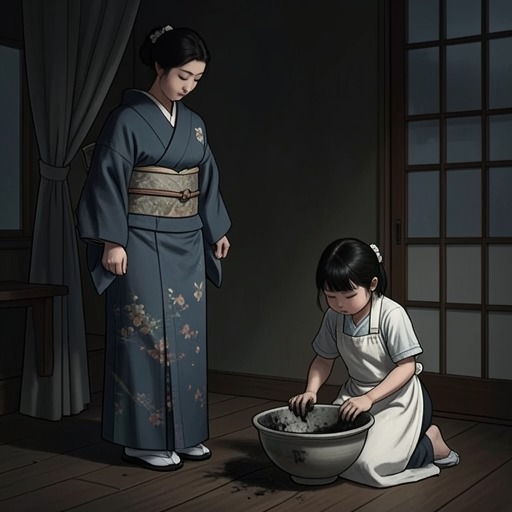
The decisive vacancy arises when a seventeen-year-old apprentice with a solo part falls down a flight of stairs and injures her leg. The injured dancer is devastated; other apprentices, however, immediately offer to replace her. Sayuri is chosen for the role. At fifteen, she has never danced onstage, but her casting does not depend on prior public experience. She has spent many evenings practicing at the okiya instead of going from party to party, with Auntie often accompanying her on the shamisen.
That sustained practice has helped Sayuri reach the eleventh level by age fifteen, though she does not claim exceptional natural talent. Her advancement and readiness emerge from repetition and discipline rather than from an established reputation as a dancer. The same seclusion that has restricted her opportunities has also left her with the preparation needed to take advantage of this one. The assignment comes in mid-March, leaving about a month to rehearse before the early-April opening. Her dance teacher helps her, often working with her privately in the afternoons.
Reversal and Consequences
Mother does not hear about the appointment from Hatsumomo. Several days after Sayuri receives the part, Mother learns the rumor during a mah-jongg game, returns to the okiya, and asks Sayuri whether it is true. After Sayuri confirms it, Mother walks away with a puzzled expression. The scene records the news reaching the household indirectly, through gossip, before it settles into Sayuri’s new responsibilities.
Hatsumomo is furious, but Mameha is unconcerned. She regards the casting as the point at which they can throw Hatsumomo out of the ring. The role thus changes the balance of their conflict: an attack intended to undermine Sayuri’s integrity has been answered by a real public opportunity, and Hatsumomo’s preference for Pumpkin cannot prevent Sayuri from taking the available part.
Significance
The casting brings private training into public view. Sayuri had been kept from the stage to avoid provoking Hatsumomo, and she had not expected to dance an important role; nevertheless, the evenings spent practicing have made her a credible replacement when an unforeseen vacancy appears. The event therefore joins contingency to preparation: another dancer’s injury creates the opening, but Sayuri’s accumulated work enables her to fill it.
The role also sharpens the contrast between rumor and performance. Mameha first presents Sayuri’s stage appearance as a fact in order to explain Hatsumomo’s motives, then discovers that the claim is about to become true. What begins as a tactical defense becomes an actual change in Sayuri’s standing. Her casting does not end the rivalry, but it gives Mameha grounds to confront it openly and gives Sayuri a place on the stage that she had previously been denied.