Sayuri retires from her geisha career in Gion
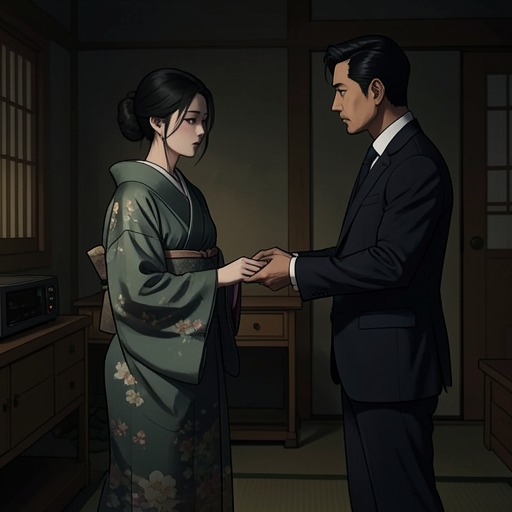
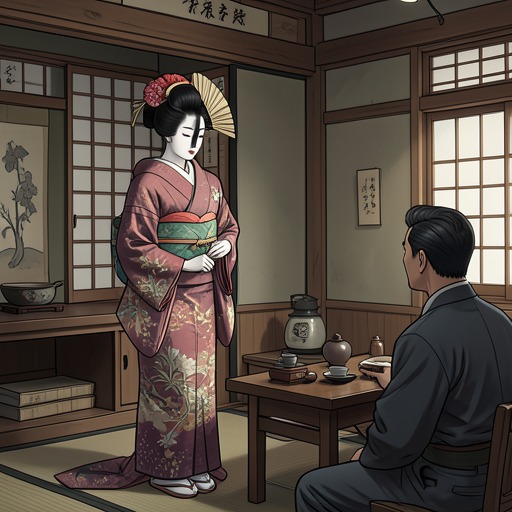
Memoirs of a GeishaSayuri’s retirement from her geisha career in Gion resolves one long-held desire at the price of another kind of belonging. After the Chairman becomes her danna, she gives up entertaining and the public routines of her profession; because he is already married and Mother will not let her leave the Nitta household without compensation, Sayuri remains in the okiya while withdrawing from Gion’s working life. The choice protects the Chairman’s relationship with her from Nobu’s view, but it cannot prevent the loss of her friendship with Nobu or her place in the world she once hoped to enter.
The cost of the Chairman’s choice
Sayuri describes the decision against the future she had imagined since girlhood: becoming the Chairman’s mistress had seemed to promise a perfect life. Instead, she recognizes that making Nobu disappear from her life also means banishing herself from Gion. Their friendship is not an incidental casualty. Sayuri sees the pattern in her earlier rupture with Pumpkin: when someone wins a prize coveted by a friend, the prize may have to be hidden, or the friendship will suffer. The Chairman wants Sayuri out of Gion so that Nobu will not see her, turning her retirement into the consequence of a love that cannot be publicly lived without damaging another bond.
The negotiations between the Chairman and Mother take several months. The Chairman is already married, so he will not marry Sayuri; a separate teahouse or inn, where Nobu would be unlikely to encounter her, might have offered a way out of Gion while giving her a new home. Mother refuses to let Sayuri leave the Nitta family, however, because the household would lose the revenue from her relationship. The settlement is financial: the Chairman agrees to pay the okiya a considerable sum each month on the condition that Mother allow Sayuri to end her career. Her retirement is therefore private in one sense, but economically arranged among the Chairman, Mother, and the household that has depended on her work.
What retirement changes
Sayuri stays in the okiya, where she has lived for years, but no longer attends morning lessons, makes the customary rounds of Gion on special occasions, or entertains guests in the evenings. The change is not a marriage into a different public role, nor a move into an independent business. She occupies a middle ground: kept out of Gion’s professional life for the Chairman’s sake, yet still a member of the household because Mother’s income depends on the arrangement. The work that once structured her days disappears while the living arrangements and financial ties that shaped her life remain.
Her choice does not make the loss easy. Sayuri had become a geisha in order to win the Chairman’s affection, and she might therefore have expected to feel little regret at giving up the profession. Instead, she misses the friendships she formed with other geisha and with men she came to know through her work. Gion’s performers have little time for socializing, but Sayuri envies the sight of two geisha hurrying together to their next engagement and laughing about the last one. She does not envy the uncertainty of their existence; she misses its sense of possibility, the feeling that an evening might still bring some mischievous pleasure.
Ties that continue, and those that do not
Retirement does not end Sayuri’s connection with Mameha. They have tea at least several times a week, and Sayuri feels deeply indebted to the woman who guided her from childhood and played a special role in her life on the Chairman’s behalf. When Sayuri finds an eighteenth-century silk painting of a woman teaching a girl calligraphy, the teacher’s benevolent expression reminds her of Mameha, and she buys it as a gift. Their continued meetings preserve an intimate bond, even as the physical setting of that bond has changed: Mameha now lives in a simple one-room apartment rather than the elegant apartment Sayuri remembers, with its view of water rushing over the Shirakawa Stream’s cascade.
The rupture with Nobu, by contrast, remains unresolved. Sayuri continues to hope that he may one day forgive her, and asks Mameha whether he has inquired about her. Eventually she must stop asking. Mameha’s sigh and sad look communicate that Sayuri has been holding on to a hope that will not restore the relationship. The retirement has thus taken more than a job: it has severed the friendship whose loss Sayuri had helped bring about, without giving her the reunion she still longs for.
A new private life
In the spring after Sayuri becomes the Chairman’s mistress, he purchases Eishin-an, a luxurious house in northeastern Kyoto intended for company guests but used chiefly by the two of them. They meet there three or four nights a week, sometimes more. The Chairman may arrive late and want only a hot bath and sleep; on other evenings he comes around sunset, eats dinner, and talks with Sayuri while servants light the garden lanterns. These visits show what replaces her evenings of public entertainment: not a return to geisha work, but a sustained private companionship organized around the Chairman’s needs and the life he can share with her.
Sayuri attends to the rhythms of that companionship as closely as she once attended to the demands of a banquet. When the Chairman speaks about a difficult workday, she listens for the tone of his voice rather than treating his account as information he wants her to retain. As he speaks, his voice softens; she then turns the conversation toward lighter matters, such as the morning’s events, a film they watched, or a story from Mameha. The shift from his work troubles to playful talk is a form of care that settles him, like water softening a stiff towel. Yet this new intimacy does not undo retirement’s losses: Sayuri has gained frequent evenings with the Chairman while relinquishing the public work, friendships, and promise of Gion that once gave her life its shape.