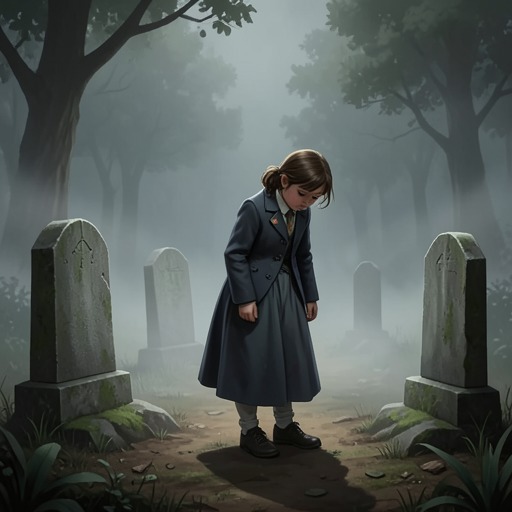
The Chairman’s death
Memoirs of a GeishaThe Chairman’s death, which comes only months after Sayuri awakens from a dream about carrying the dead and departed within herself, turns anticipated loss into a final reckoning with memory. His frailty makes his absence imaginable before it happens; afterward, Sayuri understands his departure as part of the natural passing of things, while insisting that the richness of her memories keeps him with her.
Anticipating the Loss
On the Chairman’s last visit to New York City, he and Sayuri walk through Central Park and talk about the past. Among pine trees, he stops with both frail hands resting on his cane, closes his eyes, and breathes deeply. Sayuri recognizes that he is remembering the pines outside Osaka, where he grew up. His stillness makes the past feel present, even as his body shows its vulnerability.
Later, after they return to her apartment, their intimacy leaves Sayuri feeling both drained and filled by what each has taken from the other. She falls asleep and dreams of a banquet in Gion, where an elderly man explains that his beloved wife is not truly gone because the pleasure of their life together remains within him. As she drinks an extraordinary soup, Sayuri understands the image as a way of holding those she has lost: her sister Satsu, her parents, Mr. Tanaka, Nobu, and the Chairman. She wakes in tears and takes the Chairman’s hand, afraid that she will not be able to live without him.
Death and Recognition
The Chairman is already so frail that Sayuri thinks of her mother in Yoroido. When he dies a few months later, however, she comes to understand his departure as natural, like leaves falling from trees at the end of a long life. The comparison does not erase grief; it gives the loss a place within the same world of change that has shaped her life.
Sayuri recalls that her own path to the Chairman began with the cut lip that brought her to Mr. Tanaka, and with the death of her mother and the cruel sale that followed. She pictures those events as a stream tumbling over rocky cliffs on its way to the ocean. The image links the Chairman’s death to a much longer current of loss and chance, rather than isolating it as an ending unrelated to everything before it.
Memory Afterward
Sayuri cannot explain what guides a life, but describes her own fall toward the Chairman as inevitable, like a stone falling toward the earth. His death does not undo that bond: she says she still has him in the richness of her memories, and that recounting her life has allowed her to live it again. In this account, remembrance is not simply a record of the absent; it is the means by which their presence continues within the survivor.
The Chairman’s own remark in Central Park, that the things he remembers sometimes seem more real than the things he sees, anticipates this understanding. His death makes memory more than nostalgia: it becomes Sayuri’s way of retaining the person she feared losing. The passage thus moves from the sight of his frailty, through the dream’s imagined consolation, to an acceptance of death that preserves attachment without denying absence.