Aadam Aziz
Midnight's ChildrenAadam Aziz is a Kashmiri doctor whose life is shaped by a refusal to bow before God or man, a marriage initiated through a perforated sheet, and a family history that flows into Saleem Sinai’s. The novel makes him both a person in his own right and a source of inherited patterns: the inner vacancy he associates with his oath, the family’s changing relations to India and Pakistan, and the recurrent pull of Kashmir all reappear in the grandson’s narration. Aadam’s story begins with a moment of religious doubt and ends on the lakeside landscape where that story began, but the questions surrounding his final journey remain open.
Identity and Early Life
In the early spring of 1915, while attempting to pray on the frozen ground of Kashmir, Aadam struck his nose against the earth. The incident prompted him to resolve never again to bow to God or man. In Saleem’s account, the oath leaves a vacancy within Aadam, making him vulnerable to women and history. The novel links this inward change to the physical imagery of his nose and to the wider question of belonging: whether he is Kashmiri or Indian.
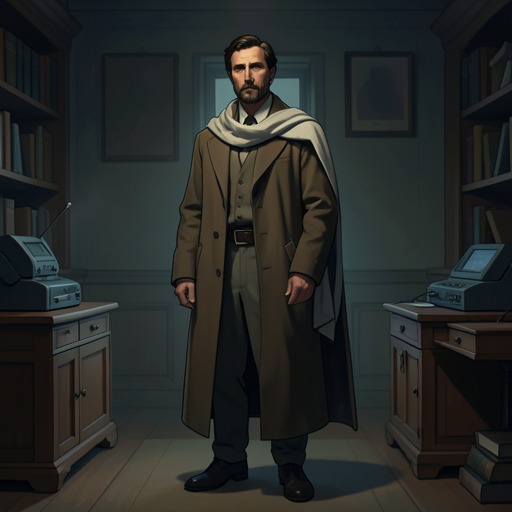
Aadam returned from medical training in Heidelberg as a newly qualified doctor to find his family altered in his absence. His father had suffered a stroke, which his mother had kept from him because she did not want to interrupt his studies. His mother, previously confined by purdah, had taken over the small gemstone business that helped pay for his education, supplemented by a scholarship. His father, meanwhile, sat in a darkened room, impaired by the stroke. Aadam’s return therefore brought him not to the family order he had left, but to a reversal of its roles.
His medical bag and training accompany him through moments when private life meets public history. At Jallianwala Bagh, he enters a gathering of thousands through a narrow alley, carrying his Heidelberg bag and trying to set aside his fear as a doctor. Saleem later connects the mark left by the bag’s clasp to the bruise that becomes an enduring sign in the family’s memory. The bruise, and the question of whether Aadam is Kashmiri or Indian, becomes part of the inheritance Saleem claims.
Marriage and Family
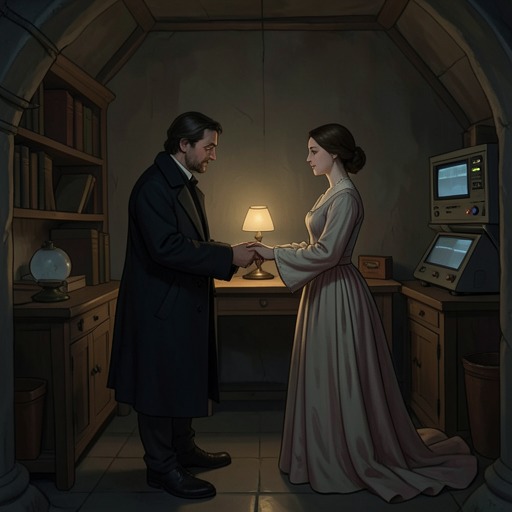
Aadam’s medical work brings him to the home of Ghani, where he encounters Naseem through a large sheet held up by two women. The sheet conceals her from view except for the portion exposed for examination. This arrangement turns the doctor’s visits into an intimate process of piecemeal knowledge: he examines what he can see, while Naseem must imagine the doctor from his hands and instruments. Aadam’s professional role gives way to love, and he comes to regard the perforated sheet as something sacred and magical because the encounter fills, for a time, the vacancy left by his oath.
The sheet is more than the means by which Aadam meets Naseem. It establishes an image that Saleem later treats as part of his own inheritance: knowledge mediated by a gap, connection made through concealment, and a family shaped by what can and cannot be seen. Aadam’s marriage begins through this restricted arrangement, and the perforated fabric returns years later as a tangible remnant of the past. When Aadam retrieves it from an old trunk, he discovers that its original hole has widened and that smaller holes have appeared around it. The worn object makes the passage of family time visible.
Aadam and Naseem become Saleem’s grandparents and the parents of Amina, later known as Amina Sinai. In Saleem’s retrospective account, Aadam’s inheritance includes the endurance associated with his mother and the later steeliness of Naseem, as well as a family connection to Kashmir that persists across generations. Saleem also describes Aadam’s father’s ability to converse with birds as a gift passed down through the family’s winding bloodlines. His own sense of identity is thus presented not as a single trait inherited from one parent, but as the result of layered family histories.
Politics and Historical Inheritance
Aadam’s political commitments form part of the family’s changing relationship with the subcontinent. Saleem recalls that Aadam and Mian Abdullah opposed the creation of Pakistan. Later, however, Aadam no longer had the strength to argue when Amina praised Pakistan; he retained enough resolve to refuse emigration. His position is marked by both conviction and fatigue, rather than by an uncomplicated political allegiance.
Saleem frames Aadam’s life as a beginning of inheritance, connecting the Kashmir of his grandfather’s youth to the national upheavals that follow. In one account of this inheritance, the family’s choice of India is associated with the enduring bruise left by the clasp of Aadam’s Heidelberg bag. In another, Saleem says that the answer to the question of being Indian or Kashmiri can be found in the bruise’s ceaseless throbbing. These formulations show how the novel makes a private bodily mark carry a historical and political question without resolving the tension between regional and national identity.
Aadam’s later presence in the family is not simply one of authority. As his beliefs weaken with age, the convictions that had sustained his youth give way under the pressures of old age, Reverend Mother, and the absence of like-minded friends. Saleem dreams of Aadam as an old man with a great shadow within him, an image that recalls the earlier vacancy. The dream makes the grandfather’s inward struggle part of the grandson’s imaginative inheritance, rather than presenting it only as a sequence of outward events.
Later Years and Death
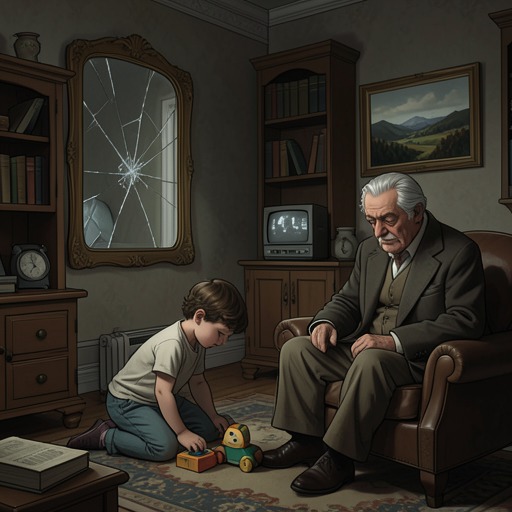
During the forty-day mourning period for his son Hanif, Aadam undergoes a startling religious experience. On the twenty-second day, Saleem reports, Aadam sees God. The next day he gathers the family in the room where Saleem had earlier spoken of his own visions and tells them that, three weeks after learning that the son he believed alive was dead, he saw God with his own eyes. Reverend Mother dismisses his account as the confusion of an old man, and the family does not believe him.
Mary Pereira responds differently. She understands that the figure Aadam saw was Joseph D’Costa, whose death and the burden of her own responsibility for it have left him marked by wounds to his hands and feet. Joseph had died in a nearby clocktower after being mistaken for God. The scene connects Aadam’s vision to a truth hidden within the family and known to Mary, while preserving the gap between what Aadam believes he saw and what the reader is told about the apparition.
Aadam’s health continues to fail, and he does not die until 1964. On Christmas Day in 1963, he leaves home by rickshaw for the railway station before Reverend Mother realizes he is gone. She reaches the station too late; the train has already departed. His unexplained departure begins a final journey that carries him toward the city surrounded by mountains and set beside a lake, returning his story to Kashmir.
On January 1, Aadam arrives outside the temple of Sankara Acharya. His death coincides with the search for the sacred hair of the Prophet. Five days before the government announces that the search has succeeded, Aadam dies; when religious authorities assemble to authenticate the relic, he is no longer alive to tell them what he might have known. The narration leaves the possible significance of his knowledge unanswered. His death closes his personal journey, but not the uncertainty surrounding the sacred hair or the history attached to it.
Narrative Role and Significance
Aadam’s life is organized around recurrence and inheritance. The oath made after his failed prayer creates the vacancy that his encounter with Naseem partly fills; the perforated sheet that brings them together later returns as an aged object in the family’s past. His nose, his medical bag, and the bruise associated with it connect intimate experience to political history, while Kashmir remains both a remembered homeland and a destination toward which the family’s imagination turns.
For Saleem, Aadam is not merely a forebear but one of the figures through whom family memory becomes a way of narrating the nation. Saleem identifies his grandfather’s choices and afflictions as part of what formed him, and later imagines Aadam in dreams as an old man whose former convictions are fading. The grandson’s narration also insists on the incompleteness of that inheritance: Aadam’s final journey begins through an unknown impulse, and his death prevents him from clarifying what he could have contributed to the controversy over the sacred hair. The unresolved ending is fitting to a character whose life repeatedly joins firm acts of refusal to questions that history does not settle.