Parvati-the-witch
Midnight's ChildrenParvati-the-witch is a magician born seven seconds after midnight on August 15, 1947, whose supernatural abilities are genuine rather than tricks of performance. Raised in Old Delhi’s conjurers’ ghetto, she becomes one of Saleem’s earliest and most steadfast allies among the Midnight Children. Her career moves between private sorcery and public illusion, while her changing relationship with Saleem draws her into the novel’s patterns of secrecy, identity, and repeated history.
Identity and Background
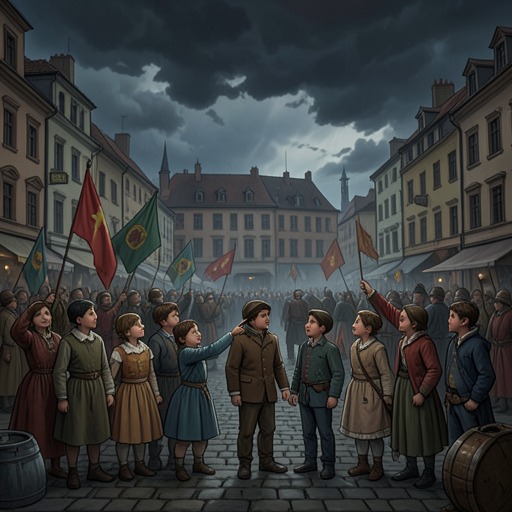
Parvati was born in a slum clustered around the steps of the Friday Mosque, in the Old Delhi quarter known as the magicians’ ghetto. Its ramshackle huts, made from packing cases, corrugated tin, and jute sacking, housed performers who had come to the capital seeking a living but faced police harassment and poverty. The community included ventriloquists, contortionists, fire-eaters, and other illusionists; Parvati grew up among their displays, not apart from them.
Her father had once been the greatest conjurer in Oudh. As a child, Parvati stood among the crowds while he performed feats that made her appear to endure impossible acts. Yet the more consequential secret was her own: born seven seconds after midnight, she possessed what the narration distinguishes as the true gifts of conjuration and sorcery, not the artifice of stage illusion. The midnight-born children included talents as varied as flight, transformation, prophecy, and transmutation; Parvati’s place among them was defined by wizardry.
The narrative presents these gifts against the dark age into which the children are born. Their powers make brilliance possible, but do not ensure goodness or moral clarity. Parvati’s story, accordingly, joins wonder to the ordinary pressures of poverty, community, loyalty, and desire rather than placing magic outside social life.
The Midnight Children and Saleem
After Saleem’s bicycle accident brings the midnight-born children into his mental field, he discovers them individually and forms the Midnight Children’s Conference. Parvati supports his claim to lead: when the children debate who should direct the group, she argues that without Saleem they cannot communicate and should make him chief. Saleem declines the title in favor of being regarded as an elder brother, but her endorsement helps secure his leadership for a time.
The Conference is meant to unite children whose lives and gifts differ, and Saleem urges them to find a shared purpose. Parvati remains among his strongest supporters as the group’s ideal is tested by rivalries, class distinctions, religious and regional prejudice, and the distractions of its members’ separate lives. Saleem imagines the children as a new principle capable of resisting the divisions around them; their growing conflicts expose how difficult that hope is to sustain.
Years later, Saleem’s return from Pakistan allows him to convene the Conference again. At first, the reunion seems to restore a lost community. But when the children question his secrecy and the parts of his mind he has closed off, he cannot explain what he has withheld. Parvati, previously his fondest supporter, loses patience and tells him he has changed. As the others withdraw, she is the only midnight child still willing to speak with him. The Conference’s disappearance leaves their connection as the last remaining thread of the group’s former life.
Sorcery, Secrecy, and Return
Parvati keeps her real abilities hidden because the magicians’ community has little reason to welcome a power that would challenge its understanding of performance. When she shows Saleem what she can do in a secluded place on the blind side of the Friday Mosque, her work is described as white magic: she can cure illness, counter poisons, treat sores, and consecrate talismans. Her demonstrations are made for Saleem, and the account stresses both the range of her knowledge and the limits of what she is willing to perform.
After India’s army enters the city, Parvati appears in public as a performer. She uses a large wicker basket to make volunteers disappear and remain absent until she chooses to bring them back. The genuine sorceress has placed her midnight-born power in the service of an illusionist’s trade, so the crowd sees a trick while the narrative identifies a different source for it. Among the returning magicians, she recognizes Saleem and gives him back his name. As he enters the basket, she reminds him that they are both children of midnight; he then vanishes inside it. The episode makes her magic an instrument of rescue and reunion, not simply spectacle.
Saleem, Shiva, and Laylah
After Saleem rejects her, Parvati turns to her own agency rather than waiting for his decision. She takes a bamboo stick with seven knots and an improvised metal hook, holds a lock of hair, and summons Shiva. The summons succeeds. The reunion brings Saleem’s former rival into the life of the magicians’ ghetto and changes the course of Parvati’s relationship with Saleem.
Later, Saleem’s lie about his inability to father a child leaves Parvati in a desperate position. Picture Singh suggests marriage as a way to preserve her honor and address the situation Saleem has described; Saleem, troubled by his own history and by his unreturned love for Jamila Singer, does not refuse. Parvati accepts him. Their marriage is therefore not presented as a simple romantic resolution: it grows out of the consequences of Saleem’s lie and the pressures surrounding her future.
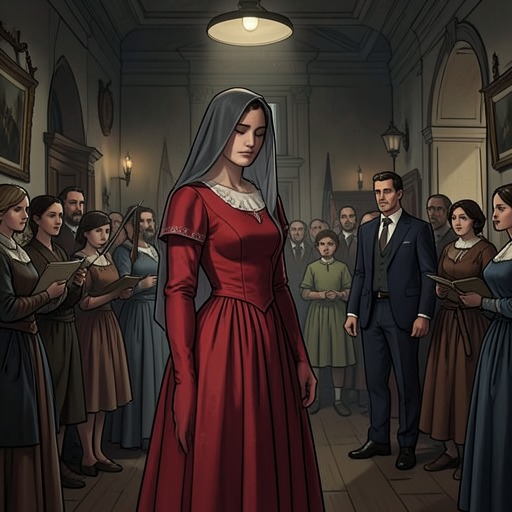
Before the wedding, Parvati formally converts to Islam and takes the name Laylah, chosen by Saleem. The change of name places her within the narrative’s recurrent pattern of people becoming new persons through renaming, while also preparing for the birth of her child. At the wedding celebrations, the magicians divide themselves between the couple as surrogate families; the ceremony takes place on a dais made from boxes associated with Resham Bibi’s demolished shack. Parvati faints during the proceedings, while the possibility that the child is already affecting her is left unspoken among the guests.
Motherhood and Narrative Significance
Parvati’s labor lasts thirteen days, with Saleem beside her, fasting and anxiously awaiting the birth. The long, difficult delivery unfolds alongside the political crisis that becomes the Emergency: as political opponents are arrested and civil rights suspended, Parvati finally gives birth at midnight. The coincidence binds the intimate event of a child’s arrival to a national turning point, continuing the novel’s practice of making family history echo public history.
The child is named Aadam Sinai and is Saleem’s son by marriage, although Saleem’s account makes the boy’s paternity part of a more complicated family history. The birth also completes a reversal: Parvati, herself one of the midnight children, becomes a mother during another consequential midnight. Her trajectory thus links the Conference’s early promise to its eventual dispersal, and private acts of care to the political forces that shape the lives of the characters.
Parvati’s role is not limited to being a magical helper or a figure in Saleem’s family story. She helps make the Conference possible, remains beside Saleem when its members abandon him, gives him back his name, and acts decisively when his choices leave her vulnerable. Her powers can conceal, summon, heal, and release, but they do not exempt her from the costs of secrecy or the constraints of the world around her. Through her, the narrative holds together two kinds of transformation: the marvel of midnight-born sorcery and the deeply human changes of loyalty, rejection, marriage, and parenthood.