Xianfeng Caifeiguan
Midnight's ChildrenThe Pioneer Café is a modest, dilapidated Bombay establishment whose changing clientele makes it a small map of the city’s ambitions and political life. Saleem first encounters it while following Amina Sinai through an unfamiliar northern district; from outside its dirty window, he witnesses her meeting with Nadir Khan, the former husband whose name and history she has kept from her son. The café’s significance lies in that double function: a place where people gather in pursuit of public dreams, and a screen through which a child glimpses a concealed family past.
Setting and daily life
The café is presented as a long, narrow, neon-lit room, with dirty windows and tables, painted signs advertising lassi, falooda, and Bombay fashion, and film music playing from a cheap radio near the till. Men sit at tables covered in worn material, occupied with cards. Its grimy appearance contrasts with more fashionable city cafés, but does not make it socially insignificant: the Pioneer is a place where different groups come at different hours, each carrying its own hopes.
In the early morning, the café fills with would-be actors and other men seeking work or fortune in the film industry. They have come to Bombay with dreams of stardom, money, and extravagant homes. Studio representatives arrive around six to recruit extras for the day’s shoots. For a brief period, as scouts from studios including D. W. Rama Studios, Filmistan Talkies, and R K Films select their workers, the café becomes a focal point for the city’s hopes of entering the movies. When the scouts leave with the chosen extras, the café empties back into its usual quiet.
A meeting place for different ambitions
The afternoon brings a different clientele. Men gather over cards, drinks, and biris, and Saleem later understands that the café is a well-known Communist Party haunt. The morning’s competition for film work and the afternoon’s political gathering are distinct uses of the same room: one directed toward personal advancement in the commercial film world, the other associated with party politics. The café’s routine gives these activities a shared physical setting without erasing their differences.
This shifting use helps define the café as more than a picturesque background. Its inhabitants are connected by their presence at the margins of the city’s more prosperous life, but they arrive with different objectives. The daily change of clientele makes the café a compact social crossroads: a place where the pursuit of recognition and the business of politics both take place in an unglamorous room.
Saleem’s discovery outside the window
The café becomes personally consequential when Amina visits it. Saleem has followed her north in the car boot, escaped into the street using his trick with pink plastic, and tracked her to the Pioneer. He cannot bring himself to enter. Instead, he presses his face to the dirty window and watches from the street, conspicuous as a prosperous, neatly dressed child among the café’s regulars.
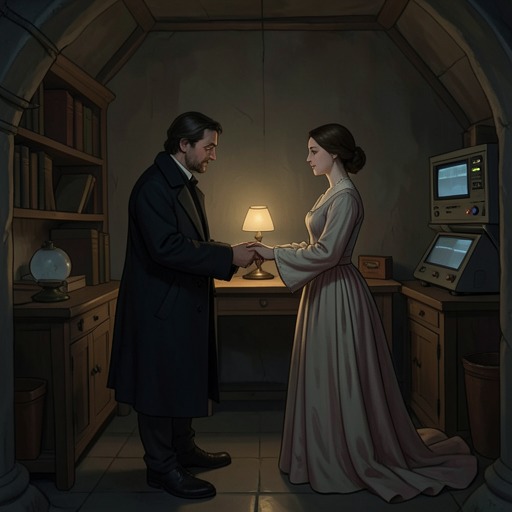
Inside, Amina moves hesitantly past the tables and sits at a shadowed table. A man rises to greet her: Nadir Khan, whom Saleem recognizes by the name that has haunted his thoughts since he overheard his mother repeating it. The café’s glass separates the boy from the reunion, allowing him to see it while keeping him outside the conversation. His observation changes what he understands about his family: the man Amina meets is not a stranger, but the former husband who disappeared from her life.
Nadir Khan’s new identity and narrative significance
By the time Saleem sees him, Nadir Khan has resurfaced after a long absence under the name Qasim Khan. He is an official Communist Party candidate, known as Lai Qasim or Qasim the Red. The location therefore links the disclosure of Amina’s concealed past with the political identity Nadir has adopted in his new life. The family secret and the café’s afternoon political world meet at the same table.
Saleem’s perspective makes the scene a study in partial knowledge. He watches through dirty glass, recognizes the man but cannot enter their meeting, and concentrates on details inside the café as he struggles with what he has discovered. The Pioneer becomes a literal viewing frame: it exposes the reunion to the child while preserving the lovers’ privacy from him. Its role in the novel follows from that contrast between what can be seen and what can yet be understood, as a public meeting place becomes the setting for a private revelation.