Joseph D’Costa
Midnight's ChildrenJoseph D’Costa is a hospital orderly whose growing political anger, disappearance, and death shape Mary Pereira’s life long after he is gone. Their relationship helps explain Mary’s decision to switch the newborns’ name-tags, while his ghost makes her concealed crime an enduring presence in the household and in Saleem’s account of his own identity.
Identity and political awakening
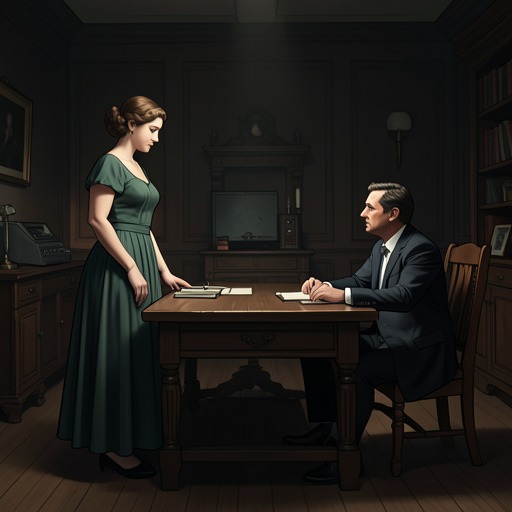
Joseph works as an orderly at Doctor Narlikar’s Nursing Home on Pedder Road, where Mary is a midwife. At first, he courts her with outings for tea, lassi, and falooda, and soft-spoken affection. Mary remembers his eyes as intense, but their early relationship is described as tender and pleasurable to her.
The relationship changes when Joseph begins sniffing the air and insists that the wind comes from the north, carrying news of death. He reads the violence in Punjab and Bengal as evidence that independence is serving the rich while the poor are being made to kill one another. His response is political: he argues that people must be shown whom to fight instead of being turned against each other. He also rejects Mary’s appeal to Christian identity, telling her that Christianity is the white people’s religion and that their own people are dying.
Mary does not share his politics. She urges him to live quietly and questions why Hindu and Muslim people’s conflict should involve Christians. As Joseph stops confiding in her and associates with dangerous people, rumors reach Mary that he is throwing bricks at cars, burning bottles, setting buses alight, and helping to blow up trams. Her account presents his radicalization through the distance it creates between them: she regards his activism as frightening, while he regards her objections as a failure to understand the cause.
Mary, Alice, and the hidden crime
Alarmed by Joseph’s conduct and hoping to intervene, Mary tells her sister Alice about him. Mary speculates that living near a slaughterhouse may have muddled his thinking, and Alice goes to speak with him. Instead of bringing him back to Mary, Alice blames Mary for repeatedly arguing with Joseph rather than supporting his political cause. Later rumors link Alice and Joseph, deepening Mary’s jealousy and distress. Mary says she will do anything to get him back, even though the relationship has already become painful and uncertain.
Joseph disappears while police search for him. During the midnight births at Doctor Narlikar’s Nursing Home, a police car on Colaba Causeway is hunting for him; he has been absent from his work, his room near the slaughterhouse, and Mary’s life. Three days after Saleem’s birth, Mary, unable to confess the baby-switching she has committed, recognizes that Joseph has abandoned both her and Alice. She leaves the Nursing Home and asks Amina Sinai to employ her as an ayah, explaining that she fell in love with the baby at first sight. From then on, Mary devotes herself to raising Saleem, making her care for him inseparable from the memory of the crime she has not disclosed.
The novel connects Mary’s action to her attachment to Joseph, but does not present the switch as his instruction or as a political act by him. His disappearance leaves Mary alone with her remorse; she chooses service and affection toward Saleem as a partial amends, while keeping the secret that will eventually change the family’s understanding of his birth.
Death and the haunting
Joseph is found dead in the clocktower after a snakebite. When his body is carried out, Mary faints at the sight of his face. Inspector Vakeel identifies him as a wanted criminal and says the tower held homemade bombs, enough explosive power to destroy the hill. The discovery joins Joseph’s political militancy to the household’s immediate present, while his death gives Mary’s private grief a visible, consequential form.
After his death, Joseph returns in Mary’s dreams. Saleem, whose developing telepathy reaches into other people’s thoughts, encounters these dreams at midnight: Joseph appears in changing forms and accuses Mary, while Saleem senses the guilt carried by the family’s food. Mary’s pickles and chutneys become associated with that guilt, and later with dreams of accusing fingers. The narration does not give Saleem access to the whole secret at once; Mary’s remorse is present before he can understand its cause.
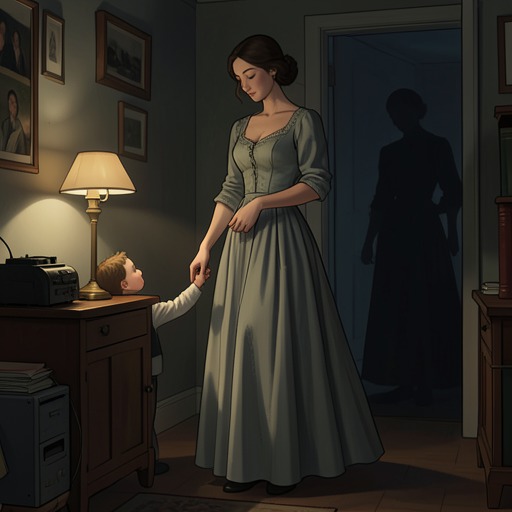
As Mary’s sleep deteriorates, the border between dreaming and waking blurs. Joseph begins to appear to her as a ghost in Buckingham Villa, lounging in the rooms as if they were his own. Mary sometimes rebukes him, but she also discovers that old affection has returned. The ghost does not reciprocate: his expression remains accusing, and his presence recalls the unresolved crime rather than restoring their relationship. Mary understands that confession might free her, yet delays because she loves Saleem and fears that telling the truth will hurt him.
Confession and narrative significance
In 1958, after eleven years of haunting, Joseph’s ghost appears again at the family home. Mary sees him walking toward Ahmed Sinai’s office, begs him not to trouble the household, and rushes to Amina to ask forgiveness. She gathers the family and insists on telling them the truth herself, before Joseph can reveal it. In the office, she confesses that she changed the newborns’ name-tags for Joseph’s sake and pleads that Saleem not be punished for what she did. Her revelation overturns the family’s understanding of Saleem’s parentage; Ahmed responds by identifying the figure in the room as his former servant Musa, rather than treating Mary’s confession as a simple private admission.
Joseph’s haunting is also tied to the structure of Mary’s guilt. The ghost appears to deteriorate while the responsibility for the crime rests on him, and Mary’s recognition of this decay makes confession seem inevitable. She nevertheless postpones it whenever she looks at Saleem. Her care for him is genuine, but it cannot undo either the switch or the years of concealment: affection protects him in one sense and prolongs the secret in another.
Through Joseph, the novel brings the political violence around independence into intimate life without making the two histories identical. His anger concerns the poor being driven to fight one another; Mary’s personal crisis concerns love, jealousy, remorse, and an act that alters a child’s identity. His disappearance leaves her to carry that act alone, while his recurring ghost turns memory into a presence that disrupts domestic life. Later, Saleem’s own storytelling and pickling give the past a form that can be preserved but not made pure: the history he recounts remains shaped by guilt, partial knowledge, and the effort to tell what happened.