Saleem’s betrayal of the Midnight’s Children
Midnight's ChildrenSaleem’s betrayal of the Midnight’s Children is the disclosure, under interrogation during the Emergency, of identifying information about the surviving members of the Midnight Children’s Conference. Imprisoned at the Widows’ Hostel, Saleem gives his interrogators names, addresses, and physical descriptions. He later describes himself as having betrayed the children and confesses to them in shame, while refusing to recall or narrate the methods used to make him speak. The episode makes the founder of the Conference an unwilling instrument of its collapse and binds his private guilt to the children’s subsequent imprisonment and persecution.
Setting and circumstances
The disclosure takes place in the palace that has become the Widows’ Hostel, on the Ganges. The building’s small upper rooms and great halls of lamentation form the setting for the Emergency-era roundup and detention of the Midnight’s Children. Saleem is confined in a small room and given prison food. His narration presents the institution not merely as a jail but as the center of the Widow’s power, where the children are gathered and their whispers begin to fill the walls.
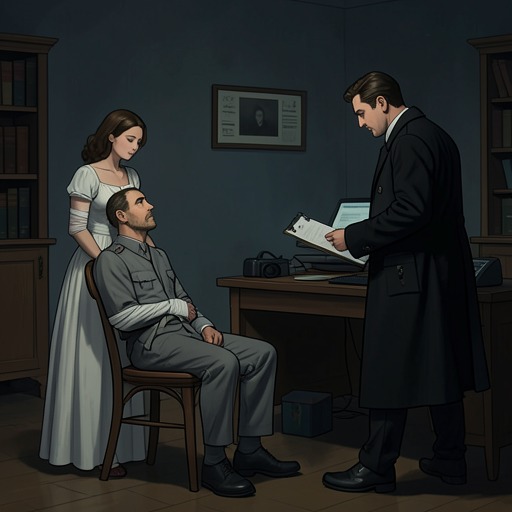
Two uniformed interrogators visit Saleem to question him. He gives them the nickname Abbott-and-Costello, but stresses that the pair do not succeed in making him laugh. Their mismatched appearance is recalled more clearly than their methods: Saleem says that he has forgotten what they did to induce his confession and will not describe it. That omission is part of the account. The reader is told that pressure was applied and that Saleem talked, but not how the questioning proceeded.
What Saleem reveals
Saleem says that he became extremely talkative under the interrogators’ forgotten pressures. What he disclosed included names, addresses, and physical descriptions. He identifies the scale of the betrayal as five hundred and seventy-eight children, after being told that Parvati was dead and Shiva had joined the enemy; the number underlines that the interrogation concerns a dispersed community, not a handful of acquaintances.
The interrogators respond with approving remarks when Saleem supplies information about children they did not know. Their reactions make the practical purpose of the questioning plain: the details he provides help them identify the children. The account does not establish that Saleem volunteered willingly or explain the precise means of pressure, but he takes responsibility for the act itself. He calls it betrayal and names its consequence as the end of the Conference he had founded.
Confession, guilt, and absence
After the disclosure, Saleem is left in the Hostel, bar-fettered in a small room with only a straw mattress. The restraints make ordinary movement and rest difficult. His physical isolation contrasts with the voices he hears in the walls: the imprisoned children’s whispers become the means by which the consequences of his confession reach him. Their presence turns private remorse into an imagined, ongoing conversation with those he betrayed.
In a letter-like address to the children, Saleem admits that he did it and asks them to forgive him, while saying that he does not expect forgiveness. He considers possible excuses, including that he was not responsible for Shiva and that many people were being imprisoned, then refuses to rely on them. He also resists explaining the event through broad political analysis, arguing that those living through it are too close to events to gain perspective. The confession therefore holds together an acknowledgment of personal responsibility and an insistence on the limits of what he can understand or remember.
Consequences and narrative significance
Saleem’s disclosure helps dismantle the Midnight Children’s Conference. The children are rounded up and brought to the Hostel between April and December; Saleem hears their voices through the walls and recognizes the gathering as the consequence of his shameful confession. The Conference’s founder, once the point of connection among the children, has instead supplied the information that exposes them to the state. Their confinement makes the betrayal collective in its effects, even though the act of disclosure is his.
The narration links this episode to a recurring pattern of disappearance in Saleem’s history. In his confession, he remembers people vanishing and describes the children as having disappeared from the world. This language presents the roundup not as an isolated arrest but as the latest instance of lives removed from public view. His account of the betrayal also remains marked by absence: he names what he revealed and what followed, but not the interrogation’s techniques. That gap prevents remorse from becoming a complete explanation.
As a narrative event, the betrayal converts Saleem’s role from founder and chronicler into informant and prisoner. He tells the children that he will not take the larger view or offer excuses; instead, he records his subjective shame and asks them to prepare for what may come next. The episode thus makes memory itself part of the aftermath: his confession preserves the children’s presence in words, but cannot undo their capture or restore the community he helped bring to an end.