Widow’s Regime Forced Sterilization Policy Against the Midnight’s Children
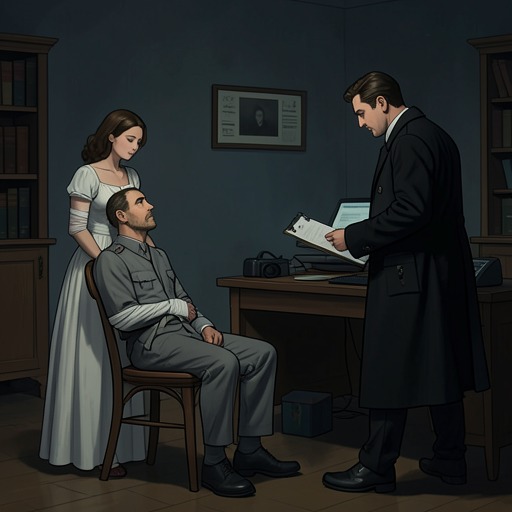
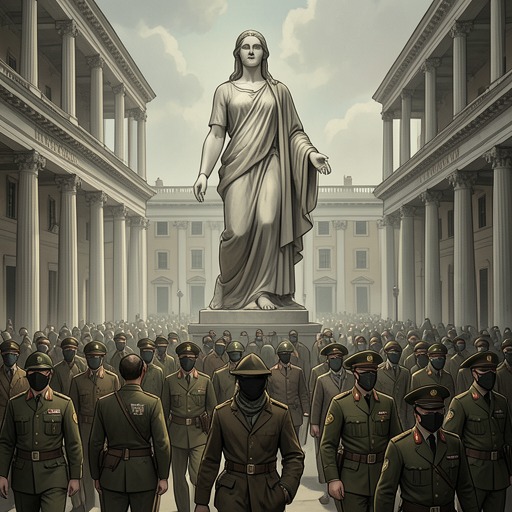
Midnight's ChildrenThe Widow’s Regime Forced Sterilization Policy Against the Midnight’s Children is the state’s bodily assault on the 420 children, a measure that destroys their reproductive capacity and leaves them bound to one another by a shared injury. Its immediate coercion outlasts the Widow’s rule: release restores their freedom of movement, but not the future the policy has taken from them.
The children as a political threat
The policy makes the Midnight’s Children’s bodies the target of political power. In Saleem’s account, the children’s collective existence helps explain the Widow’s actions: he later links the end of the sterilization campaign to the day she called a general election, suggesting that the 420 were among the forces she feared. This is Saleem’s retrospective interpretation, not an impersonal account of government policy; the connection emerges through his remembered sequence of imprisonment, forced sterilization, and political change.
The violence and its aftermath
Saleem’s release from the palace of the howling widows comes unexpectedly in late March 1977. He initially stands blinking in the sunlight, unable to make sense of what has happened. Only afterward does he learn that the Prime Minister called an election on January 18, the day he identifies as the end of the sterilization campaign. Political reversal brings the prisoners out, but it does not undo the physical violation they have undergone.
When the 420 survivors gather in the gullies of Benares, they look at one another and recognize the memory of their gelding in each other’s eyes. The wound is at once bodily and communal: each survivor encounters the policy’s consequence in the others, and the sight becomes unbearable. They mumble farewells and disperse into the privacy of the crowds, ending their collective life together rather than recovering the extraordinary community they once formed.
The limits of the policy’s victory
The policy’s attempt to extinguish the children’s future is not, in Saleem’s telling, the same as extinguishing every consequence of their lives. While he is imprisoned, he learns that Major Shiva has undergone a voluntary vasectomy. Saleem laughs not simply at his rival’s sterilization, but at the contrast between that news and the stories of Shiva’s sexual exploits: he imagines that children fathered by Shiva are already being raised across the country. The image gives the novel’s reproductive language a bitter irony. The Widow’s measure has mutilated the Midnight’s Children, but it cannot make the future wholly conform to the state’s design.
That possibility does not soften the ending. Saleem predicts that the multitudes will trample him, his son, and generations beyond them, until the thousand and first generation. The policy’s immediate assault is over, yet its meaning persists in his larger fear that the children of midnight are condemned to be both masters and victims of their times, denied the privacy of living or dying in peace.