Widows’ Hostel
Midnight's ChildrenThe Widows’ Hostel is the site of the Widow’s imprisonment and sterilization of the Midnight’s Children during the Emergency. Its most consequential scene is not a rescue or reunion but a release: in March 1977, Saleem Sinai and 419 other children emerge into daylight, recognize in one another the memory of their gelding, and disperse. The Hostel’s aftermath also exposes the instability of Saleem’s account, since he later confesses that his claim about Shiva’s death was invented.
Confinement and release
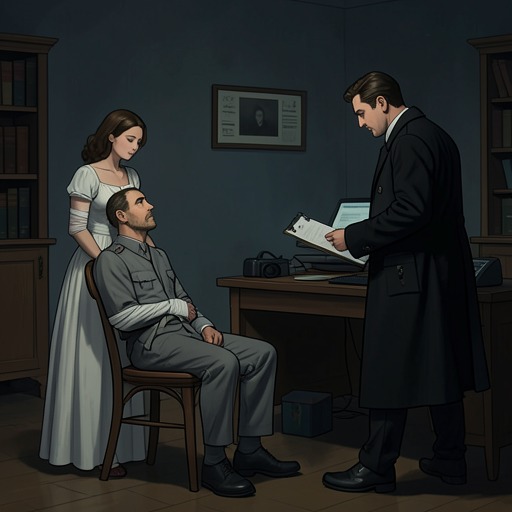
Saleem recalls being held in what he calls the palace of the howling widows. By the time he is freed in late March 1977, he has been deprived of his magical powers and sterilized along with the other children. He steps outside blinking in the sunlight, unable at first to understand what has happened or even how to ask questions. His disorientation makes release a physical event before it becomes political knowledge.
The explanation arrives afterward. On January 18, the day the campaign of sterilization ended, the Prime Minister had unexpectedly called a general election. Saleem learns later that the ruling regime suffered a crushing defeat and that files were burned; when he walked out, he knew none of this. The sequence separates the political change that makes release possible from the captive’s experience of it: the election is already turning the country, but the people emerging from the Hostel first encounter daylight and uncertainty.
The dispersal of the children
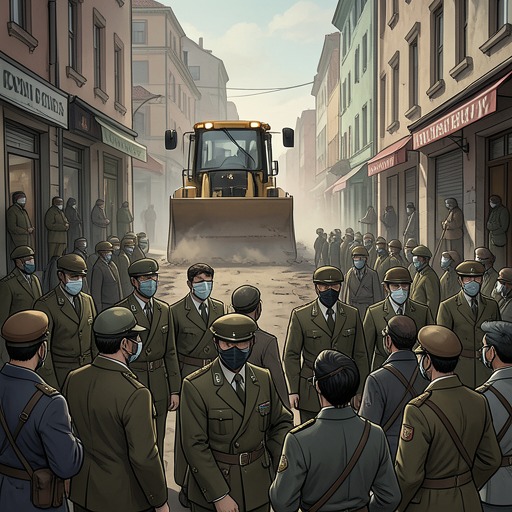
Outside, 420 former captives look at one another and see the memory of their sterilization reflected in each other’s eyes. Unable to bear that recognition, they exchange mumbled farewells and scatter into the crowds of Benares. Their dispersal ends the group’s shared confinement, but it does not restore the community formed by their birth-time or its lost powers. The crowd offers privacy and concealment rather than repair.
The number gives the departure its stark shape: the four hundred and twenty leave together in one moment, then become individuals moving separately through the city. Saleem’s account makes their common injury visible while showing how quickly its witnesses vanish from one another’s lives. The Hostel is thus remembered less as a lasting institution than as the place from which a damaged collective is released into anonymity.
Shiva and the narrator’s correction
At the moment of release, Saleem asks what has happened to Major Shiva, whom he calls a traitor. He is told that Shiva has undergone voluntary vasectomy. Saleem laughs, not simply at his rival’s condition, but at the irony that Shiva, the destroyer of the Midnight’s Children, has also fathered children across the country. In Saleem’s telling, the Hostel’s sterilization has not ended Shiva’s generative role.
That account is later revised. Saleem admits that he lied about Shiva’s death: he does not know where Shiva went after the Widows’ Hostel. He had invented a later scene in which Roshanara Shetty entered Shiva’s cell with her husband’s German pistol and killed him. Saleem says fear of Shiva and the possibility that Shiva might discover the secret of his birth shaped the fabrication. The confession makes the Hostel a boundary between narrated certainty and acknowledged ignorance: Saleem can report the release, but his account of what became of his rival exceeds what he knows.
Memory, history, and damaged endings
The Hostel’s place in the narrative is bound to the book’s broken, retrospective form. Saleem describes his own climax as scraps of memory rather than a clean ascent to a peak, and says he must build reality from fragments. The children’s departure is one such fragment: a precise number, a remembered look, and farewells too quiet to turn into a reunion. The scene gives the political end of the Emergency a bodily and collective consequence without suggesting that a change of government undoes the injury.
The correction about Shiva sharpens that uncertainty. Saleem recognizes that an autobiographer can make past events seem real by declaring that they occurred, and acknowledges that fear made him supply a death he could not verify. The Hostel therefore marks both what happened to the children and the limit of the narrator’s authority over what happened next. Its survivors leave the institution, but the story leaves their shared experience behind as memory, separation, and an account that must itself be questioned.