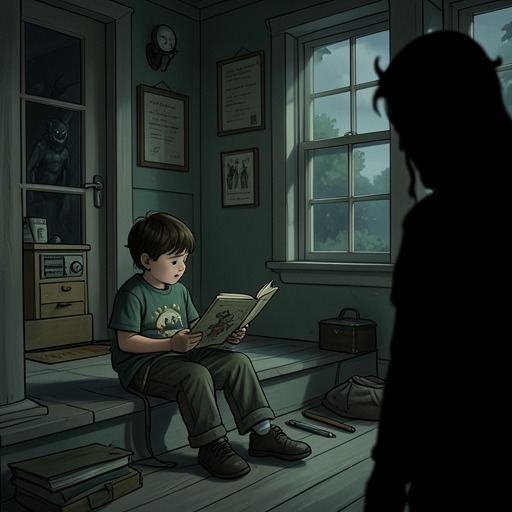
“monsters with human faces”
Miss Peregrine's Home of Peculiar Children“monsters with human faces” is the expression that overturns Jacob Portman’s childhood understanding of his grandfather’s stories. The monsters Abraham described had been an imaginative disguise for human persecution, connecting the family’s private history to the violence of the Second World War and to the danger peculiars faced from hollowgast.
From Childhood Tale to Historical Truth
As a child, Jacob heard that Abraham had been sent from Poland to a children’s home in Wales because monsters were after him. Abraham described frightening creatures in fantastic terms, and Jacob both feared them and delighted in imagining his grandfather surviving them. The story’s creatures gave a child-sized shape to danger that Jacob could not yet understand.
The later revelation changes the meaning of that account without making its fear unreal. Abraham was the only member of his family to escape Poland before the Second World War. At twelve, he was sent by train to Britain with a suitcase and the clothes he wore; he never saw his parents or extended family again. They were killed before he turned sixteen. The monsters in the story’s historical reality were people: Nazis in uniform, whose appearance could seem ordinary even as they carried out persecution.
Two Histories of Persecution
The expression also sits within a second history. The children’s home that sheltered Abraham had seemed, by contrast with mainland Europe, like an enchanted refuge. Its endless summers, guardian angels, and magical children transformed the reality of displaced children into a protective fairy-tale form. The children’s supposed peculiarity was their Jewishness; their survival after escape from ghettos and gas chambers was itself extraordinary.
Miss Peregrine later describes Abraham’s predicament as a double genocide: Jews were being murdered by the Nazis, while peculiars were being killed by hollowgast. He was tormented by the sense that he was hiding while both communities to which he belonged were being slaughtered. The phrase therefore does not collapse the two threats into one: it distinguishes human perpetrators from supernatural pursuers while showing how both shaped Abraham’s life.
The Phrase’s Later Meaning
Abraham said that he had gone to war to fight monsters. After the war ended Nazi rule, the hollowgast emerged stronger, and many peculiars remained in hiding. Abraham returned changed, determined to live outside the loop rather than continue hiding. In that account, “monsters with human faces” names the historical truth behind his childhood tales and the lasting pressure of the dangers he had survived.
The expression also frames Jacob’s retrospective understanding of his grandfather. What had once seemed like an invented adventure was a guarded retelling of exile, family loss, and persecution. The fantastic imagery made that history approachable in childhood, but its later explanation restores the human agents and historical stakes concealed beneath the tale.